Und dann auf "Zum Home-Bildschirm [+]".

Stöbern
genialokal zum Startbildschirm hinzufügen
Installieren Sie die genialokal App auf Ihrem Startbildschirm für einen schnellen Zugriff und eine komfortable Nutzung.
Installieren Sie die genialokal App auf Ihrem Startbildschirm für einen schnellen Zugriff und eine komfortable Nutzung.

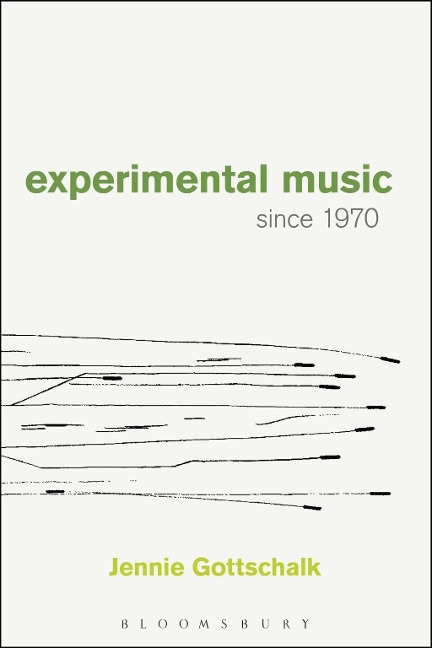
What is experimental music today? This book offers an up to date survey of this field for anyone with an interest, from seasoned practitioners to curious readers. This book takes the stance that experimental music is not a limited historical event, but is a proliferation of approaches to sound that reveals much about present-day experience. An experimental work is not identifiable by its sound alone, but by the nature of the questions it poses and its openness to the sounding event.
Experimentation is a way of working. It pushes past that which is known to discover what lies beyond it, finding new knowledge, forms, and relationships, or accepting a state of uncertainty. For each of these composers and sound artists, craft is developed and transformed in response to the questions they bring to their work. Scientific, perceptual, or social phenomena become catalysts in the operation of the work.
These practices are not presented according to a chronology, a set of techniques, or social groupings. Instead, they are organized according to the content areas that are their subjects, including resonance, harmony, objects, shapes, perception, language, interaction, sites, and histories. Musical materials may be subject, among other treatments, to systemization, observation, examination, magnification, fragmentation, translation, or destabilization. These restless and exploratory modes of engagement have continued to develop over recent decades, expanding the scope of both musical practice and listening.
Jennie Gottschalk is a composer and independent scholar based in Boston. Since receiving a doctorate in composition from Northwestern University in 2008, she has traveled extensively to gather first-hand information about experimental music practices. For additional resources related to this book, please visit the author's website at soundexpanse.com.
Chapter 1: Defining Features of Experimental Music
1.1. Introduction
1.2. Indeterminacy
1.3. Silence
Chapter 2: Scientific Approaches
2.1. Acts of Discovery
2.2. Harmonic Relations
2.3. Playing with Numbers
2.4. Learning by Making
2.5. Finding Hidden Sounds
Chapter 3: Physicalities
3.1. The Physicality of Performance
3.2. Resonant Spaces
3.3. Objects as Instruments
3.4. From Shape to Sound
Chapter 4: Perception
4.1. The Position of the Listener
4.2. The Perception of Time
Chapter 5: Information, Language, and Interaction
5.1. Treatments of Sonic Information
5.2. The Sounds of Living Beings
5.3. Language
5.4. Interaction
Chapter 6: Place and Time
6.1. Mappings
6.2. Site-Specific Works
6.3. Histories
Chapter 7: Advocates
Appendix
Index