Und dann auf "Zum Home-Bildschirm [+]".

Stöbern
genialokal zum Startbildschirm hinzufügen
Installieren Sie die genialokal App auf Ihrem Startbildschirm für einen schnellen Zugriff und eine komfortable Nutzung.
Installieren Sie die genialokal App auf Ihrem Startbildschirm für einen schnellen Zugriff und eine komfortable Nutzung.
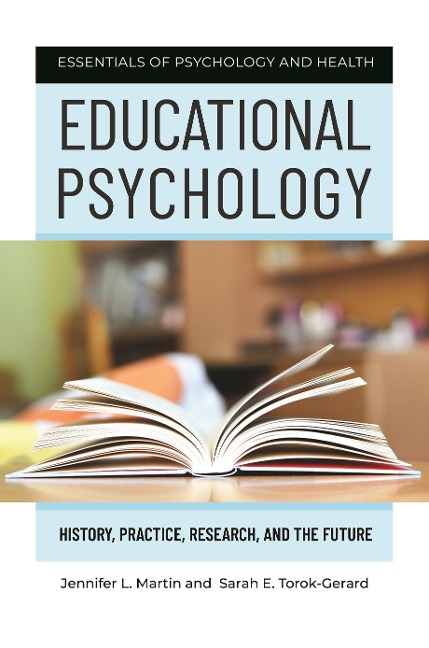
A comprehensive introduction to educational psychology, this volume is inclusive of all of the essentials-covering history, profiles, theories, applications, research, case studies, current events, issues, controversies, and more. Focused on human learning and teaching, the field of educational psychology informs a range of educational challenges, including instructional design, curriculum development, organizational learning, special education, student motivation, and classroom management. In this book, two veteran professors in the fields of education and psychology, offer a clear and concise yet comprehensive overview of this growing specialty. This volume will be valuable not only to university students aiming to understand psychology's subfields and to choose a major or a specialty, but also to classroom teachers, school administrators, and school social workers aiming to make teaching more effective and learning more thorough and lasting. Topics include the field's history, primary figures theories, research, theories, applications, issues, and controversies. Authors Martin and Torok-Gerard also explain current issues of social justice and educational equity, citing means that have been used to meet those goals in schools. The text additionally analyzes special education as a civil rights issue as well as equity and fairness for LGBTQ+ students in the context of social justice. The text ends with emerging research and predictions for the future of educational psychology.
Jennifer L. Martin, PhD, is assistant professor in the Department of Teacher Education at the University of Illinois.
Sarah E. Torok-Gerard, PhD, is associate professor in the Department of Psychology, Neuroscience, and Human Development at the University of Mount Union.
Series Foreword
Acknowledgments
Timeline
Part One: Overview
Chapter 1
The Historical Origins of Educational Psychology: An Overview
Chapter 2
Perspectives: How Students Think-Neuroscience and Theories of Cognition
Chapter 3
Theories: Intelligence, Memory, Language, and Reading Acquisition
Chapter 4
Developmental and Social Psychology in Educational Psychology
Chapter 5
Profiles in Contemporary Research
Part Two: Practice
Chapter 6
Applications in Equitable Educational Design and Instructional Development
Chapter 7
Classroom Management and Student Motivation: An Intersectional Perspective
Chapter 8
Educational Psychology and Special Education: An Issue of Civil Rights
Chapter 9
Protections for Contemporary Student Minority Groups against Oppression
Chapter 10
Case Studies in Educational Psychology for Educational Equity
Part Three: Research and Looking Ahead
Chapter 11
Classic Research
Chapter 12
Emerging Research on Teaching and Learning
Glossary
Resources
About the Authors and Contributors
Index
Dieses eBook wird im PDF-Format geliefert und ist mit einem Adobe Kopierschutz (DRM) versehen. Sie können dieses eBook mit allen Geräten lesen, die das PDF-Format und den Adobe Kopierschutz (DRM) unterstützen.
Zum Beispiel mit den folgenden Geräten:
• tolino Reader
Laden Sie das eBook direkt über den Reader-Shop auf dem tolino herunter oder übertragen Sie das eBook auf Ihren tolino mit einer kostenlosen Software wie beispielsweise Adobe Digital Editions.
• Sony Reader & andere eBook Reader
Laden Sie das eBook direkt über den Reader-Shop herunter oder übertragen Sie das eBook mit der kostenlosen Software Sony READER FOR PC/Mac oder Adobe Digital Editions auf ein Standard-Lesegeräte mit epub- und Adobe DRM-Unterstützung.
• Tablets & Smartphones
Möchten Sie dieses eBook auf Ihrem Smartphone oder Tablet lesen, finden Sie hier unsere kostenlose Lese-App für iPhone/iPad und Android Smartphone/Tablets.
• PC & Mac
Lesen Sie das eBook direkt nach dem Herunterladen mit einer kostenlosen Lesesoftware, beispielsweise Adobe Digital Editions, Sony READER FOR PC/Mac oder direkt über Ihre eBook-Bibliothek in Ihrem Konto unter „Meine eBooks“ - „online lesen“.
Schalten Sie das eBook mit Ihrer persönlichen Adobe ID auf bis zu sechs Geräten gleichzeitig frei.
Bitte beachten Sie, dass die Kindle-Geräte das Format nicht unterstützen und dieses eBook somit nicht auf Kindle-Geräten lesbar ist.