Und dann auf "Zum Home-Bildschirm [+]".

Stöbern
genialokal zum Startbildschirm hinzufügen
Installieren Sie die genialokal App auf Ihrem Startbildschirm für einen schnellen Zugriff und eine komfortable Nutzung.
Installieren Sie die genialokal App auf Ihrem Startbildschirm für einen schnellen Zugriff und eine komfortable Nutzung.


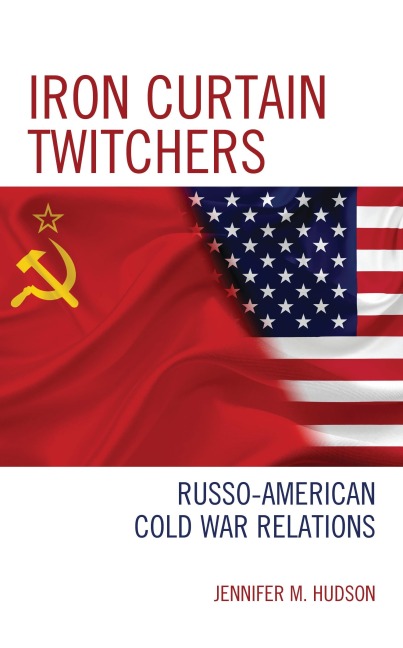
The Cold War is often viewed in absolutist terminology: the United States and the Soviet Union characterized one another in oppositional rhetoric and pejorative propaganda. State-sanctioned communications stressed the inherent dissimilarity between their own citizens and those of their Cold War foe. Such rhetoric exacerbated geopolitical tensions and heightened Cold War paranoia, most notably during the Red Scare and brinkmanship incidents. Government leaders stressed the reactive defensive foreign policies they implemented to retaliate against their counterparts' offensive maneuvers. Only brief periods of détente gave glimpses into the possibility of concerted peaceful coexistence.
Yet such characterizations neglect the complexities and rhetorical nuances that created fissures throughout the long-standing ideological conflict. Grassroots diplomacy rarely coalesced with official governmental rhetoric and often contradicted the discourse emanating from the White House and the Kremlin. Organizations such as Women Strike for Peace (WSP), the Committee for Nonviolent Action (CNVA), and the Moscow Trust Group (MTG) defied policy directives and sought to establish genuine peaceful coexistence. Traveling citizens posited that U.S. and Soviet citizens possessed more underlying commonalities than their governmental leaders cared to admit - phenomena underscored in events such as the San-Francisco-to-Moscow Walk for Peace. Spacebridge programs railed against the Strategic Defense Initiative (SDI) and proclaimed that figurative and literal links between their country and the "Other" proved more conducive to public opinion than "Star Wars."
Iron Curtain Twitchers examines such juxtaposing rhetorics through three lexical themes: contamination, containment, and coexistence. It analyzes the disparate perspectives of public politicians and private citizens throughout the Cold War's duration and its aftermath to better understand the political, cultural, and geopolitical nuances of U.S.-Russia relations. Vacillating rhetoric among politicians, journalists, and traveling citizens complicated geopolitical relationships, sociopolitical disagreements, and cultural characterizations. These dialogues are contrasted with the cultural mediums of film and political cartoons to underscore fluctuating Cold War identity dynamics. Manifestations of one's own country contrasted with propagations of the "Other" and indicate that the Cold War lasted much longer and remains more virulent than previously conceived.
Jennifer M. Hudson is lecturer at the University of Texas at Dallas.
Chapter 1: Ideological Contagions, 1870-1924
Chapter 2: Interwar Border-Crossings and Identity Crises, 1924-1939
Chapter 3: Peaceful Coexistence during the Great Patriotic War, 1939-1945
Chapter 4: Arms Enthusiasts and Disarmament Devotees, 1946-1959
Chapter 5: Brinkmanship Gives Birth to Détente, 1959-1979
Chapter 6: The Cold War's Last Breath, 1980-1991
Conclusion: Post-Cold War Relations
Dieses eBook wird im PDF-Format geliefert und ist mit einem Adobe Kopierschutz (DRM) versehen. Sie können dieses eBook mit allen Geräten lesen, die das PDF-Format und den Adobe Kopierschutz (DRM) unterstützen.
Zum Beispiel mit den folgenden Geräten:
• tolino Reader
Laden Sie das eBook direkt über den Reader-Shop auf dem tolino herunter oder übertragen Sie das eBook auf Ihren tolino mit einer kostenlosen Software wie beispielsweise Adobe Digital Editions.
• Sony Reader & andere eBook Reader
Laden Sie das eBook direkt über den Reader-Shop herunter oder übertragen Sie das eBook mit der kostenlosen Software Sony READER FOR PC/Mac oder Adobe Digital Editions auf ein Standard-Lesegeräte mit epub- und Adobe DRM-Unterstützung.
• Tablets & Smartphones
Möchten Sie dieses eBook auf Ihrem Smartphone oder Tablet lesen, finden Sie hier unsere kostenlose Lese-App für iPhone/iPad und Android Smartphone/Tablets.
• PC & Mac
Lesen Sie das eBook direkt nach dem Herunterladen mit einer kostenlosen Lesesoftware, beispielsweise Adobe Digital Editions, Sony READER FOR PC/Mac oder direkt über Ihre eBook-Bibliothek in Ihrem Konto unter „Meine eBooks“ - „online lesen“.
Schalten Sie das eBook mit Ihrer persönlichen Adobe ID auf bis zu sechs Geräten gleichzeitig frei.
Bitte beachten Sie, dass die Kindle-Geräte das Format nicht unterstützen und dieses eBook somit nicht auf Kindle-Geräten lesbar ist.