Und dann auf "Zum Home-Bildschirm [+]".

Stöbern
genialokal zum Startbildschirm hinzufügen
Installieren Sie die genialokal App auf Ihrem Startbildschirm für einen schnellen Zugriff und eine komfortable Nutzung.
Installieren Sie die genialokal App auf Ihrem Startbildschirm für einen schnellen Zugriff und eine komfortable Nutzung.
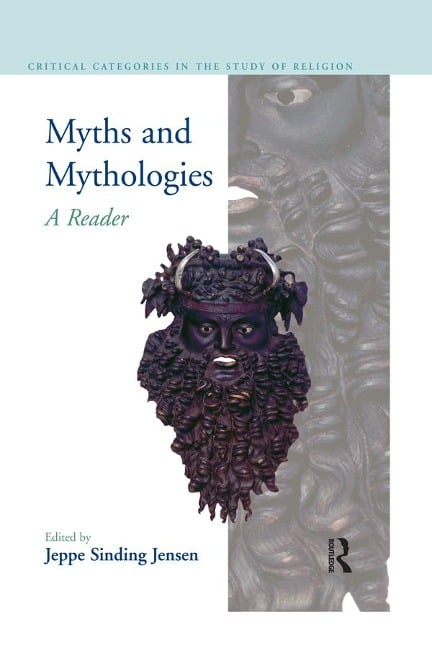
In all cultures and at all times, humans have told stories about where they came from, who they are and how they should live their lives. 'Myths and Mythologies' brings together the key classic and contemporary writings - philosophical, psychological, sociological, semiological and cognitivist - on myth. To the insider, myths contain truth, revelation and a 'history of ourselves'; to the outsider, a culture s myths can be seen as the product of foolish, infantile and wishful thinking. Myths tell us about specific cultures, about human creativity, and how narrative shapes and reflects understanding. The 'Reader' is an invaluable resource for students and scholars interested in the impact of narrative on human culture and the meaning of truth in religious language.
Jeppe Sinding Jensen is a Senior Lecturer in the Department of the Study of Religion, Aarhus University, Denmark.
Introduction I. Philosophical approaches to the study of myth Introduction Lucien Lévy-Bruhl, ?The transition to the higher mental types? from How Natives Think Susanne K. Langer, ?Life-Symbols: The Roots of Myth? from Philosophy in a New Key Ernst Cassirer, ?The place of language and myth in the pattern of human culture? from Language and Myth Karl Popper, ?The Worlds 1, 2 and 3? from ?Indeterminism is not enough: An afterword? in The Open Universe John R. Searle, ?Language and Social Reality? from The Construction of Social Reality II. Psychological approaches Introduction Friedrich Max MÃ-ller, from Comparative Mythology Bronislaw Malinowski, ?Myth in Primitive Psychology? from Magic, Science and Religion Sigmund Freud, ?Introductory lecturers on psycho-analysis? Mircea Eliade, ?Cosmogonic Myth and ?Sacred History?? from The Quest III. Sociological approaches Introduction Ã0/00mile Durkheim and Marcel Mauss ?Conclusion? from Primitive Classification George Dumézil ?The Gods: Asir and Vanir? from Gods of the Ancient Northmen Mary Douglas ?Primitive Worlds? from Purity and Danger Pierre Clastres ?What Makes Indians Laugh? from Society against the State IV. Semiological and narratological approaches Introduction Claude Lévi-Strauss ?Overture? from The Raw and the Cooked Marcel Detienne ?The Myth of ?Honeyed Orpheus? from Myth, Religion and Society Roland Barthes ?Introduction to the Structural Analysis of Narratives? from The Semiotic Challenge Roy Wagner ?The Theory of Symbolic Obviation? from Lethal Speech V. Cognitivist approaches Introduction Edwin Hutchins ?Myth and experience in the Trobriand Islands? from Cultural Models in Language and Thought Bradd Shore ?Dreamtime Learning, Inside-Out: The Narrative of the Wawilak Sisters? from Culture in Mind Jerome Bruner ?The Transactional Self? from Actual Minds, Possible Worlds Andy Clark, ?Language: The Ultimate Artefact? from Being There VI. Modern Myths and Mythologies
Dieses eBook wird im PDF-Format geliefert und ist mit einem Adobe Kopierschutz (DRM) versehen. Sie können dieses eBook mit allen Geräten lesen, die das PDF-Format und den Adobe Kopierschutz (DRM) unterstützen.
Zum Beispiel mit den folgenden Geräten:
• tolino Reader
Laden Sie das eBook direkt über den Reader-Shop auf dem tolino herunter oder übertragen Sie das eBook auf Ihren tolino mit einer kostenlosen Software wie beispielsweise Adobe Digital Editions.
• Sony Reader & andere eBook Reader
Laden Sie das eBook direkt über den Reader-Shop herunter oder übertragen Sie das eBook mit der kostenlosen Software Sony READER FOR PC/Mac oder Adobe Digital Editions auf ein Standard-Lesegeräte mit epub- und Adobe DRM-Unterstützung.
• Tablets & Smartphones
Möchten Sie dieses eBook auf Ihrem Smartphone oder Tablet lesen, finden Sie hier unsere kostenlose Lese-App für iPhone/iPad und Android Smartphone/Tablets.
• PC & Mac
Lesen Sie das eBook direkt nach dem Herunterladen mit einer kostenlosen Lesesoftware, beispielsweise Adobe Digital Editions, Sony READER FOR PC/Mac oder direkt über Ihre eBook-Bibliothek in Ihrem Konto unter „Meine eBooks“ - „online lesen“.
Schalten Sie das eBook mit Ihrer persönlichen Adobe ID auf bis zu sechs Geräten gleichzeitig frei.
Bitte beachten Sie, dass die Kindle-Geräte das Format nicht unterstützen und dieses eBook somit nicht auf Kindle-Geräten lesbar ist.