Und dann auf "Zum Home-Bildschirm [+]".

Stöbern
genialokal zum Startbildschirm hinzufügen
Installieren Sie die genialokal App auf Ihrem Startbildschirm für einen schnellen Zugriff und eine komfortable Nutzung.
Installieren Sie die genialokal App auf Ihrem Startbildschirm für einen schnellen Zugriff und eine komfortable Nutzung.


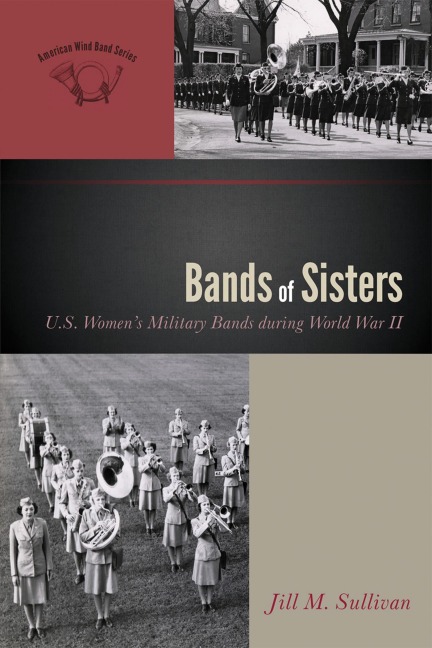
On Saturday, November 14, 1944, radio listeners heard an enthusiastic broadcast announcer describe something they had never heard before: Women singing the "Marines' Hymn" instead of the traditional all-male United States Marine Band. The singers were actually members of its sister organization, The Marine Corps Women's Reserve Band of Camp Lejeune, North Carolina. Today, few remember these all-female military bands because only a small number of their performances were broadcast or pressed to vinyl. But, as Jill Sullivan argues in Bands of Sisters: U.S. Women's Military Bands during World War II, these gaps in the historical record can hardly be treated as the measure of their success.
The novelty of these bands-initially employed by the U.S. military to support bond drives-drew enough spectators for the bands to be placed on tour, raising money for the war and boosting morale. The women, once discharged at the war's end, refused to fade into post-war domesticity. Instead, the strong bond fostered by youthful enthusiasm and the rare opportunity to serve in the military while making professional caliber music would come to last some 60 years. Based on interviews with over 70 surviving band members, Bands of Sisters tells the tale of this remarkable period in the history of American women.
Sullivan covers the history of these ensembles, tracing accounts such as the female music teachers who would leave their positions to become professional musicians-no easy matter for female instrumentalists of the pre-war era. Sullivan further traces how some band members would later be among the first post-war music therapists based on their experience working with medical personnel in hospitals to treat injured soldiers. The opportunities presented by military service inevitably promoted new perspectives on what women could accomplish outside of the home, resulting in a lifetime of lasting relationships that would inspire future generations of musicians.
Jill M. Sullivan is associate professor of Music Education at Arizona State University.
Foreword by Raoul F. Camus
Preface
Chapter 1: Introduction
Chapter 2: Women's Army Corps Bands
Chapter 3: Coast Guard SPAR Band
Chapter 4: Women Accepted for Volunteer Emergency Service (WAVES) Bands
Chapter 5: Marine Corps Women's Reserve Band
Chapter 6: Music for the Injured Soldier
Chapter 7: Conclusion
Bibliography
Appendix: List of women interviewed, date, band, instrument, rank
Illustrations: List of Figures
Index
Dieses eBook wird im PDF-Format geliefert und ist mit einem Adobe Kopierschutz (DRM) versehen. Sie können dieses eBook mit allen Geräten lesen, die das PDF-Format und den Adobe Kopierschutz (DRM) unterstützen.
Zum Beispiel mit den folgenden Geräten:
• tolino Reader
Laden Sie das eBook direkt über den Reader-Shop auf dem tolino herunter oder übertragen Sie das eBook auf Ihren tolino mit einer kostenlosen Software wie beispielsweise Adobe Digital Editions.
• Sony Reader & andere eBook Reader
Laden Sie das eBook direkt über den Reader-Shop herunter oder übertragen Sie das eBook mit der kostenlosen Software Sony READER FOR PC/Mac oder Adobe Digital Editions auf ein Standard-Lesegeräte mit epub- und Adobe DRM-Unterstützung.
• Tablets & Smartphones
Möchten Sie dieses eBook auf Ihrem Smartphone oder Tablet lesen, finden Sie hier unsere kostenlose Lese-App für iPhone/iPad und Android Smartphone/Tablets.
• PC & Mac
Lesen Sie das eBook direkt nach dem Herunterladen mit einer kostenlosen Lesesoftware, beispielsweise Adobe Digital Editions, Sony READER FOR PC/Mac oder direkt über Ihre eBook-Bibliothek in Ihrem Konto unter „Meine eBooks“ - „online lesen“.
Schalten Sie das eBook mit Ihrer persönlichen Adobe ID auf bis zu sechs Geräten gleichzeitig frei.
Bitte beachten Sie, dass die Kindle-Geräte das Format nicht unterstützen und dieses eBook somit nicht auf Kindle-Geräten lesbar ist.