Und dann auf "Zum Home-Bildschirm [+]".

Stöbern
genialokal zum Startbildschirm hinzufügen
Installieren Sie die genialokal App auf Ihrem Startbildschirm für einen schnellen Zugriff und eine komfortable Nutzung.
Installieren Sie die genialokal App auf Ihrem Startbildschirm für einen schnellen Zugriff und eine komfortable Nutzung.
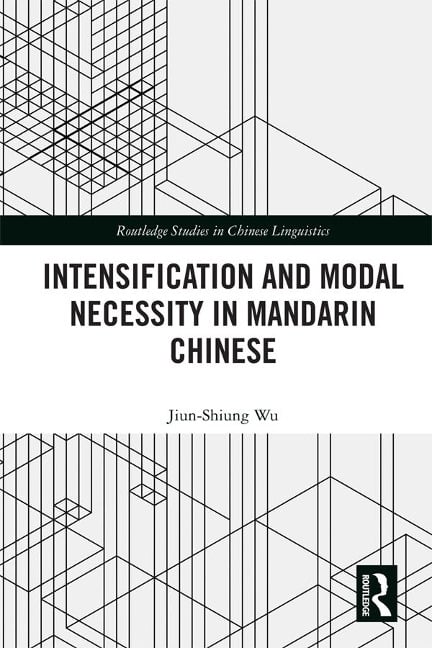
This book addresses intensification and modal necessity in Mandarin Chinese. Intensification is used in this book to describe the speaker's emphasis on a proposition, because, by emphasizing on a proposition, the speaker intensifies the degree of his/her confidence and affirmativeness toward the truth of a proposition, cf. the distinction between 'weaker' and 'stronger'. Modal necessity discussed in this book refers either to the speaker's certainty regarding the truth of an inference, judgment or stipulation, that is, epistemic necessity or to the speaker's certainty concerning the obligatoriness of a proposition, based on rules or regulations, i.e., deontic necessity. This book examines a series of lexical items in Mandarin Chinese that express either intensification or modal necessity, provides a unified semantics and also presents how these lexical items are semantically distinct. Intensification and Modal Necessity in Mandarin Chinese is aimed at instructors, researchers and post-graduate students of Chinese Linguistics.
Jiun-Shiung Wu is a Professor of Linguistics and Director of the Institute of Linguistics at National Chung Cheng University, Chiayi, Taiwan. He received a Ph.D. degree in linguistics from University of Texas at Austin, Texas, U.S.A, May, 2003. He served as the President of Linguistic Society of Taiwan from February, 2010 to January, 2012. He is a board member of International Association of Chinese Linguistics. He is the author of Temporal and Atemporal Relations in Mandarin. Taiwan Journal of Linguistics Monograph Series No. 2. He also publishes more than a dozen of journal papers and has more than thirty conference presentations.
List of Abbreviations. Introduction. Chapter 2: Review of Previous Studies. Chapter 3: The Most General Case: Yídìng. Chapter 4: Intra-sentential Resolution: Tiedìng. Chapter 5: Certainty Confirmation: Kendìng. Chapter 6: Certainty Expression: Dudìng. Chapter 7: Causing: Bìrán. Chapter 8: Anti-causing: Bìdìng. Chapter 9: Underspecified Modal Base: Shìbì. Chapter 10: Addressee's To-Do List: Wùbì. Chapter 11: Archaic Strong Modal Epistemic Necessity and Intensification: Bì. Chapter 12: General Discussion. Chapter 13: Conclusion. References.
Dieses eBook wird im PDF-Format geliefert und ist mit einem Adobe Kopierschutz (DRM) versehen. Sie können dieses eBook mit allen Geräten lesen, die das PDF-Format und den Adobe Kopierschutz (DRM) unterstützen.
Zum Beispiel mit den folgenden Geräten:
• tolino Reader
Laden Sie das eBook direkt über den Reader-Shop auf dem tolino herunter oder übertragen Sie das eBook auf Ihren tolino mit einer kostenlosen Software wie beispielsweise Adobe Digital Editions.
• Sony Reader & andere eBook Reader
Laden Sie das eBook direkt über den Reader-Shop herunter oder übertragen Sie das eBook mit der kostenlosen Software Sony READER FOR PC/Mac oder Adobe Digital Editions auf ein Standard-Lesegeräte mit epub- und Adobe DRM-Unterstützung.
• Tablets & Smartphones
Möchten Sie dieses eBook auf Ihrem Smartphone oder Tablet lesen, finden Sie hier unsere kostenlose Lese-App für iPhone/iPad und Android Smartphone/Tablets.
• PC & Mac
Lesen Sie das eBook direkt nach dem Herunterladen mit einer kostenlosen Lesesoftware, beispielsweise Adobe Digital Editions, Sony READER FOR PC/Mac oder direkt über Ihre eBook-Bibliothek in Ihrem Konto unter „Meine eBooks“ - „online lesen“.
Schalten Sie das eBook mit Ihrer persönlichen Adobe ID auf bis zu sechs Geräten gleichzeitig frei.
Bitte beachten Sie, dass die Kindle-Geräte das Format nicht unterstützen und dieses eBook somit nicht auf Kindle-Geräten lesbar ist.