Und dann auf "Zum Home-Bildschirm [+]".

Stöbern
genialokal zum Startbildschirm hinzufügen
Installieren Sie die genialokal App auf Ihrem Startbildschirm für einen schnellen Zugriff und eine komfortable Nutzung.
Installieren Sie die genialokal App auf Ihrem Startbildschirm für einen schnellen Zugriff und eine komfortable Nutzung.

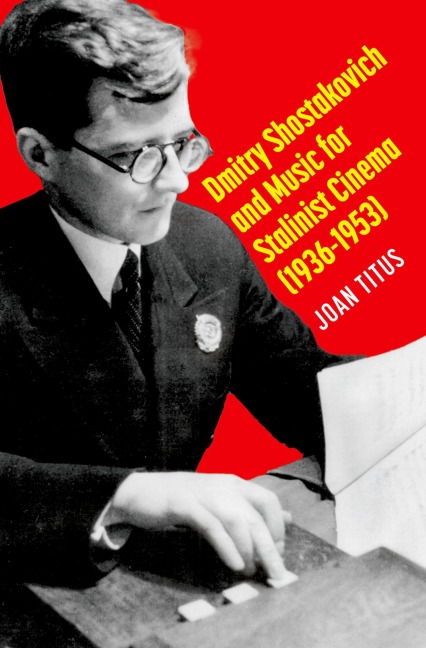
In her first volume, Joan Titus explored the early years of Dmitry Shostakovich's career as the first Russian musician to emerge as a composer for the Soviet cinema. In this second volume, Dmitry Shostakovich and Music for Stalinist Cinema (1936-1953), Titus explores Shostakovich's continued development as a preeminent Soviet film composer and his navigation of the Soviet film industry amidst the cultural politics of late Stalinism. Based on archival materials and contemporaneous press, Titus combines musical analysis of eighteen scores with discussion of socio-cultural context and reception of his work. She frames the discussion using the concepts of the mainstream and middlebrow to highlight the complex role of Shostakovich's film music within Soviet arts culture. The composer's experience with diverse filmmakers, genres, and styles allowed him the opportunity to experiment with film scoring and musical meaning, which revealed his heterogenous and thorough knowledge of musical styles and his integration of classical and popular musical trends. This unusual and varied experience makes him an excellent case study for examining the development of the film composer within Soviet film industry during late Stalinism, and situates his scoring within an emerging global film music history.
Joan Titus is Professor of Musicology and Ethnomusicology, and Women's, Gender, and Sexuality Studies at the University of North Carolina at Greensboro. She researches the cultural politics of audiovisual media and has published on the themes of Soviet and Russian film music, indigeneity and transnational identities, and the intersectionality of gender, race, and nationalism in music for screen media.
Archives and Libraries Consulted Note on Transliteration and Translation About the Companion Website 1. Introduction 2. Between the Revolution and the Soviet 3. Facets of the Soviet 4. Youth, Gender, and the Soviet Hero(ine) 5. Heroes and Cold War Relations 6. Heroes and Stalin Cult Films 7. Conclusion Notes Bibliography Index