Und dann auf "Zum Home-Bildschirm [+]".

Stöbern
genialokal zum Startbildschirm hinzufügen
Installieren Sie die genialokal App auf Ihrem Startbildschirm für einen schnellen Zugriff und eine komfortable Nutzung.
Installieren Sie die genialokal App auf Ihrem Startbildschirm für einen schnellen Zugriff und eine komfortable Nutzung.
Ihr gewünschter Artikel ist in 0 Buchhandlungen vorrätig - wählen Sie hier eine Buchhandlung in Ihrer Nähe aus:

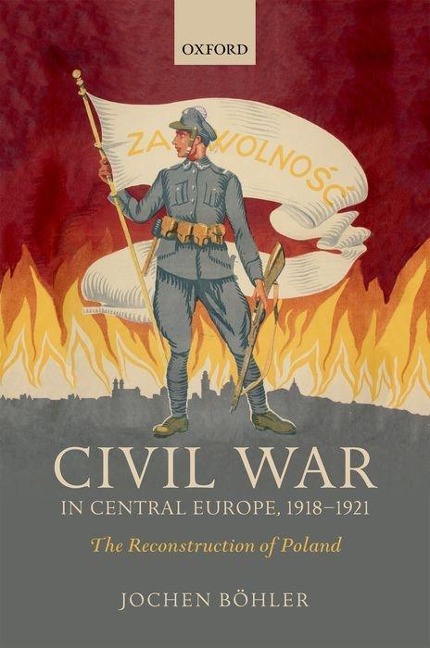
The First World War did not end in Central Europe in November 1918. The armistices marked the creation of the Second Polish Republic and the first shot of the Central European Civil War which raged from 1918 to 1921. The fallen German, Russian, and Austrian Empires left in their wake lands with peoples of mixed nationalities and ethnicities. These lands soon became battle grounds and the ethno-political violence that ensued forced those living within them to decide on their national identity.
Civil War in Central Europe seeks to challenge previous notions that such conflicts which occurred between the First and Second World Wars were isolated incidents and argues that they should be considered as part of a European war; a war which transformed Poland into a nation.
Jochen Böhler is a Research Fellow at the Imre Kertész Kolleg in Jena, where he teaches courses on the history of early twentieth-century Central and Eastern Europe. His most recent publications include, War, Pacification, and Mass Murder, 1939: The Einsatzgruppen in Poland (2014) alongside Jurgen Matthäus and Klaus-Michael Mallmann, Legacies of Violence: Eastern Europe's First World War (2014) with Joachim von Puttkamer and Wlodzimierz Borodziej and The Waffen-SS. A European History (2016) with Robert Gerwarth.
List of Illustrations and Maps
Introduction
1: Nations, States, and Conflict in Central Europe
2: How to Mobilize the Polish Nation
3: The Central European Civil War
4: Violence and Crimes Beyond the Battlefields
Conclusion
Epilogue