Und dann auf "Zum Home-Bildschirm [+]".

Stöbern
genialokal zum Startbildschirm hinzufügen
Installieren Sie die genialokal App auf Ihrem Startbildschirm für einen schnellen Zugriff und eine komfortable Nutzung.
Installieren Sie die genialokal App auf Ihrem Startbildschirm für einen schnellen Zugriff und eine komfortable Nutzung.
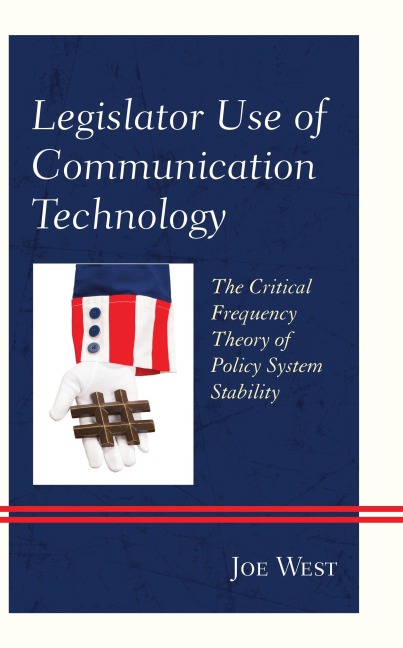
Political use of communication technology is rapidly changing the nature of politics; one need look no further than President Trump's use of Twitter to realize the impact that communication technology is having on political processes. Communication technology has long been recognized as part of the policy feedback process, but until now, has received relatively little focus, often relegated to a line or two in a policy process theory system diagram labeled "feedback." This book takes a fresh look at the role that communication technology plays in the policy process by applying natural science control and electrical engineering concepts such as bandwidth, latency, phase crossover, and positive and negative feedback to develop the critical frequency theory of policy system stability. This theory suggests that every policymaking institution has some critical frequency of communications from the policy environment that once exceeded, causes the policymaking institution to go unstable, and it is this instability that causes the policymaking process to speed up. With the theory developed, data collected on approximately 2,000 state legislators from every state in the U.S. is analyzed using linear and nonlinear regression models to understand the statistically significant relationships between communication technology frequency of use and importance, and the demographic, political, and institutional variables that contribute to policy process stability and instability. Additionally, interviews with legislators uncover many novel and interesting examples of the use of communication technology in the policy process. For example, legislators note that lobbyists sitting in legislative chambers listening to floor debates are actually texting questions and answers to legislators as they debate; legislators participating in this process are acting as policymaking puppets for the lobbyists sitting in the gallery. This single use of a communication technology has the capability of changing the very nature of what it means to be a legislator; with lobbyists acting as surrogate legislators.
Joe West is assistant professor at the University of North Carolina at Pembroke.
Chapter 1: Communication Technology as Feedback in the Policy Process
Chapter 2: Mature Communication Technologies
Chapter 3: Mass-Media Communication Technologies
Chapter 4: Internet-Enabled Communication Technologies
Chapter 5: Relative Use and Importance of all Communication Technologies
Chapter 6: Legislator Roles, Policy Conflict and Constituent Communications
Chapter 7: Political Polarization
Chapter 8: Critical Frequency Theory of Policy System Stability
Dieses eBook wird im PDF-Format geliefert und ist mit einem Adobe Kopierschutz (DRM) versehen. Sie können dieses eBook mit allen Geräten lesen, die das PDF-Format und den Adobe Kopierschutz (DRM) unterstützen.
Zum Beispiel mit den folgenden Geräten:
• tolino Reader
Laden Sie das eBook direkt über den Reader-Shop auf dem tolino herunter oder übertragen Sie das eBook auf Ihren tolino mit einer kostenlosen Software wie beispielsweise Adobe Digital Editions.
• Sony Reader & andere eBook Reader
Laden Sie das eBook direkt über den Reader-Shop herunter oder übertragen Sie das eBook mit der kostenlosen Software Sony READER FOR PC/Mac oder Adobe Digital Editions auf ein Standard-Lesegeräte mit epub- und Adobe DRM-Unterstützung.
• Tablets & Smartphones
Möchten Sie dieses eBook auf Ihrem Smartphone oder Tablet lesen, finden Sie hier unsere kostenlose Lese-App für iPhone/iPad und Android Smartphone/Tablets.
• PC & Mac
Lesen Sie das eBook direkt nach dem Herunterladen mit einer kostenlosen Lesesoftware, beispielsweise Adobe Digital Editions, Sony READER FOR PC/Mac oder direkt über Ihre eBook-Bibliothek in Ihrem Konto unter „Meine eBooks“ - „online lesen“.
Schalten Sie das eBook mit Ihrer persönlichen Adobe ID auf bis zu sechs Geräten gleichzeitig frei.
Bitte beachten Sie, dass die Kindle-Geräte das Format nicht unterstützen und dieses eBook somit nicht auf Kindle-Geräten lesbar ist.