Und dann auf "Zum Home-Bildschirm [+]".

Stöbern
genialokal zum Startbildschirm hinzufügen
Installieren Sie die genialokal App auf Ihrem Startbildschirm für einen schnellen Zugriff und eine komfortable Nutzung.
Installieren Sie die genialokal App auf Ihrem Startbildschirm für einen schnellen Zugriff und eine komfortable Nutzung.
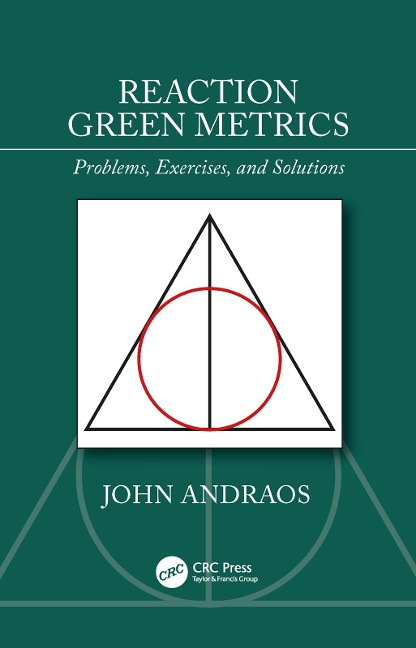
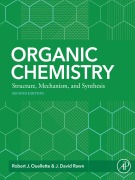
This book contains a series of exercises and problems posed in the subject of green metrics. Essentially it is a "how to" book on evaluating the material efficiency, environmental impact, safety-hazard impact, and energy efficiency of any kind of chemical reaction or synthesis plan. Only the essential green metrics in each of these categories are used. The introduction highlights the hierarchy of metrics used throughout the book, explains the structure of how the book is arranged, how the problems are posed, and how the reader is to use the book. Examples refer to themes according to the headings given in the table of contents and are arranged in a hierarchical order. Key Features:- The topics cover fundamentals in chemistry and the chemical industry in a blended fashion - A unique text covering the fundamentals of green metrics from materials efficiency and environmental and safety-hazard impact, to new green technologies and more- The book will be useful in a range of chemistry courses, from early undergraduate to advanced graduate courses, whether based in lectures, tutorials or laboratory experiments- Using an extensive glossary of terms used in green metrics, each chapter has a specified theme where the relevant metrics definitions pertaining to that theme will be given with one or two illustrative worked examples- Supplemental web-based downloadable material including extra problems, full solutions, Excel files, ChemDraw files, templates, and exercises
John Andraos earned a Ph.D. in 1992 from the University of Toronto in physical organic chemistry. He then did post-doctoral work at the University of Ottawa and at The University of Queensland studying kinetics of reactions in heterogeneous media and cumulene intermediates in low temperature matrices, respectively. Since his appointment as Lecturer and Course Director at York University (1999-2009) he has taught and developed courses in organic chemistry. In 2002 he launched the first industrial and "green" chemistry course in the history of the Department of Chemistry at York. His current research is broadly defined as reaction optimization and discovery. His undertaking of an ambitious project to construct a database of synthesis plans fully quantified by green metrics analysis for pharmaceuticals, important natural products, dyestuffs, agrichemicals, and molecules of theoretical interest culminated in the publication of "The Algebra of Organic Synthesis: green metrics, design strategy, route selection, and optimization" (CRC Press-Taylor & Francis, 2012). He also co-edited "Green Syntheses Volume 1" (CRC Press-Taylor & Francis, 2014) with Prof. Pietro Tundo (University of Venice) which is the first resource of reliable green chemistry experiments that have been checked for greenness claims by rigorous material efficiency metrics analysis.
Preface Chapter 1 Introduction Chapter 2 Constitution of a Chemical Reaction and Reaction Balancing Chapter 3 Experimental Description of Chemical Reactions Chapter 4 Chemical Reaction Classifications Chapter 5 Drawing Chemical Structures Chapter 6 Waste Production and Input Material Consumption Chapter 7 Intrinsic Greenness Chapter 8 Automated Computation for a Single Reaction Appendix: Other Terminologies Index
Dieses eBook wird im PDF-Format geliefert und ist mit einem Adobe Kopierschutz (DRM) versehen. Sie können dieses eBook mit allen Geräten lesen, die das PDF-Format und den Adobe Kopierschutz (DRM) unterstützen.
Zum Beispiel mit den folgenden Geräten:
• tolino Reader
Laden Sie das eBook direkt über den Reader-Shop auf dem tolino herunter oder übertragen Sie das eBook auf Ihren tolino mit einer kostenlosen Software wie beispielsweise Adobe Digital Editions.
• Sony Reader & andere eBook Reader
Laden Sie das eBook direkt über den Reader-Shop herunter oder übertragen Sie das eBook mit der kostenlosen Software Sony READER FOR PC/Mac oder Adobe Digital Editions auf ein Standard-Lesegeräte mit epub- und Adobe DRM-Unterstützung.
• Tablets & Smartphones
Möchten Sie dieses eBook auf Ihrem Smartphone oder Tablet lesen, finden Sie hier unsere kostenlose Lese-App für iPhone/iPad und Android Smartphone/Tablets.
• PC & Mac
Lesen Sie das eBook direkt nach dem Herunterladen mit einer kostenlosen Lesesoftware, beispielsweise Adobe Digital Editions, Sony READER FOR PC/Mac oder direkt über Ihre eBook-Bibliothek in Ihrem Konto unter „Meine eBooks“ - „online lesen“.
Schalten Sie das eBook mit Ihrer persönlichen Adobe ID auf bis zu sechs Geräten gleichzeitig frei.
Bitte beachten Sie, dass die Kindle-Geräte das Format nicht unterstützen und dieses eBook somit nicht auf Kindle-Geräten lesbar ist.