Und dann auf "Zum Home-Bildschirm [+]".

Stöbern
genialokal zum Startbildschirm hinzufügen
Installieren Sie die genialokal App auf Ihrem Startbildschirm für einen schnellen Zugriff und eine komfortable Nutzung.
Installieren Sie die genialokal App auf Ihrem Startbildschirm für einen schnellen Zugriff und eine komfortable Nutzung.
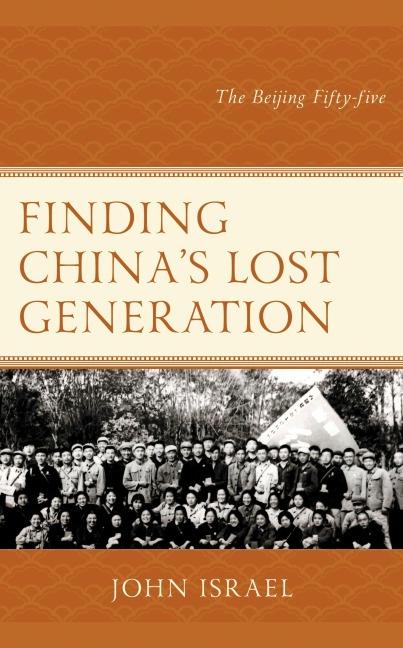
In December 1968 Mao Zedong proclaimed that China's educated urban youth should move to the countryside to be reeducated by the poor and lower middle peasants. Some seventeen million who responded to his call spent the better part of a decade laboring in remote and impoverished regions.
Returning to the cities in the late 1970s, undereducated, unemployed, and manifestly unprepared to contribute to China's post-Maoist future, the rusticated youth were dubbed the "Lost Generation". How then, could China transform itself into an economic and military behemoth without the support of an entire generation of educated men and women?
A close look at a group of young Beijingers suggests that at least some of the rusticated millions reentered urban life with assets that enabled them to play a creative role. "The Beijing Fifty-five" were atypical insofar as they had volunteered to carve rubber plantations out of a tropical wilderness on China's southwest border a year before the wave of involuntary recruits. However, their struggle to survive cultural, political, and physical challenges was typical.
Drawing from the spoken and written testimony of the Fifty-five, this book shows in dramatic detail how "The Lost Generation" survived the tribulations of the Mao years to help build today's China.
John Israel is well known for his writings on students and higher education in Twentieth Century China. Professor Israel conducted research in Taiwan and Hong Kong (1959-1962, 1973) and in the People's Republic of China since 1980. Following normalization of US-China diplomatic relations, he became the first post-1949 American resident professor in Kunming. Over the past four decades, he has lived and studied in China - particularly in Yunnan province - for extensive periods. John in emeritus professor of history at University of Virginia
Dieses eBook wird im PDF-Format geliefert und ist mit einem Adobe Kopierschutz (DRM) versehen. Sie können dieses eBook mit allen Geräten lesen, die das PDF-Format und den Adobe Kopierschutz (DRM) unterstützen.
Zum Beispiel mit den folgenden Geräten:
• tolino Reader
Laden Sie das eBook direkt über den Reader-Shop auf dem tolino herunter oder übertragen Sie das eBook auf Ihren tolino mit einer kostenlosen Software wie beispielsweise Adobe Digital Editions.
• Sony Reader & andere eBook Reader
Laden Sie das eBook direkt über den Reader-Shop herunter oder übertragen Sie das eBook mit der kostenlosen Software Sony READER FOR PC/Mac oder Adobe Digital Editions auf ein Standard-Lesegeräte mit epub- und Adobe DRM-Unterstützung.
• Tablets & Smartphones
Möchten Sie dieses eBook auf Ihrem Smartphone oder Tablet lesen, finden Sie hier unsere kostenlose Lese-App für iPhone/iPad und Android Smartphone/Tablets.
• PC & Mac
Lesen Sie das eBook direkt nach dem Herunterladen mit einer kostenlosen Lesesoftware, beispielsweise Adobe Digital Editions, Sony READER FOR PC/Mac oder direkt über Ihre eBook-Bibliothek in Ihrem Konto unter „Meine eBooks“ - „online lesen“.
Schalten Sie das eBook mit Ihrer persönlichen Adobe ID auf bis zu sechs Geräten gleichzeitig frei.
Bitte beachten Sie, dass die Kindle-Geräte das Format nicht unterstützen und dieses eBook somit nicht auf Kindle-Geräten lesbar ist.