Und dann auf "Zum Home-Bildschirm [+]".

Stöbern
genialokal zum Startbildschirm hinzufügen
Installieren Sie die genialokal App auf Ihrem Startbildschirm für einen schnellen Zugriff und eine komfortable Nutzung.
Installieren Sie die genialokal App auf Ihrem Startbildschirm für einen schnellen Zugriff und eine komfortable Nutzung.
Ihr gewünschter Artikel ist in 0 Buchhandlungen vorrätig - wählen Sie hier eine Buchhandlung in Ihrer Nähe aus:

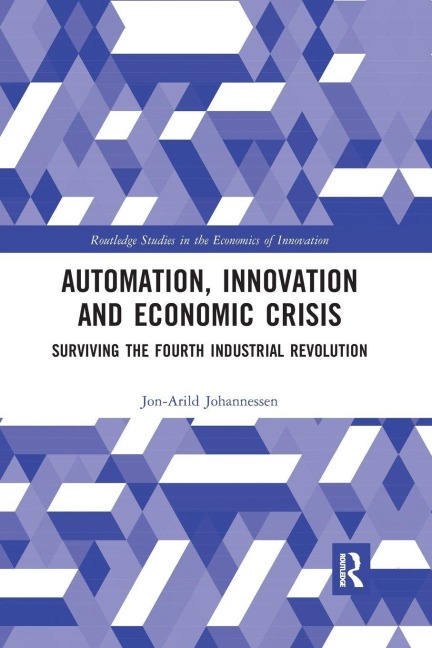

The fourth industrial revolution is developing globally, with no geographical centre and is taking place at enormous speed. Robots will bring about the informatization of work such that the way we work, where we work and our relationships with our colleagues and employers are all in a state of change. The author argues that a "perfect"
Jon-Arild Johannessen holds a Master of Science from Oslo University in History. He holds a Ph.D. from Stockholm University in Systemic Thinking. He is currently professor (full) in Leadership, at Kristiania University College, Oslo, and Nord University, Norway. He has been professor (full) in Innovation, at Syd-Danske University, Denmark. He has been professor (full) in Management at The Arctic University, Norway. At Bodø Graduate School of Business, Norway, he had a professorship (full) in Information Management. At the Norwegian School of Management he has been professor (full) in Knowledge Management. He has written more than 200 international papers on innovation, knowledge management and leadership. He has been author/co-author of 30 books.
Preface; Chapter 1: Trends towards feudal capitalism; Introduction; Analysis and discussion; Conclusion; Chapter 2: Globalization: The emergence of "Mamounia", the new global nation; Introduction; The exercise of power: totalitarian capitalism; Financial capital's globalization; Mamounia: the new global nation; Conclusion; Chapter 3: Robots and informats will cause economic and social crises; Introduction; Robots and informats: economic and social crises; Innovation: herd behaviour and economic bubbles; Destructive wealth creation: transformation of social systems; Conclusion; Chapter 4: Aspects of a policy architecture for the fourth industrial revolution; Introduction; The economic subsystem; The political subsystem; The cultural subsystem; The social subsystem; Conclusion; Chapter 5: Concepts; Index