Und dann auf "Zum Home-Bildschirm [+]".

Stöbern
genialokal zum Startbildschirm hinzufügen
Installieren Sie die genialokal App auf Ihrem Startbildschirm für einen schnellen Zugriff und eine komfortable Nutzung.
Installieren Sie die genialokal App auf Ihrem Startbildschirm für einen schnellen Zugriff und eine komfortable Nutzung.
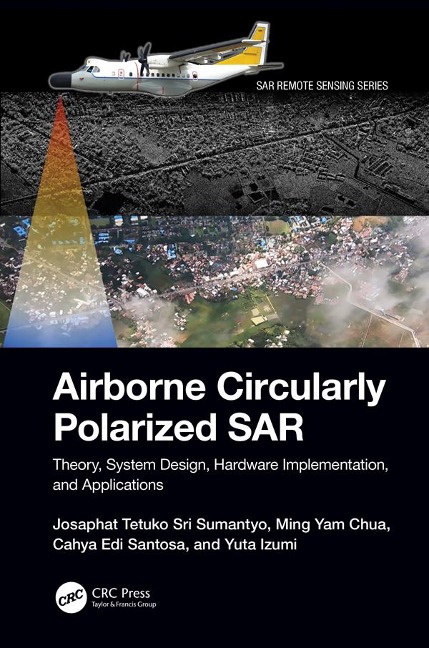
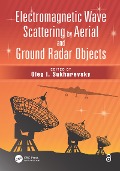
A comprehensive resource on airborne synthetic aperture radar (SAR) systems, Airborne Circularly Polarized SAR explains the theory, system design, hardware and software, and applications of airborne circularly polarized SAR in environmental monitoring and other uses. Readers learn how to build the hardware and software of circularly polarized SAR, the antenna system, and how to generate point target responses and images using the range doppler algorithm (RDA) from raw signal data. The book discusses applications and analyzing techniques using a circularly polarized SAR system and image processing. Images and MATLAB® codes are provided to help professionals and researchers with their applications and future studies. Features - Provides the theory of circularly polarized wave and polarimetry related to system design, scattering analysis, polarimetric SAR, and applications in microwave remote sensing - Explains the real radio frequency (RF) system and the original antenna, including circuit explanation and know-how of measurement technique to adjust to the required parameter in system design - Discusses the technique of ground test and flight mission to calibrate and validate the performance of airborne circularly polarized SAR - Highlights image signal processing with MATLAB codes and how to obtain a single look complex (SLC) image for further applications - Includes several applications of airborne circularly polarized SAR from international leading experts This book is beneficial to professionals, researchers, academics, and graduate students from disciplines such as Electronic Engineering; Radar Systems; Aerospace Engineering; Signal Processing; Image Processing; Environmental Remote Sensing.
Josaphat Tetuko Sri Sumantyo is the Head of the Department of Environmental Remote Sensing and Head Division of Earth and Environmental Sciences, Graduate School of Integrated Science and Technology, Chiba University, Japan. He has authored or coauthored about 700 journals and conference papers, and 15 books related to wave analysis, SAR, and small antennas. Dr. Sri Sumantyo is the General Chair of the 7th Asia-Pacific Conference on Synthetic Aperture Radar (APSAR 2021) and the Co-Leader of the Working Group on remote sensing instrumentation and technologies for unmanned aerial vehicles of IEEE Geoscience and Remote Sensing Society and Technical Committee on Instrumentation and Future Technologies. Chua Ming Yam is an Assistant Professor with the Center for Environmental Remote Sensing, Chiba University, Chiba, Japan. He received his Ph.D. degree in engineering, with a focus on radar system design and radar waveform synthesis techniques, from Multimedia University, Selangor, Malaysia where he was a Researcher from 2003 to 2009, a Lecturer from 2009 to 2012, and a Senior Lecturer from 2012 to 2016. He is a Member of IEEE. Cahya Edi Santosa is a Research Associate (Postdoctoral Research Fellowship) with the Center for Environmental and Remote Sensing, Chiba University, Japan. He received his Ph.D. degree in information processing and computer science from Chiba University, Chiba, Japan, Since 2003, he has been a Researcher with the National Institute of Aeronautics and Space of Indonesia (LAPAN), Bogor, Indonesia. Dr. Santosa is a member of the IEEE Transaction Antenna and Propagation Society and the Institute of Electronics, Information, and Communication Engineers of Japan. He was the recipient of the National Institute of Aeronautics and Space of Indonesia (LAPAN) Award for Best Young Researcher in 2008, and the Outstanding Ph.D. Excellence Academic Award from Chiba University in 2018. Yuta Izumi is currently a JSPS research fellow (Postdoctoral) at the Institute of Industrial Science, the University of Tokyo, Japan. He received his Ph.D. degree in radar remote sensing from the Tohoku University, Japan in 2021. From 2018 to 2020 he was a JSPS research fellow DC1 and from 2019 to 2020 he was a visiting researcher at the Swiss Federal Institute of Technology (ETH) Zurich, Switzerland. Dr. Izumi is a recipient of the Student Paper Award at the ISRS in 2017, President Award from Chiba University in 2018, Dean Award from the Graduate School of Advanced Integration in 2018, Science Young Researcher Award from IEEE Geoscience and Remote Sensing Society.
1. Introduction of Synthetic Aperture Radar 2. Basics of SAR Polarimetry 3. System Design 4. RF System 5. Baseband and Control Unit 6. Circularly Polarized Antenna 7. Ground Test, Airborne Installation, and Flight Mission 8. SAR Image Formation 9. Applications 10. Summary
Dieses eBook wird im PDF-Format geliefert und ist mit einem Adobe Kopierschutz (DRM) versehen. Sie können dieses eBook mit allen Geräten lesen, die das PDF-Format und den Adobe Kopierschutz (DRM) unterstützen.
Zum Beispiel mit den folgenden Geräten:
• tolino Reader
Laden Sie das eBook direkt über den Reader-Shop auf dem tolino herunter oder übertragen Sie das eBook auf Ihren tolino mit einer kostenlosen Software wie beispielsweise Adobe Digital Editions.
• Sony Reader & andere eBook Reader
Laden Sie das eBook direkt über den Reader-Shop herunter oder übertragen Sie das eBook mit der kostenlosen Software Sony READER FOR PC/Mac oder Adobe Digital Editions auf ein Standard-Lesegeräte mit epub- und Adobe DRM-Unterstützung.
• Tablets & Smartphones
Möchten Sie dieses eBook auf Ihrem Smartphone oder Tablet lesen, finden Sie hier unsere kostenlose Lese-App für iPhone/iPad und Android Smartphone/Tablets.
• PC & Mac
Lesen Sie das eBook direkt nach dem Herunterladen mit einer kostenlosen Lesesoftware, beispielsweise Adobe Digital Editions, Sony READER FOR PC/Mac oder direkt über Ihre eBook-Bibliothek in Ihrem Konto unter „Meine eBooks“ - „online lesen“.
Schalten Sie das eBook mit Ihrer persönlichen Adobe ID auf bis zu sechs Geräten gleichzeitig frei.
Bitte beachten Sie, dass die Kindle-Geräte das Format nicht unterstützen und dieses eBook somit nicht auf Kindle-Geräten lesbar ist.