Und dann auf "Zum Home-Bildschirm [+]".

Stöbern
genialokal zum Startbildschirm hinzufügen
Installieren Sie die genialokal App auf Ihrem Startbildschirm für einen schnellen Zugriff und eine komfortable Nutzung.
Installieren Sie die genialokal App auf Ihrem Startbildschirm für einen schnellen Zugriff und eine komfortable Nutzung.
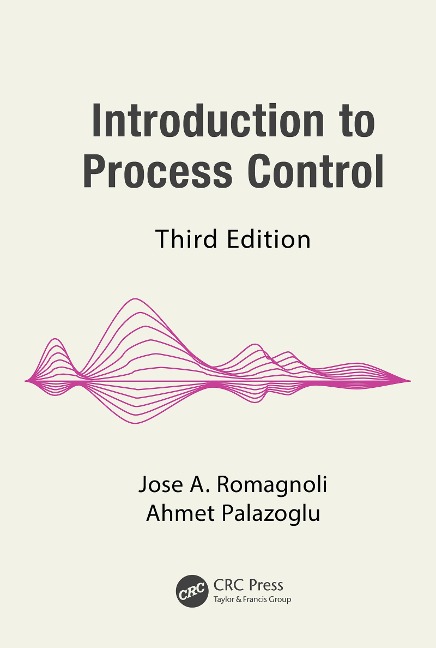
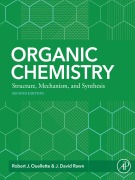
Introduction to Process Control, Third Edition continues to provide a bridge between traditional and modern views of process control by blending conventional topics with a broader perspective of integrated process operation, control, and information systems. Updated and expanded throughout, this third edition addresses issues highly relevant to today's teaching of process control: - Discusses smart manufacturing, new data preprocessing techniques, and machine learning and artificial intelligence concepts that are part of current smart manufacturing decisions - Includes extensive references to guide the reader to the resources needed to solve modeling, classification, and monitoring problems - Introduces the link between process optimization and process control (optimizing control), including the effect of disturbances on the optimal plant operation, the concepts of steady-state and dynamic back-off as ways to quantify the economic benefits of control, and how to determine an optimal transition policy during a planned production change - Incorporates an introduction to the modern architectures of industrial computer control systems with real case studies and applications to pilot-scale operations - Analyzes the expanded role of process control in modern manufacturing, including model-centric technologies and integrated control systems - Integrates data processing/reconciliation and intelligent monitoring in the overall control system architecture Drawing on the authors' combined 60 years of teaching experiences, this classroom-tested text is designed for chemical engineering students but is also suitable for industrial practitioners who need to understand key concepts of process control and how to implement them. The text offers a comprehensive pedagogical approach to reinforce learning and presents a concept first followed by an example, allowing students to grasp theoretical concepts in a practical manner and uses the same problem in each chapter, culminating in a complete control design strategy. A vast number of exercises throughout ensure readers are supported in their learning and comprehension. Downloadable MATLAB® toolboxes for process control education as well as the main simulation examples from the book offer a user-friendly software environment for interactively studying the examples in the text. These can be downloaded from the publisher's website. Solutions manual is available for qualifying professors from the publisher.
Jose A. Romagnoli holds the Cain Chair in Process Systems Engineering in the Department of Chemical Engineering and is the director of the Laboratory for Process Systems Engineering at Louisiana State University. He earned a PhD in chemical engineering from the University of Minnesota. Dr. Romagnoli has authored more than 300 international publications and was awarded the Centenary Medal of Australia for his contributions to chemical engineering. His research covers all aspects of process systems engineering, including data processing and reconciliation, modeling of complex systems, advanced model-based control, intelligent process monitoring and supervision, and plant-wide optimization. Ahmet Palazoglu is a professor of chemical engineering and materials science at the University of California, Davis. He earned a PhD in chemical engineering from Rensselaer Polytechnic Institute. Dr. Palazoglu has authored more than 150 publications and has taught short courses to academic and industrial audiences on process monitoring applications. His research interests include process control, nonlinear dynamics, process monitoring, and statistical modeling.
Part I: Introduction. 1. Why Process Control? 2. Definitions and Terminology. Part II: Modeling for Control. 3. Basic Concepts in Modeling. 4. Development of Models from Fundamental Laws. 5. Input-Output Models. 6. Models from Process Data. Part III: Process Analysis. 7. Stability. 8. Dynamic Performance. 9. Frequency Response. Part IV: Feedback Control. 10. Basic Elements of Feedback Control. 11. Stability Analysis of Closed-Loop Processes. 12. Feedback Control Design. Part V: Model-Based Control. 13. Model-Based Control. 14. Model Uncertainty and Robustness. 15. Model Predictive Control. Part VI: Multivariable Control. 16. Multivariable Systems. 17. Multivariable Systems. 18. Design of Multivariable Controllers. Part VII: Control in Modern Manufacturing. 19. Practical Control of Nonlinear Processes. 20. Process Optimization and Control. 21. Industrial Control Technology. 22. Role of Process Control in Modern Manufacturing. 23. Data Processing and Reconciliation. 24. Process Monitoring.
Dieses eBook wird im PDF-Format geliefert und ist mit einem Adobe Kopierschutz (DRM) versehen. Sie können dieses eBook mit allen Geräten lesen, die das PDF-Format und den Adobe Kopierschutz (DRM) unterstützen.
Zum Beispiel mit den folgenden Geräten:
• tolino Reader
Laden Sie das eBook direkt über den Reader-Shop auf dem tolino herunter oder übertragen Sie das eBook auf Ihren tolino mit einer kostenlosen Software wie beispielsweise Adobe Digital Editions.
• Sony Reader & andere eBook Reader
Laden Sie das eBook direkt über den Reader-Shop herunter oder übertragen Sie das eBook mit der kostenlosen Software Sony READER FOR PC/Mac oder Adobe Digital Editions auf ein Standard-Lesegeräte mit epub- und Adobe DRM-Unterstützung.
• Tablets & Smartphones
Möchten Sie dieses eBook auf Ihrem Smartphone oder Tablet lesen, finden Sie hier unsere kostenlose Lese-App für iPhone/iPad und Android Smartphone/Tablets.
• PC & Mac
Lesen Sie das eBook direkt nach dem Herunterladen mit einer kostenlosen Lesesoftware, beispielsweise Adobe Digital Editions, Sony READER FOR PC/Mac oder direkt über Ihre eBook-Bibliothek in Ihrem Konto unter „Meine eBooks“ - „online lesen“.
Schalten Sie das eBook mit Ihrer persönlichen Adobe ID auf bis zu sechs Geräten gleichzeitig frei.
Bitte beachten Sie, dass die Kindle-Geräte das Format nicht unterstützen und dieses eBook somit nicht auf Kindle-Geräten lesbar ist.