Und dann auf "Zum Home-Bildschirm [+]".

Stöbern
genialokal zum Startbildschirm hinzufügen
Installieren Sie die genialokal App auf Ihrem Startbildschirm für einen schnellen Zugriff und eine komfortable Nutzung.
Installieren Sie die genialokal App auf Ihrem Startbildschirm für einen schnellen Zugriff und eine komfortable Nutzung.
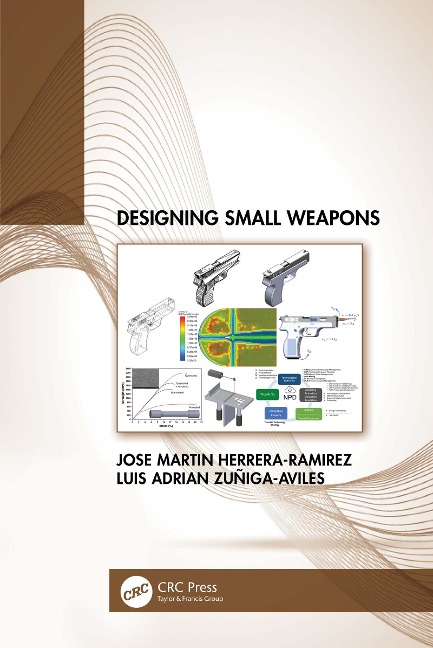
This book focuses on developing small weapons, following the lifecycle of a firearm from design to manufacture. It demonstrates how modern technologies can be used at every stage of the process, such as design methodologies, CAD/CAE/CAM software, rapid prototyping, test benches, materials, heat and surface treatments, and manufacturing processes. Several case studies are presented to provide detailed considerations on developing specific topics. Small weapons are designed to be carried by one person; examples are pistols, revolvers, rifles, carbines, shotguns, and submachine guns. Beginning with a review of the history of weapons from ancient to modern times, this book builds on this by mapping out recent innovations and state-of-the-art technologies that have advanced small weapon design. Presenting a comprehensive guide to computer design tools used by weapon engineers, this book demonstrates the capabilities of modern software at all stages of the process, looking at the computer-aided design, engineering, and manufacturing. It also details the materials used to create small weapons, notably steels, engineering polymers, composites, and emerging materials. Manufacturing processes, both conventional and unconventional, are discussed, for example, casting, powder metallurgy, additive manufacturing, and heat and surface treatments. This book is essential reading to those in the field of weapons, such as designers, workers in research and development, engineering and design students, students at military colleges, sportsmen, hunters, and those interested in firearms. Dr. Jose Martin Herrera-Ramirez is a military engineer with experience in the field of weapon and ammunition development. After receiving his PhD in Materials Science and Engineering from the Paris School of Mines in France, he was the head of the Applied Research Center and Technology Development for the Mexican Military Industry (CIADTIM). He now researches the development of metallic alloys and composites at the Research Center for Advanced Materials (CIMAV) in Chihuahua, Mexico. Dr. Luis Adrian Zuñiga-Aviles is a military engineer with wide experience in the field of weapon and ammunition development. He was head of the prototypes and simulation departments at the Applied Research Center and Technology Development for the Mexican Military Industry (CIADTIM) and head of engineering of the Production directorate. He received his PhD in Science and Technology on Mechatronics from the Center for Engineering and Industrial Development (CIDESI) in Queretaro, Mexico. He now researches the new product design and development for military application, machinery, robotics, and medical devices in the Faculty of Medicine at the Autonomous University of Mexico State (UAEMex) and the Faculty of Engineering at UAEMex as part of the Researchers for Mexico program CONACYT.
Dr. Martin Herrera is a military engineer with experience in the field of weapon and ammunition development. After receiving his PhD in Materials Science and Engineering from the National School of Mines of Paris in France, he was the head of the Applied Research Center and Technology Development for the Mexican Military Industry (CIADTIM). He now researches the development of metallic alloys and composites at the Research Center for Advanced Materials (CIMAV) in Chihuahua, Mexico. Dr. Adrian Zuñiga is a military engineer with wide experience in the field of weapon and ammunition development. He was a Researcher in the Applied Research Center and Technology Development for the Mexican Military Industry (CIADTIM) and is now a Major Industrial Engineer after serving 21 years in the Mexican army. He is also a member of the Dynamics and Control Systems research group in the Faculty of Engineering at the Autonomous University of Mexico State.
Chapter 1 History of the Design of Small Weapons Chapter 2 Beginning the Product Design Chapter 3 Custom and Functional Requirements Chapter 4 CAD Modeling and CAE Simulation Chapter 5 CAM Assessment and Rapid Prototyping Chapter 6 Experimental Physical Models, Test Benches, and Prototypes Chapter 7 Materials Used in the Production of Small Weapons Chapter 8 Heat Treatments and Surface Hardening of Small Weapon Components Chapter 9 Manufacturing Processes for Small Weapon Components
Dieses eBook wird im PDF-Format geliefert und ist mit einem Adobe Kopierschutz (DRM) versehen. Sie können dieses eBook mit allen Geräten lesen, die das PDF-Format und den Adobe Kopierschutz (DRM) unterstützen.
Zum Beispiel mit den folgenden Geräten:
• tolino Reader
Laden Sie das eBook direkt über den Reader-Shop auf dem tolino herunter oder übertragen Sie das eBook auf Ihren tolino mit einer kostenlosen Software wie beispielsweise Adobe Digital Editions.
• Sony Reader & andere eBook Reader
Laden Sie das eBook direkt über den Reader-Shop herunter oder übertragen Sie das eBook mit der kostenlosen Software Sony READER FOR PC/Mac oder Adobe Digital Editions auf ein Standard-Lesegeräte mit epub- und Adobe DRM-Unterstützung.
• Tablets & Smartphones
Möchten Sie dieses eBook auf Ihrem Smartphone oder Tablet lesen, finden Sie hier unsere kostenlose Lese-App für iPhone/iPad und Android Smartphone/Tablets.
• PC & Mac
Lesen Sie das eBook direkt nach dem Herunterladen mit einer kostenlosen Lesesoftware, beispielsweise Adobe Digital Editions, Sony READER FOR PC/Mac oder direkt über Ihre eBook-Bibliothek in Ihrem Konto unter „Meine eBooks“ - „online lesen“.
Schalten Sie das eBook mit Ihrer persönlichen Adobe ID auf bis zu sechs Geräten gleichzeitig frei.
Bitte beachten Sie, dass die Kindle-Geräte das Format nicht unterstützen und dieses eBook somit nicht auf Kindle-Geräten lesbar ist.