Und dann auf "Zum Home-Bildschirm [+]".

Stöbern
genialokal zum Startbildschirm hinzufügen
Installieren Sie die genialokal App auf Ihrem Startbildschirm für einen schnellen Zugriff und eine komfortable Nutzung.
Installieren Sie die genialokal App auf Ihrem Startbildschirm für einen schnellen Zugriff und eine komfortable Nutzung.
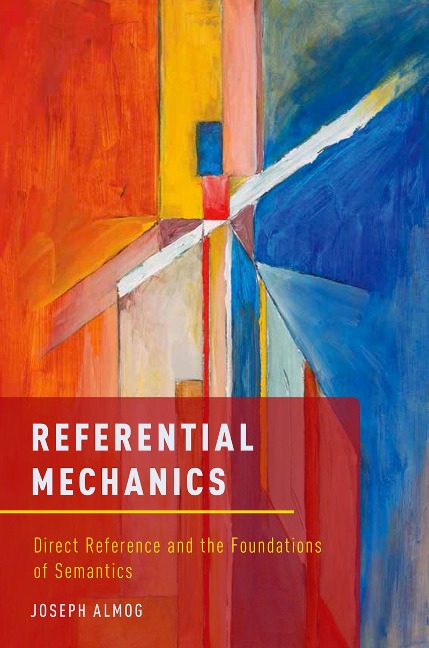
This volume is focused on understanding a key idea in modern semantics-direct reference-and its integration into a general semantics for natural language. In the first three chapters, foundational analyses from three philosophers -Saul Kripke, David Kaplan and Keith Donnellan-are dissected in detail. The differences between their respective ideas lead to varying consequences in the philosophy of mind, the metaphysics of necessity, and the epistemological idea of a priori knowledge.
In the last chapter, two central puzzles said to threaten direct reference are raised. One is Frege's puzzle about judgments of cognitive significance and informativeness. This puzzle is analyzed and is shown to be the opposite of a threat; informative identities are, in effect, a consequence of the new cognitive insights behind direct reference. The second puzzle, the Partee-Kaplan, is a threat: how to unify the referential semantics of nouns with the seemingly non referential semantics of denoting phrases?
The volume criticizes the concept of a unifying methodology-assimilating the referential nouns to the complex denoting phrases by way of (set theoretic) "ontological sublimation"--as proposed by Montague--and launches an orthogonal unification methodology generalizing direct reference to the common nouns anchoring the denoting phrases.
Joseph Almog is the author of Everything in Its Right Place (forthcoming), Cogito: Descartes and Thinking the World (2008), What Am I? Descartes and the Mind-Body Problem (2001) and co-editor of Essays on Reference, Language, and Mind (2012), Having in Mind: The Philosophy of Keith Donnellan (2012), and The Philosophy of David Kaplan (2009) -- all from Oxford University Press.
Preface Acknowledgements Introduction Part I-Direct Reference by Designation Part II-Direct Reference by Singular Proposition Part III-Direct Reference by Referential Use Part IV-Foundational Questions-Two Central Puzzles Index
Dieses eBook wird im PDF-Format geliefert und ist mit einem Adobe Kopierschutz (DRM) versehen. Sie können dieses eBook mit allen Geräten lesen, die das PDF-Format und den Adobe Kopierschutz (DRM) unterstützen.
Zum Beispiel mit den folgenden Geräten:
• tolino Reader
Laden Sie das eBook direkt über den Reader-Shop auf dem tolino herunter oder übertragen Sie das eBook auf Ihren tolino mit einer kostenlosen Software wie beispielsweise Adobe Digital Editions.
• Sony Reader & andere eBook Reader
Laden Sie das eBook direkt über den Reader-Shop herunter oder übertragen Sie das eBook mit der kostenlosen Software Sony READER FOR PC/Mac oder Adobe Digital Editions auf ein Standard-Lesegeräte mit epub- und Adobe DRM-Unterstützung.
• Tablets & Smartphones
Möchten Sie dieses eBook auf Ihrem Smartphone oder Tablet lesen, finden Sie hier unsere kostenlose Lese-App für iPhone/iPad und Android Smartphone/Tablets.
• PC & Mac
Lesen Sie das eBook direkt nach dem Herunterladen mit einer kostenlosen Lesesoftware, beispielsweise Adobe Digital Editions, Sony READER FOR PC/Mac oder direkt über Ihre eBook-Bibliothek in Ihrem Konto unter „Meine eBooks“ - „online lesen“.
Schalten Sie das eBook mit Ihrer persönlichen Adobe ID auf bis zu sechs Geräten gleichzeitig frei.
Bitte beachten Sie, dass die Kindle-Geräte das Format nicht unterstützen und dieses eBook somit nicht auf Kindle-Geräten lesbar ist.