Und dann auf "Zum Home-Bildschirm [+]".

Stöbern
genialokal zum Startbildschirm hinzufügen
Installieren Sie die genialokal App auf Ihrem Startbildschirm für einen schnellen Zugriff und eine komfortable Nutzung.
Installieren Sie die genialokal App auf Ihrem Startbildschirm für einen schnellen Zugriff und eine komfortable Nutzung.
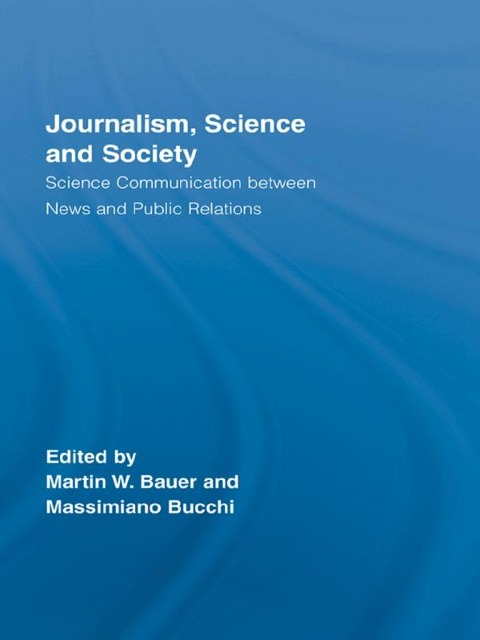
Analyzing the role of journalists in science communication, this book presents a perspective on how this is going to evolve in the twenty-first century. The book takes three distinct perspectives on this interesting subject. Firstly, science journalists reflect on their 'operating rules' (science news values and news making routines). Secondly, a brief history of science journalism puts things into context, characterising the changing output of science writing in newspapers over time. Finally, the book invites several international journalists or communication scholars to comment on these observations thereby opening the global perspective. This unique project will interest a range of readers including science communication students, media studies scholars, professionals working in science communication and journalists.
Martin W. Bauer is Senior Lecturer in Social Psychology and Research Methodology at the London School of Economics, UK. Massimiano Bucchi is lecturer in Sociology of Science at the University of Trento, Italy.
1. Introduction Part 1: The Changing Scenarios of Science Communication 2. Insects or Neutrons?: Science News Values in Interwar Britain 3. The Rise and Fall of Science Communication in Late 19th Century Italy 4. From Journalism to Corporate Communication in Post-War Britain 5. Big Science, Little News: Science Coverage in the Italian Daily Press, 1947-1997 6. Growing, but Foreign Source Dependent: Science Coverage in Latin America 7. The Latest Boom in Popular Science Books Part 2: Science Writing: Practitioners' Perspectives 8. Telling Stories, not Educating People 9. The Sex Appeal of Science News 10. Science Stories that cannot be Told 11. Chiara Palmerini: Science Reporting as Negotiation 12. Why Journalists Report Science as they do 13. How the Internet Changed Science Journalism 14. The End of Science Journalism Part 3: Public Relations for Science - Practitioners' Perspectives 15. The Royal Society and the Debate on Climate Change 16. PR for Physics of Matter: Tops... and Flops 17. Communication by Scientists or Stars? 18. A PR Strategy Without a PR Office? 19. Public Engagement of Science in the Private Sector: A New Form of PR? 20. The Strength of PR and the Weakness of Science Journalism 21. The Use of Scientific Expertise for Political PR: The Donana and Prestige Cases in Spain Part 4: International Commentary 22. Sharon Dunwoody: USA - Focus on the Audience 23. Australia: Co-Ordination and Professionalisation 24. South Africa: Building Capacity 25. South Korea: The Scandal of Professor Hwang Woo-Suk 26. Japan: A Boom in Science News
Dieses eBook wird im PDF-Format geliefert und ist mit einem Adobe Kopierschutz (DRM) versehen. Sie können dieses eBook mit allen Geräten lesen, die das PDF-Format und den Adobe Kopierschutz (DRM) unterstützen.
Zum Beispiel mit den folgenden Geräten:
• tolino Reader
Laden Sie das eBook direkt über den Reader-Shop auf dem tolino herunter oder übertragen Sie das eBook auf Ihren tolino mit einer kostenlosen Software wie beispielsweise Adobe Digital Editions.
• Sony Reader & andere eBook Reader
Laden Sie das eBook direkt über den Reader-Shop herunter oder übertragen Sie das eBook mit der kostenlosen Software Sony READER FOR PC/Mac oder Adobe Digital Editions auf ein Standard-Lesegeräte mit epub- und Adobe DRM-Unterstützung.
• Tablets & Smartphones
Möchten Sie dieses eBook auf Ihrem Smartphone oder Tablet lesen, finden Sie hier unsere kostenlose Lese-App für iPhone/iPad und Android Smartphone/Tablets.
• PC & Mac
Lesen Sie das eBook direkt nach dem Herunterladen mit einer kostenlosen Lesesoftware, beispielsweise Adobe Digital Editions, Sony READER FOR PC/Mac oder direkt über Ihre eBook-Bibliothek in Ihrem Konto unter „Meine eBooks“ - „online lesen“.
Schalten Sie das eBook mit Ihrer persönlichen Adobe ID auf bis zu sechs Geräten gleichzeitig frei.
Bitte beachten Sie, dass die Kindle-Geräte das Format nicht unterstützen und dieses eBook somit nicht auf Kindle-Geräten lesbar ist.