Und dann auf "Zum Home-Bildschirm [+]".

Stöbern
genialokal zum Startbildschirm hinzufügen
Installieren Sie die genialokal App auf Ihrem Startbildschirm für einen schnellen Zugriff und eine komfortable Nutzung.
Installieren Sie die genialokal App auf Ihrem Startbildschirm für einen schnellen Zugriff und eine komfortable Nutzung.


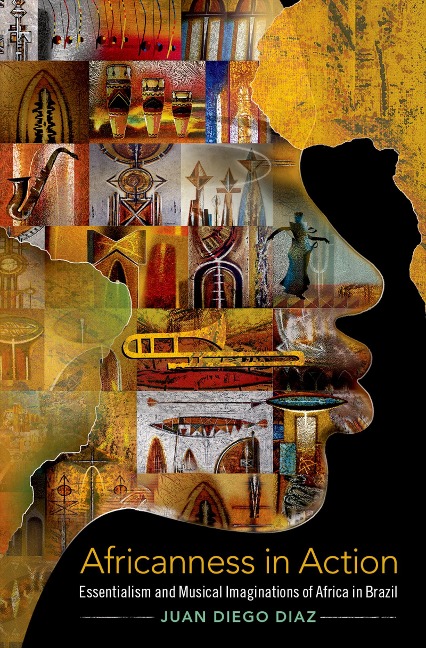
When many people think of African music, the first ideas that come to mind are often of rhythm, drums, and dancing. These perceptions are rooted in emblematic African and African-derived genres such as West African drumming, funk, salsa, or samba and, more importantly, essentialized notions about Africa which have been fueled over centuries of contact between the "West," Africa, and the African diaspora. These notions, of course, tend to reduce and often portray Africa and the diaspora as primitive, exotic, and monolithic. In Africanness in Action, author Juan Diego Díaz explores this dynamic through the perspectives of Black musicians in Bahia, Brazil, a site imagined by many as a diasporic epicenter of African survivals and purity. Black musicians from Bahia, Díaz argues, assert Afro-Brazilian identities, promote social change, and critique racial inequality by creatively engaging essentialized tropes about African music and culture. Instead of reproducing these notions, musicians demonstrate agency by strategically emphasizing or downplaying them.
Juan Diego Díaz is Assistant Professor of Ethnomusicology at UC Davis. Prior to UC Davis, Díaz held posts as a lecturer at the University of Ghana and postdoctoral fellow at the University of Essex, the latter funded by the Social Sciences and Humanities Research Council of Canada. The funded research investigates the music of the descendants of freed enslaved Africans who resettled from Brazil to Ghana, Togo, and Benin during the nineteenth century. This research has produced a book called Tabom Voices: A History of the Ghanaian Afro-Brazilian Community in Their Own Words (2016) and the documentary film Tabom in Bahia (2017), documenting the visit of a Ghanaian master drummer to Bahia, Brazil. His articles appear in journals such as Ethnomusicology, Ethnomusicology Forum, Analytical Approaches to World Music, and Latin American Music Review.
Dieses eBook wird im PDF-Format geliefert und ist mit einem Adobe Kopierschutz (DRM) versehen. Sie können dieses eBook mit allen Geräten lesen, die das PDF-Format und den Adobe Kopierschutz (DRM) unterstützen.
Zum Beispiel mit den folgenden Geräten:
• tolino Reader
Laden Sie das eBook direkt über den Reader-Shop auf dem tolino herunter oder übertragen Sie das eBook auf Ihren tolino mit einer kostenlosen Software wie beispielsweise Adobe Digital Editions.
• Sony Reader & andere eBook Reader
Laden Sie das eBook direkt über den Reader-Shop herunter oder übertragen Sie das eBook mit der kostenlosen Software Sony READER FOR PC/Mac oder Adobe Digital Editions auf ein Standard-Lesegeräte mit epub- und Adobe DRM-Unterstützung.
• Tablets & Smartphones
Möchten Sie dieses eBook auf Ihrem Smartphone oder Tablet lesen, finden Sie hier unsere kostenlose Lese-App für iPhone/iPad und Android Smartphone/Tablets.
• PC & Mac
Lesen Sie das eBook direkt nach dem Herunterladen mit einer kostenlosen Lesesoftware, beispielsweise Adobe Digital Editions, Sony READER FOR PC/Mac oder direkt über Ihre eBook-Bibliothek in Ihrem Konto unter „Meine eBooks“ - „online lesen“.
Schalten Sie das eBook mit Ihrer persönlichen Adobe ID auf bis zu sechs Geräten gleichzeitig frei.
Bitte beachten Sie, dass die Kindle-Geräte das Format nicht unterstützen und dieses eBook somit nicht auf Kindle-Geräten lesbar ist.