Und dann auf "Zum Home-Bildschirm [+]".

Stöbern
genialokal zum Startbildschirm hinzufügen
Installieren Sie die genialokal App auf Ihrem Startbildschirm für einen schnellen Zugriff und eine komfortable Nutzung.
Installieren Sie die genialokal App auf Ihrem Startbildschirm für einen schnellen Zugriff und eine komfortable Nutzung.

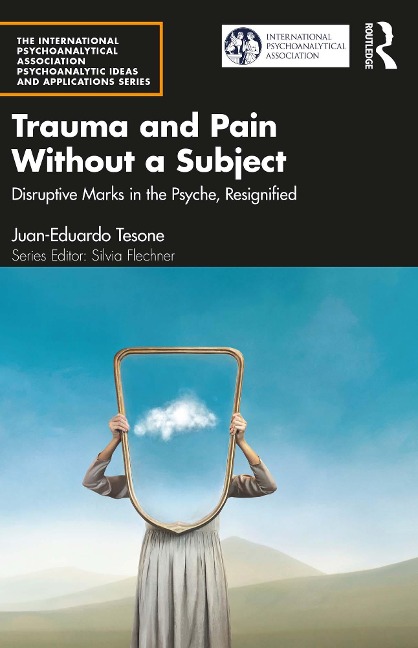
Trauma and Pain Without a Subject explores the necessity of the subject of trauma emerging, particularly when a victim has experienced but not worked through disruptive situations, in order for unconscious pain to finally be experienced. The book is presented in three parts, with the first, "Transgression and Crime", uncovering silence around the topic of incest and sexual violence within the clinic. The second part, "Between Completeness and Nothingness", develops the topic of sexual violence and considers the construction of femininities and masculinities within the paradigm of a heteronormative patriarchal society, with reference to Shakespeare's Much Ado About Nothing. The third part, "Yes, We See, But What? What We Hear", explores the intimate relation between the visual and the auditory, especially in relation to hysteria. Trauma and Pain Without a Subject will be of great interest to psychoanalysts in practice and in training, and to all psychoanalytic practitioners working with trauma.
Juan-Eduardo Tesone is Emeritus Professor of Psychoanalysis at the University of Salvador (USAL), Argentina, and Associate Professor of Psychology at Paris Nanterre University, France. He is a Member and Training Analyst of the Argentine Psychoanalytic Association and Member of the International Psychoanalytical Association. He is the author of more than 100 articles in specialist journals, in Spanish, French, English, Italian, German, Portuguese, and Croatian, and author and co-author of several books.
About the author Series editor's foreword Preface Introduction PART I - Transgression and crime Chapter 1: Incests and transgression of the narcissistic taboo Chapter 2: Incest is not the Oedipus Chapter 3: From the theory of seduction to traumatic seduction Chapter 4: In-cestus: from disavowal to revelation. Analysis of the film "The Celebration" (FESTEN) Chapter 5: Dominique: incest in the folds of the name or ig-nominia Chapter 6: A pain without a subject PART II - Between completeness and nothingness Chapter 7: Could what they say be true? Chapter 8: The importance of the No in the prevention of sexual violence against children and adolescents Chapter 9: Femicide and orphanhood Chapter 10: The divine jouissance, the feminine position, and the mystics Chapter 11: Masculinities checkmated? Chapter 12: The tattoo and the shield of Perseus Chapter 13: William, did you say, "Much Ado about Nothing"? PART III - Yes, we see, but what? What we hear Chapter 14: Hysteria's contribution to subjectivity Chapter 15: Sexes and genders Chapter 16: Cumulative trauma and "troumatique" Chapter 17: Viability of psychic change. Between the disruptive of life and the inertia of the deadly, or how to generate fertile psychic changes Chapter 18: What hurts you? Psychic vulnerability and somatic disorder Chapter 19: Transformations of the formless: painting and psychoanalysis Chapter 20: Commemorating, remembering, forgetting