Und dann auf "Zum Home-Bildschirm [+]".

Stöbern
genialokal zum Startbildschirm hinzufügen
Installieren Sie die genialokal App auf Ihrem Startbildschirm für einen schnellen Zugriff und eine komfortable Nutzung.
Installieren Sie die genialokal App auf Ihrem Startbildschirm für einen schnellen Zugriff und eine komfortable Nutzung.
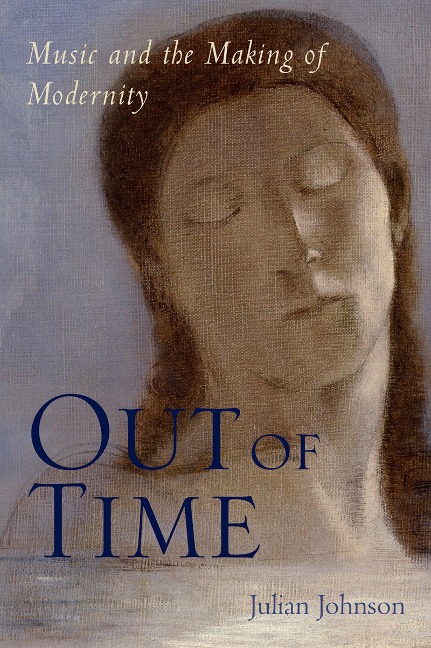
What does music have to say about modernity? How can this apparently unworldly art tell us anything about modern life? In Out of Time, author Julian Johnson begins from the idea that it can, arguing that music renders an account of modernity from the inside, a history not of events but of sensibility, an archaeology of experience. If music is better understood from this broad perspective, our idea of modernity itself is also enriched by the specific insights of music. The result is a rehearing of modernity and a rethinking of music - an account that challenges ideas of linear progress and reconsiders the common concerns of music, old and new. If all music since 1600 is modern music, the similarities between Monteverdi and Schoenberg, Bach and Stravinsky, or Beethoven and Boulez, become far more significant than their obvious differences. Johnson elaborates this idea in relation to three related areas of experience - temporality, history and memory; space, place and technology; language, the body, and sound. Criss-crossing four centuries of Western culture, he moves between close readings of diverse musical examples (from the madrigal to electronic music) and drawing on the history of science and technology, literature, art, philosophy, and geography. Against the grain of chronology and the usual divisions of music history, Johnson proposes profound connections between musical works from quite different times and places. The multiple lines of the resulting map, similar to those of the London Underground, produce a bewildering network of plural connections, joining Stockhausen to Galileo, music printing to sound recording, the industrial revolution to motivic development, steam trains to waltzes. A significant and groundbreaking work, Out of Time is essential reading for anyone interested in the history of music and modernity.
Julian Johnson is Regius Professor of Music at Royal Holloway, University of London, having previously been a Reader in Music at the University of Oxford. He has published widely on music from the 18th century to contemporary music, with a particular focus on Modernism, musical aesthetics, and questions of music's cultural meaning and value. He was for many years an active composer, a background that continues to shape his perspectives as a musicologist.
Introduction Mapping musical modernity
1. Being Late Looking back Brokenness Remembering
2. Being Early Pushing forwards The temporality of desire Sounding utopia
3. The Precarious Present Simultaneity Boredom Historicism as modernism
4. Being Everywhere The space of music Labyrinths Technologies of the musical body
5. Being Elsewhere Music as transport The metaphysics of restlessness Re-enchantment
6. Placing the Self Being nowhere Hypersubjectivity Staging the self
7. Like a Language Disclosure Discourse Music as self-critique
8. Le corps sonore The return of the repressed Bodies of sound The grammar of dreams Bibliography
Dieses eBook wird im PDF-Format geliefert und ist mit einem Adobe Kopierschutz (DRM) versehen. Sie können dieses eBook mit allen Geräten lesen, die das PDF-Format und den Adobe Kopierschutz (DRM) unterstützen.
Zum Beispiel mit den folgenden Geräten:
• tolino Reader
Laden Sie das eBook direkt über den Reader-Shop auf dem tolino herunter oder übertragen Sie das eBook auf Ihren tolino mit einer kostenlosen Software wie beispielsweise Adobe Digital Editions.
• Sony Reader & andere eBook Reader
Laden Sie das eBook direkt über den Reader-Shop herunter oder übertragen Sie das eBook mit der kostenlosen Software Sony READER FOR PC/Mac oder Adobe Digital Editions auf ein Standard-Lesegeräte mit epub- und Adobe DRM-Unterstützung.
• Tablets & Smartphones
Möchten Sie dieses eBook auf Ihrem Smartphone oder Tablet lesen, finden Sie hier unsere kostenlose Lese-App für iPhone/iPad und Android Smartphone/Tablets.
• PC & Mac
Lesen Sie das eBook direkt nach dem Herunterladen mit einer kostenlosen Lesesoftware, beispielsweise Adobe Digital Editions, Sony READER FOR PC/Mac oder direkt über Ihre eBook-Bibliothek in Ihrem Konto unter „Meine eBooks“ - „online lesen“.
Schalten Sie das eBook mit Ihrer persönlichen Adobe ID auf bis zu sechs Geräten gleichzeitig frei.
Bitte beachten Sie, dass die Kindle-Geräte das Format nicht unterstützen und dieses eBook somit nicht auf Kindle-Geräten lesbar ist.