Und dann auf "Zum Home-Bildschirm [+]".

Stöbern
genialokal zum Startbildschirm hinzufügen
Installieren Sie die genialokal App auf Ihrem Startbildschirm für einen schnellen Zugriff und eine komfortable Nutzung.
Installieren Sie die genialokal App auf Ihrem Startbildschirm für einen schnellen Zugriff und eine komfortable Nutzung.


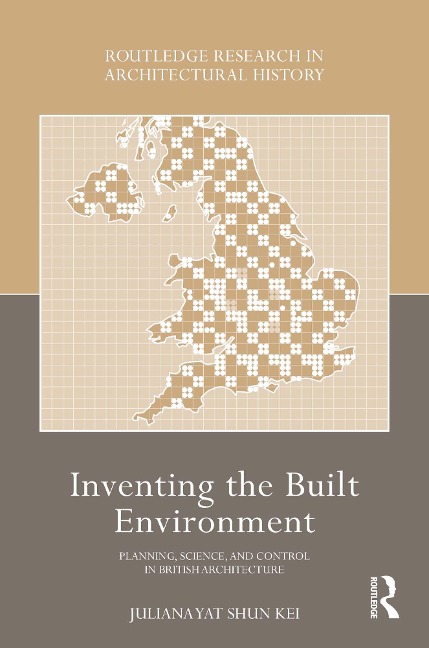
Why and how was the term 'built environment' first introduced? Inventing the Built Environment retrieves the origin of this ubiquitous term. The articulation of the 'built environment,' Kei demonstrates, coincided with the redefinition of education, research, and professional practices in architecture and town planning in 1960s Britain. Concentrating on the half-decade during which the term permeated the architectural and planning professions, this book recalls a time when the 'built environment' was conceived as a part of the British government's effort in national economic planning. Inventing the Built Environment unpacks the proposal for a Research Council for the Built Environment to mobilise architecture and town planning for political economy. How a relatively small group of architects, planners, politicians, and researchers transposed scientific thoughts from biology, economics, and computation into the 'built environment' will be considered, too. Kei highlights the assumptions about and classification of the population that were made when inventing the 'built environment.' The architectural and biosocial implications of the making and remaking of this architectural-environmental notion, in Britain and beyond, will be revealed through the works of pre-eminent architect-planners including Richard Llewelyn-Davies and William Holford. At a time when environmental concerns again take the front seat of architectural and planning debates, this book offers, for scholars and students, an alternative lens to reflect on the assumptions and bias that can be embedded in our architectural lexicons.
Juliana Yat Shun Kei is a Lecturer in Architecture at the University of Liverpool. Her works investigate the use and abuse of environmental notions in architecture, with a focus on 20th-century British architecture. This interest is derived from her previous research into the post-modern and preservation turn of British architecture through the career of British South-African architect Theo Crosby. Her upcoming project, building on this current research on the invention of the 'built environment,' examines the changes in British architecture and urbanism engendered by the establishment of the Department of the Environment in 1970. Her other research focuses on Hong Kong's architectural and urban culture. With Daniel M. Cooper, she completed a survey of the disappeared Vietnamese refugee camps in Hong Kong in 2022. She is a co-founder of the Hong Kong Design History Network.
List of Figures Acknowledgements Introducing the Built Environment 1 Planning the Built Environment 2 Writing the Built Environment 3 The Environmental Education 4 Controlling the Built Environment 5 Modelling the Built Environment 6 Realising the Built Environment The Environments After Index
Dieses eBook wird im PDF-Format geliefert und ist mit einem Adobe Kopierschutz (DRM) versehen. Sie können dieses eBook mit allen Geräten lesen, die das PDF-Format und den Adobe Kopierschutz (DRM) unterstützen.
Zum Beispiel mit den folgenden Geräten:
• tolino Reader
Laden Sie das eBook direkt über den Reader-Shop auf dem tolino herunter oder übertragen Sie das eBook auf Ihren tolino mit einer kostenlosen Software wie beispielsweise Adobe Digital Editions.
• Sony Reader & andere eBook Reader
Laden Sie das eBook direkt über den Reader-Shop herunter oder übertragen Sie das eBook mit der kostenlosen Software Sony READER FOR PC/Mac oder Adobe Digital Editions auf ein Standard-Lesegeräte mit epub- und Adobe DRM-Unterstützung.
• Tablets & Smartphones
Möchten Sie dieses eBook auf Ihrem Smartphone oder Tablet lesen, finden Sie hier unsere kostenlose Lese-App für iPhone/iPad und Android Smartphone/Tablets.
• PC & Mac
Lesen Sie das eBook direkt nach dem Herunterladen mit einer kostenlosen Lesesoftware, beispielsweise Adobe Digital Editions, Sony READER FOR PC/Mac oder direkt über Ihre eBook-Bibliothek in Ihrem Konto unter „Meine eBooks“ - „online lesen“.
Schalten Sie das eBook mit Ihrer persönlichen Adobe ID auf bis zu sechs Geräten gleichzeitig frei.
Bitte beachten Sie, dass die Kindle-Geräte das Format nicht unterstützen und dieses eBook somit nicht auf Kindle-Geräten lesbar ist.