Und dann auf "Zum Home-Bildschirm [+]".

Stöbern
genialokal zum Startbildschirm hinzufügen
Installieren Sie die genialokal App auf Ihrem Startbildschirm für einen schnellen Zugriff und eine komfortable Nutzung.
Installieren Sie die genialokal App auf Ihrem Startbildschirm für einen schnellen Zugriff und eine komfortable Nutzung.


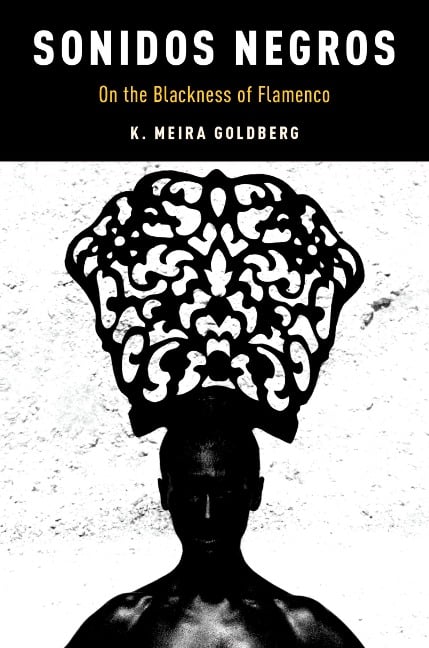
How is the politics of Blackness figured in the flamenco dancing body? What does flamenco dance tell us about the construction of race in the Atlantic world? Sonidos Negros traces how, in the span between 1492 and 1933, the vanquished Moor became Black, and how this figure, enacted in terms of a minstrelized Gitano, paradoxically came to represent Spain itself. The imagined Gypsy about which flamenco imagery turns dances on a knife's edge delineating Christian and non-Christian, White and Black worlds. This figure's subversive teetering undermines Spain's symbolic linkage of religion with race, a prime weapon of conquest. Flamenco's Sonidos Negros live in this precarious balance, amid the purposeful confusion and ruckus cloaking embodied resistance, the lament for what has been lost, and the values and aspirations of those rendered imperceptible by enslavement and colonization.
K. Meira Goldberg is a flamenco performer, teacher, choreographer and historian. She teaches at Fashion Institute of Technology and is Scholar in Residence at the Foundation for Iberian Music at the CUNY Grad Center. She has taught and guest lectured at Sarah Lawrence College, New York University, Flamenco Festival International in Albuquerque, Ballet Hispanico, Bryn Mawr, Princeton, Duke, Juilliard, The New School, and Smith College.
List of Illustrations Acknowledgments Foreword: Brenda Dixon Gottschild Introduction: The Moor Inside Part I. Changing Places: Figuring Race and Empire in the Eighteenth-Century Fandango Chapter 1. Good Shepherd, Bumpkin Shepherd: Distinction in Villano Gambetas (Gambols) and Zapatetas (Stamps) Chapter 2. Concentric Circles of Theatricality: Pantomimic Dances from the Sacred to the Secular Part II. A Modernist Becoming: The Power of Blackness Chapter 3. Parody and Sorrow Chapter 4. Nonsense of the Body Chapter 5. Tilting across the Racial Divide: Jacinto Padilla, "El Negro Meri" and the Flamenco Clown Chapter 6. Jaleo de Jerez and Tumulte Noir: Juana Vargas "La Macarrona" at the Exposition Universelle, Paris, 1889 Conclusions: "Lily-White Maidens" and "Black Gitanos"
Bibliography: Index:
Dieses eBook wird im PDF-Format geliefert und ist mit einem Adobe Kopierschutz (DRM) versehen. Sie können dieses eBook mit allen Geräten lesen, die das PDF-Format und den Adobe Kopierschutz (DRM) unterstützen.
Zum Beispiel mit den folgenden Geräten:
• tolino Reader
Laden Sie das eBook direkt über den Reader-Shop auf dem tolino herunter oder übertragen Sie das eBook auf Ihren tolino mit einer kostenlosen Software wie beispielsweise Adobe Digital Editions.
• Sony Reader & andere eBook Reader
Laden Sie das eBook direkt über den Reader-Shop herunter oder übertragen Sie das eBook mit der kostenlosen Software Sony READER FOR PC/Mac oder Adobe Digital Editions auf ein Standard-Lesegeräte mit epub- und Adobe DRM-Unterstützung.
• Tablets & Smartphones
Möchten Sie dieses eBook auf Ihrem Smartphone oder Tablet lesen, finden Sie hier unsere kostenlose Lese-App für iPhone/iPad und Android Smartphone/Tablets.
• PC & Mac
Lesen Sie das eBook direkt nach dem Herunterladen mit einer kostenlosen Lesesoftware, beispielsweise Adobe Digital Editions, Sony READER FOR PC/Mac oder direkt über Ihre eBook-Bibliothek in Ihrem Konto unter „Meine eBooks“ - „online lesen“.
Schalten Sie das eBook mit Ihrer persönlichen Adobe ID auf bis zu sechs Geräten gleichzeitig frei.
Bitte beachten Sie, dass die Kindle-Geräte das Format nicht unterstützen und dieses eBook somit nicht auf Kindle-Geräten lesbar ist.