Und dann auf "Zum Home-Bildschirm [+]".

Stöbern
genialokal zum Startbildschirm hinzufügen
Installieren Sie die genialokal App auf Ihrem Startbildschirm für einen schnellen Zugriff und eine komfortable Nutzung.
Installieren Sie die genialokal App auf Ihrem Startbildschirm für einen schnellen Zugriff und eine komfortable Nutzung.
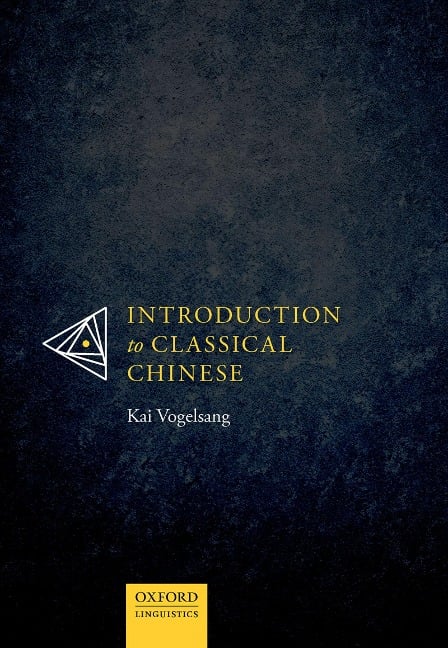
This textbook provides a comprehensive scholarly introduction to Classical Chinese and its texts. Classical Chinese is the language of Confucius and Mencius and their contemporaries, who wrote the seminal texts of Chinese philosophy more than 2,000 years ago. Although it was used as a living language for only a relatively short time, it was the foundation of Chinese education throughout the Imperial age, and formed the basis of a literary tradition that continues to the present day.
This book offers students all the necessary tools to read, understand, and analyse Classical Chinese texts, including: step-by-step clearly illustrated descriptions of syntactic features; core vocabulary lists; introductions to relevant historical and cultural topics; selected readings from classical literature with original commentaries and in-depth explanations; introductions to dictionaries and other reference works on the study of ancient China; and a guide to philological methods used in the critical analysis of Classical Chinese texts. The extensive glossary provides phonological reconstructions, word classes, English translations, and citations to illustrate usage, while the up-to-date bibliography serves as a valuable starting point for further research.
Kai Vogelsang is Professor of Sinology at the Asien-Afrika-Institut, University of Hamburg. He has published widely on Chinese language, culture, and history. His most recent works include Geschichte Chinas [History of China] (5th edition; Reclam, 2018) and Shangjun shu: Schriften des Fürsten von Shang (Kröner Verlag, 2017).
- Preface - List of figures - List of abbreviations - Abbreviated book titles - Introduction - Part I - 1: Word Classes and Constituents - 2: Noun Phrases 1 - 3: Nominal Clauses - 4: Verbal Clauses - 5: Objects and Questions - 6: Noun Phrases 2 - 7: Adverbial Modification - 8: Prepositional Phrases I - 9: Prepositional Phrases II - 10: Reference to Time - 11: Complements - 12: Nominalization - 13: Themes - 14: Anteposition and Inversion - 15: Complex Sentences 1 - 16: Complex Sentences 2 - Part II - 17: Lunyu - 18: Mengzi - 19: Xunzi - 20: Zuozhuan - 21: Guoyu - 22: Laozi - 23: Zhuangzi - 24: Mozi - 25: Guanzi - 26: Military Texts - 27: Shangjun shu - 28: Han Feizi - 29: Lüshi chunqiu - 30: Zhanguo ce - 31: Shiji - 32: Yijing - 33: Ritual Texts - Glossary - Bibliography - Index
Dieses eBook wird im PDF-Format geliefert und ist mit einem Adobe Kopierschutz (DRM) versehen. Sie können dieses eBook mit allen Geräten lesen, die das PDF-Format und den Adobe Kopierschutz (DRM) unterstützen.
Zum Beispiel mit den folgenden Geräten:
• tolino Reader
Laden Sie das eBook direkt über den Reader-Shop auf dem tolino herunter oder übertragen Sie das eBook auf Ihren tolino mit einer kostenlosen Software wie beispielsweise Adobe Digital Editions.
• Sony Reader & andere eBook Reader
Laden Sie das eBook direkt über den Reader-Shop herunter oder übertragen Sie das eBook mit der kostenlosen Software Sony READER FOR PC/Mac oder Adobe Digital Editions auf ein Standard-Lesegeräte mit epub- und Adobe DRM-Unterstützung.
• Tablets & Smartphones
Möchten Sie dieses eBook auf Ihrem Smartphone oder Tablet lesen, finden Sie hier unsere kostenlose Lese-App für iPhone/iPad und Android Smartphone/Tablets.
• PC & Mac
Lesen Sie das eBook direkt nach dem Herunterladen mit einer kostenlosen Lesesoftware, beispielsweise Adobe Digital Editions, Sony READER FOR PC/Mac oder direkt über Ihre eBook-Bibliothek in Ihrem Konto unter „Meine eBooks“ - „online lesen“.
Schalten Sie das eBook mit Ihrer persönlichen Adobe ID auf bis zu sechs Geräten gleichzeitig frei.
Bitte beachten Sie, dass die Kindle-Geräte das Format nicht unterstützen und dieses eBook somit nicht auf Kindle-Geräten lesbar ist.