Und dann auf "Zum Home-Bildschirm [+]".

Stöbern
genialokal zum Startbildschirm hinzufügen
Installieren Sie die genialokal App auf Ihrem Startbildschirm für einen schnellen Zugriff und eine komfortable Nutzung.
Installieren Sie die genialokal App auf Ihrem Startbildschirm für einen schnellen Zugriff und eine komfortable Nutzung.
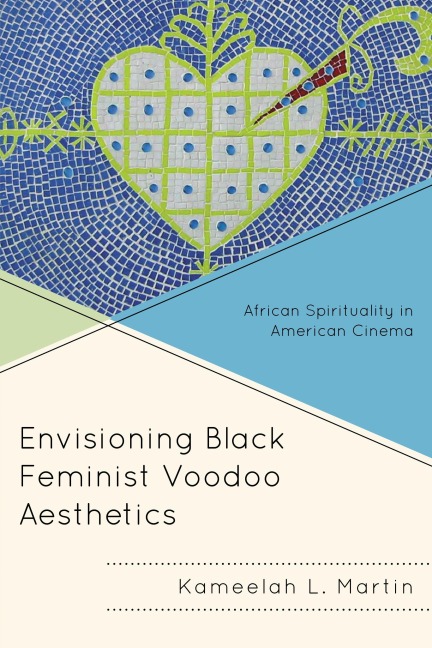
In the twenty-first century, American popular culture increasingly makes visible the performance of African spirituality by black women. Disney's Princess and the Frog and Pirates of the Caribbean franchise are two notable examples. The reliance on the black priestess of African-derived religion as an archetype, however, has a much longer history steeped in the colonial othering of Haitian Vodou and American imperialist fantasies about so-called 'black magic'.
Within this cinematic study, Martin unravels how religious autonomy impacts the identity, function, and perception of Africana women in the American popular imagination. Martin interrogates seventy-five years of American film representations of black women engaged in conjure, hoodoo, obeah, or Voodoo to discern what happens when race, gender, and African spirituality collide. She develops the framework of Voodoo aesthetics, or the inscription of African cosmologies on the black female body, as the theoretical lens through which to scrutinize black female religious performance in film. Martin places the genre of film in conversation with black feminist/womanist criticism, offering an interdisciplinary approach to film analysis.
Positioning the black priestess as another iteration of Patricia Hill Collins' notion of controlling images, Martin theorizes whether film functions as a safe space for a racial and gendered embodiment in the performance of African diasporic religion. Approaching the close reading of eight signature films from a black female spectatorship, Martin works chronologically to express the trajectory of the black priestess as cinematic motif over the last century of filmmaking. Conceptually, Martin recalibrates the scholarship on black women and representation by distinctly centering black women as ritual specialists and Black Atlantic spirituality on the silver screen.
Kameelah L. Martin is associate professor of African American literature at Savannah State University.
Introduction: Towards a Black Feminist Voodoo Aesthetic
Chapter 1: Vintage Hollywood Voodoo: The Black Priestess in 1930s Cinema
Chapter 2: Mambos, Chickens, and Blood: Disrupting Visual Pleasure in Alan Parker's Angel Heart
Chapter 3: For Us, By Us: Black Feminist Narratives of Resistance in the Independent Films of Julie Dash and Kasi Lemmons
Chapter 4: Subversion and Entertainment: Elegba, Trickery, and Black Female Absence in The Skeleton Key
Ch. 5: Voodoo in Disneyland?: Spiritual Appropriation by the Mouse; or Imagineered Voodoo Aesthetics
Epilogue: "'Good Wickedry': Beyoncé and the Black Feminist Voodoo Aesthetics of Lemonade
About the Author
Dieses eBook wird im PDF-Format geliefert und ist mit einem Adobe Kopierschutz (DRM) versehen. Sie können dieses eBook mit allen Geräten lesen, die das PDF-Format und den Adobe Kopierschutz (DRM) unterstützen.
Zum Beispiel mit den folgenden Geräten:
• tolino Reader
Laden Sie das eBook direkt über den Reader-Shop auf dem tolino herunter oder übertragen Sie das eBook auf Ihren tolino mit einer kostenlosen Software wie beispielsweise Adobe Digital Editions.
• Sony Reader & andere eBook Reader
Laden Sie das eBook direkt über den Reader-Shop herunter oder übertragen Sie das eBook mit der kostenlosen Software Sony READER FOR PC/Mac oder Adobe Digital Editions auf ein Standard-Lesegeräte mit epub- und Adobe DRM-Unterstützung.
• Tablets & Smartphones
Möchten Sie dieses eBook auf Ihrem Smartphone oder Tablet lesen, finden Sie hier unsere kostenlose Lese-App für iPhone/iPad und Android Smartphone/Tablets.
• PC & Mac
Lesen Sie das eBook direkt nach dem Herunterladen mit einer kostenlosen Lesesoftware, beispielsweise Adobe Digital Editions, Sony READER FOR PC/Mac oder direkt über Ihre eBook-Bibliothek in Ihrem Konto unter „Meine eBooks“ - „online lesen“.
Schalten Sie das eBook mit Ihrer persönlichen Adobe ID auf bis zu sechs Geräten gleichzeitig frei.
Bitte beachten Sie, dass die Kindle-Geräte das Format nicht unterstützen und dieses eBook somit nicht auf Kindle-Geräten lesbar ist.