Und dann auf "Zum Home-Bildschirm [+]".

Stöbern
genialokal zum Startbildschirm hinzufügen
Installieren Sie die genialokal App auf Ihrem Startbildschirm für einen schnellen Zugriff und eine komfortable Nutzung.
Installieren Sie die genialokal App auf Ihrem Startbildschirm für einen schnellen Zugriff und eine komfortable Nutzung.
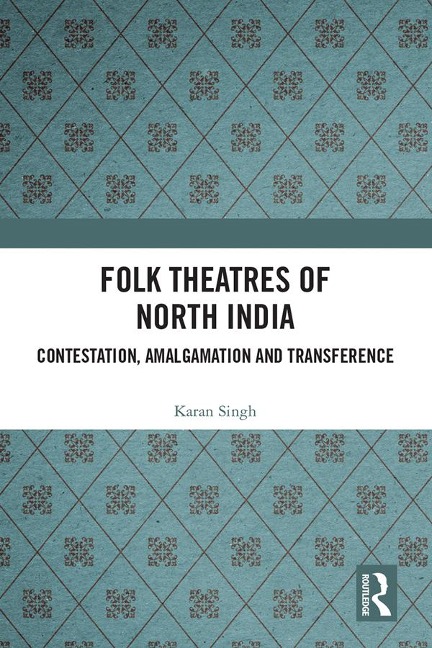
This book examines folk theatres of North India as a unique performative structure, a counter stream to the postulations of Sanskrit and Western realistic theatre. In focusing on their historical, social and cultural imprints, it explores how these theatres challenge the linearity of cultural history and subvert cultural hegemony. The book looks at diverse forms of theatre such as svangs, nautanki, tamasha, all with conventions like open performative space, free mingling of spectators and actors, flexibility in roles and genres, etc. It discusses the genesis, history and the independent trajectory of folk theatres; folk theatre and Sanskrit dramaturgy; cinematic legacy; and theatrical space as performance besides investigating causes, inter-relations within socio-cultural factors, and the performance principles underlying them. It shows how these theatres effectively contest delimitation of human creative impulses (as revealed in classical Sanskrit theatre) from structuring as also of normative impulses of religion and culture, while amalgamating influences from Western theatre, newly-rising religious reform movements of 19th century India, tantra and Bhakti. It further highlights their ability to adapt and reinvent themselves in accordance with spatial and temporal transformations to constitute an important anthropological layer of Indian society. Comprehensive and empirically rich, this book will be an essential read for scholars and researchers of cultural studies, theatre, film and performance studies, sociology, political studies, popular culture, and South Asian studies.
Karan Singh is Associate Professor of English at Government College for Women, Mahendragarh, Haryana, India. He has been Affiliated Fellow at International Institute of Asian Studies, Leiden, Netherlands and Associate at Indian Institute of Advanced Study, Shimla. He has completed two major research projects of University Grants Commission on Dalit Literature and Folk Theatres and has published three books - Iris Murdoch: Melodrama and Metaphysics (2008), Dalitism and Feminism: Locating Women in Dalit Literature (2011), and Unknown Voices (2011). He is also Editor of OASIS, a literary annual journal and President of the Society for Promotion of English Language and Literature.
Foreword. Acknowledgements. Note on Transliteration. Introduction - Folk Theatre: Genesis, History and Causes 1. Folk Theatre and Sanskrit Dramaturgy 2. Folk Theatre and Western Theatre 3. Folk Theatre: The Cinematic Legacy 4. Folk Theatrical Space as Performance. Conclusion. Glossary. Works Cited. Index
Dieses eBook wird im PDF-Format geliefert und ist mit einem Adobe Kopierschutz (DRM) versehen. Sie können dieses eBook mit allen Geräten lesen, die das PDF-Format und den Adobe Kopierschutz (DRM) unterstützen.
Zum Beispiel mit den folgenden Geräten:
• tolino Reader
Laden Sie das eBook direkt über den Reader-Shop auf dem tolino herunter oder übertragen Sie das eBook auf Ihren tolino mit einer kostenlosen Software wie beispielsweise Adobe Digital Editions.
• Sony Reader & andere eBook Reader
Laden Sie das eBook direkt über den Reader-Shop herunter oder übertragen Sie das eBook mit der kostenlosen Software Sony READER FOR PC/Mac oder Adobe Digital Editions auf ein Standard-Lesegeräte mit epub- und Adobe DRM-Unterstützung.
• Tablets & Smartphones
Möchten Sie dieses eBook auf Ihrem Smartphone oder Tablet lesen, finden Sie hier unsere kostenlose Lese-App für iPhone/iPad und Android Smartphone/Tablets.
• PC & Mac
Lesen Sie das eBook direkt nach dem Herunterladen mit einer kostenlosen Lesesoftware, beispielsweise Adobe Digital Editions, Sony READER FOR PC/Mac oder direkt über Ihre eBook-Bibliothek in Ihrem Konto unter „Meine eBooks“ - „online lesen“.
Schalten Sie das eBook mit Ihrer persönlichen Adobe ID auf bis zu sechs Geräten gleichzeitig frei.
Bitte beachten Sie, dass die Kindle-Geräte das Format nicht unterstützen und dieses eBook somit nicht auf Kindle-Geräten lesbar ist.