Und dann auf "Zum Home-Bildschirm [+]".

Stöbern
genialokal zum Startbildschirm hinzufügen
Installieren Sie die genialokal App auf Ihrem Startbildschirm für einen schnellen Zugriff und eine komfortable Nutzung.
Installieren Sie die genialokal App auf Ihrem Startbildschirm für einen schnellen Zugriff und eine komfortable Nutzung.


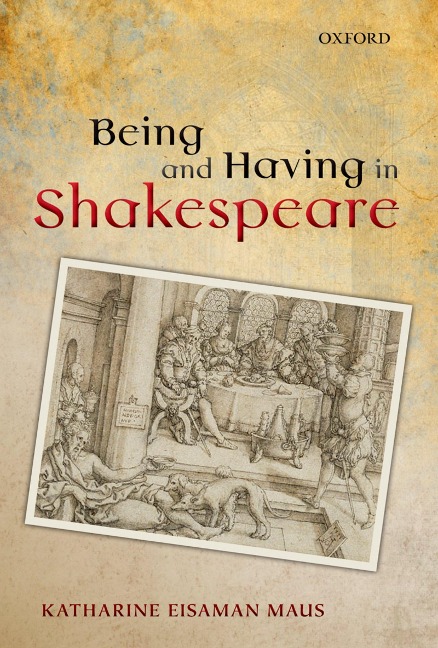
What is the relation between who a person is, and what he or she has? A number of Shakespeare's plays engage with this question, elaborating a 'poetics of property' centering on questions of authority and entitlement, of inheritance and prodigality, and of the different opportunities afforded by access to land and to chattel property. Being and Having in Shakespeare considers these presentations of ownership and authority. Richard II and the Henry IV plays construe sovereignty as a form of property right, largely construing imperium, or the authority over persons in a polity, as a form of dominium, the authority of the propertyholder. Nonetheless, what property means changes considerably from Richard's reign to Henry's, as the imagined world of the plays is reconfigured to include an urban economy of chattel consumables. The Merchant of Venice, written between Richard II and Henry IV, part 1, reimagines, in comic terms, some of the same issues broached in the history plays. It focuses in particular on the problem of the daughter's inheritance and on the different property obligations among kin, friends, business associates, and spouses. In the figure of the 'vagabond king', theoretically entitled but actually dispossessed, Henry VI, part 2 and King Lear both coordinate problems of entitlement with conundrums about distributive justice, raising fundamental questions about property relations and social organization.
Katharine Eisaman Maus is James Cabell Professor of English at the University of Virginia. She has published widely on English Renaissance literature, especially drama. Maus has held fellowships from the Guggenheim Foundation, National Endowment for the Humanities, American Council of Learned Societies, and Leverhulme Foundation. One of her previous monographs, Inwardness and Theater in the English Renaissance, won the Roland Bainton Prize from the Sixteenth Century Association.
- 1: Being and Having in Richard II - 2: Prodigal Princes: Land and Chattels in the Second Tetralogy - 3: Heirs and Affines in The Merchant of Venice - 4: The Properties of Friendship in The Merchant of Venice - 5: Vagabond Kings: Entitlement and Distribution in Henry VI and King Lear
Dieses eBook wird im PDF-Format geliefert und ist mit einem Adobe Kopierschutz (DRM) versehen. Sie können dieses eBook mit allen Geräten lesen, die das PDF-Format und den Adobe Kopierschutz (DRM) unterstützen.
Zum Beispiel mit den folgenden Geräten:
• tolino Reader
Laden Sie das eBook direkt über den Reader-Shop auf dem tolino herunter oder übertragen Sie das eBook auf Ihren tolino mit einer kostenlosen Software wie beispielsweise Adobe Digital Editions.
• Sony Reader & andere eBook Reader
Laden Sie das eBook direkt über den Reader-Shop herunter oder übertragen Sie das eBook mit der kostenlosen Software Sony READER FOR PC/Mac oder Adobe Digital Editions auf ein Standard-Lesegeräte mit epub- und Adobe DRM-Unterstützung.
• Tablets & Smartphones
Möchten Sie dieses eBook auf Ihrem Smartphone oder Tablet lesen, finden Sie hier unsere kostenlose Lese-App für iPhone/iPad und Android Smartphone/Tablets.
• PC & Mac
Lesen Sie das eBook direkt nach dem Herunterladen mit einer kostenlosen Lesesoftware, beispielsweise Adobe Digital Editions, Sony READER FOR PC/Mac oder direkt über Ihre eBook-Bibliothek in Ihrem Konto unter „Meine eBooks“ - „online lesen“.
Schalten Sie das eBook mit Ihrer persönlichen Adobe ID auf bis zu sechs Geräten gleichzeitig frei.
Bitte beachten Sie, dass die Kindle-Geräte das Format nicht unterstützen und dieses eBook somit nicht auf Kindle-Geräten lesbar ist.