Und dann auf "Zum Home-Bildschirm [+]".

Stöbern
genialokal zum Startbildschirm hinzufügen
Installieren Sie die genialokal App auf Ihrem Startbildschirm für einen schnellen Zugriff und eine komfortable Nutzung.
Installieren Sie die genialokal App auf Ihrem Startbildschirm für einen schnellen Zugriff und eine komfortable Nutzung.
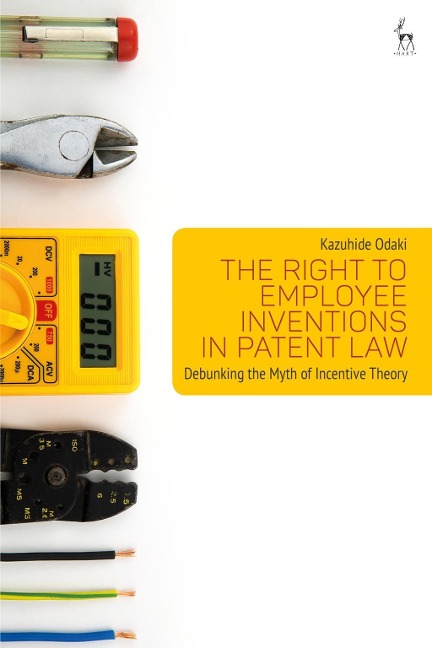
Although employers are required to pay compensation for employee inventions under the laws in many countries, existing legal literature has never critically examined whether such compensation actually gives employee inventors an incentive to invent as the legislature intends.
This book addresses the issue through reference to recent, large-scale surveys on the motivation of employee inventors (in Europe, the United States and Japan) and studies in social psychology and econometrics, arguing that the compensation is unlikely to boost the motivation, productivity and creativity of employee inventors, and thereby encourage the creation of inventions. It also discusses the ownership of inventions made by university researchers, giving due consideration to the need to ensure open science and their academic freedom.
Challenging popular assumptions, this book provides a solution to a critical issue by arguing that compensation for employee inventions should not be made mandatory regardless of jurisdiction because there is no legitimate reason to require employers to pay it. This means that patent law does not need to give employee inventors an 'incentive to invent' separately from the 'incentive to innovate' which is already given to employers.
Kazuhide Odaki has a PhD in Law from the University of Manchester.
1. Introduction
I. Background and Purpose of this Book
II. Scope and Contents of the Book
PART I
FINANCIAL INCENTIVES AND THE MOTIVATION, PRODUCTIVITY AND CREATIVITY OF EMPLOYEE INVENTORS
2. Motivation of Employee Inventors and the Effect of Incentives on their Productivity
I. Practice of Compensation to Employee Inventors
II. The Motivation-Hygiene Theory: Criticism and its Usefulness
III. Job Satisfaction and Motivation of Scientists and Engineers
IV. Motivation to Invent: Evidence from PatVal-I/II and RIETI Surveys
V. Financial Incentives and the Productivity of Employee Inventors
3. Inventor Remuneration in the Organisational Context
I. Serendipity and Corporate Hierarchy
II. Teamwork in Inventing
III. Individualism, Collectivism and the Effect of Inventor Remuneration
4. Monetary Rewards and the Creativity of Employee Inventors
I. Controversy over the Effect of Monetary Rewards
II. General Discussion
III. Analysis of Legal Schemes for Inventor Remuneration
IV. Factors that Facilitate Workplace Creativity and Innovation
V. Case Study: 3M
VI. Summary of Part I
PART II
OWNERSHIP OF EMPLOYEE INVENTIONS AND THE VALIDITY OF THE INVENTOR PRINCIPLE
5. Legitimacy of Employer Ownership
I. Rationale
6. The United States
I. Significance of the Patent and Copyright Clause: Adding the Fuel of Interest to the Fire of Genius
II. The 'Hired to Invent' Rule
III. The Shop Right Rule
IV. Pre-invention Assignment Agreements
7. Other Common Law Countries
I. England and Wales
II. Australia, Canada and Other Common Law Jurisdictions
8. Inventions Made by University Researchers
I. The Victoria University of Technology and University of Western Australia Cases
II. Open Science and the Issue of Patenting Academic Inventions
III. Ownership of Academic Inventions
9. Civil Law Countries
I. Germany
II. Japan
III. Summary of Part II
10. General Conclusion
I. Summary of the Argument
II. Policy Implications
III. Theoretical Implications
Dieses eBook wird im PDF-Format geliefert und ist mit einem Adobe Kopierschutz (DRM) versehen. Sie können dieses eBook mit allen Geräten lesen, die das PDF-Format und den Adobe Kopierschutz (DRM) unterstützen.
Zum Beispiel mit den folgenden Geräten:
• tolino Reader
Laden Sie das eBook direkt über den Reader-Shop auf dem tolino herunter oder übertragen Sie das eBook auf Ihren tolino mit einer kostenlosen Software wie beispielsweise Adobe Digital Editions.
• Sony Reader & andere eBook Reader
Laden Sie das eBook direkt über den Reader-Shop herunter oder übertragen Sie das eBook mit der kostenlosen Software Sony READER FOR PC/Mac oder Adobe Digital Editions auf ein Standard-Lesegeräte mit epub- und Adobe DRM-Unterstützung.
• Tablets & Smartphones
Möchten Sie dieses eBook auf Ihrem Smartphone oder Tablet lesen, finden Sie hier unsere kostenlose Lese-App für iPhone/iPad und Android Smartphone/Tablets.
• PC & Mac
Lesen Sie das eBook direkt nach dem Herunterladen mit einer kostenlosen Lesesoftware, beispielsweise Adobe Digital Editions, Sony READER FOR PC/Mac oder direkt über Ihre eBook-Bibliothek in Ihrem Konto unter „Meine eBooks“ - „online lesen“.
Schalten Sie das eBook mit Ihrer persönlichen Adobe ID auf bis zu sechs Geräten gleichzeitig frei.
Bitte beachten Sie, dass die Kindle-Geräte das Format nicht unterstützen und dieses eBook somit nicht auf Kindle-Geräten lesbar ist.