Und dann auf "Zum Home-Bildschirm [+]".

Stöbern
genialokal zum Startbildschirm hinzufügen
Installieren Sie die genialokal App auf Ihrem Startbildschirm für einen schnellen Zugriff und eine komfortable Nutzung.
Installieren Sie die genialokal App auf Ihrem Startbildschirm für einen schnellen Zugriff und eine komfortable Nutzung.
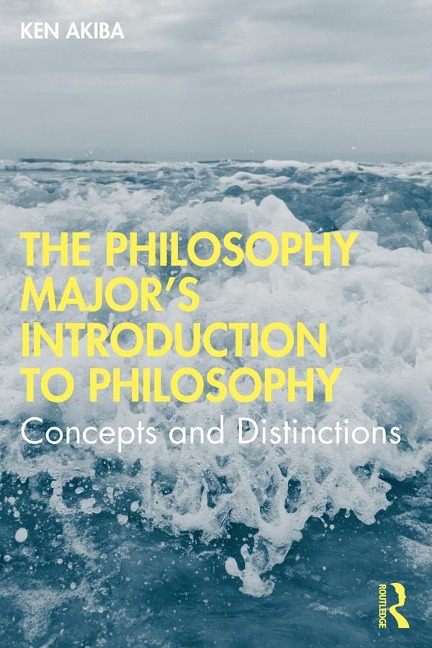
Many philosophy majors are shocked by the gap between the relative ease of lower-level philosophy courses and the difficulty of upper-division courses. This book serves as a necessary bridge to upper-level study in philosophy by offering rigorous but concise and accessible accounts of basic concepts and distinctions that are used throughout the discipline. It serves as a valuable advanced introduction to any undergraduate who is moving into upper-level courses in philosophy. While lower-level introductions to philosophy usually deal with popular topics accessible to the general student (such as contemporary moral issues, free will, and personal identity) in a piecemeal fashion, The Philosophy Major's Introduction to Philosophy offers coverage of important general philosophical concepts, tools, and devices that may be used for a long time to come in various philosophical areas. The volume is helpfully divided between a focus on the relation between language and the world in the first three chapters and coverage of mental content in the final two chapters, but builds a coherent narrative from start to finish. It also provides ample study questions and helpful signposts throughout, making it a must-have for any student attempting to engage fully with the problems and arguments in philosophy. Key Features - Integrates topics from various areas of philosophy, such as philosophy of language, metaphysics, epistemology, ethics, and philosophical logic - Provides descriptions of logico-mathematical tools necessary for philosophical studies, such as propositional logic, predicate logic, modal logic, set theory, mereology, and mathematical functions - Makes connections with modern philosophy, including discussions of Descartes's skepticism and dualism, Locke's theory of personal identity, Hume's theory of causation, and Kant's synthetic a priori - Includes well-known entertaining puzzles and thought experiments such as the Ship of Theseus, the Statue and the Clay, a Brain in a Vat, and Twin Earth - Lists helpful Exercise Questions and Discussion Questions at the end of each chapter and answers selected questions at the back of the book
Ken Akiba is Associate Professor of Philosophy at Virginia Commonwealth University, Richmond, Virginia, USA. Akiba specializes in philosophical logic, metaphysics, and philosophy of language and is co-editor (with Ali Abasnezhad) of the anthology Vague Objects and Vague Identity: New Essays on Ontic Vagueness (2014).
1. Particulars and Universals; Logic and Language 2. Extension and Intension 3. Analyticity, Apriority, and Necessity 4. Content, Linguistic and Mental 5. Internalism and Externalism
Dieses eBook wird im PDF-Format geliefert und ist mit einem Adobe Kopierschutz (DRM) versehen. Sie können dieses eBook mit allen Geräten lesen, die das PDF-Format und den Adobe Kopierschutz (DRM) unterstützen.
Zum Beispiel mit den folgenden Geräten:
• tolino Reader
Laden Sie das eBook direkt über den Reader-Shop auf dem tolino herunter oder übertragen Sie das eBook auf Ihren tolino mit einer kostenlosen Software wie beispielsweise Adobe Digital Editions.
• Sony Reader & andere eBook Reader
Laden Sie das eBook direkt über den Reader-Shop herunter oder übertragen Sie das eBook mit der kostenlosen Software Sony READER FOR PC/Mac oder Adobe Digital Editions auf ein Standard-Lesegeräte mit epub- und Adobe DRM-Unterstützung.
• Tablets & Smartphones
Möchten Sie dieses eBook auf Ihrem Smartphone oder Tablet lesen, finden Sie hier unsere kostenlose Lese-App für iPhone/iPad und Android Smartphone/Tablets.
• PC & Mac
Lesen Sie das eBook direkt nach dem Herunterladen mit einer kostenlosen Lesesoftware, beispielsweise Adobe Digital Editions, Sony READER FOR PC/Mac oder direkt über Ihre eBook-Bibliothek in Ihrem Konto unter „Meine eBooks“ - „online lesen“.
Schalten Sie das eBook mit Ihrer persönlichen Adobe ID auf bis zu sechs Geräten gleichzeitig frei.
Bitte beachten Sie, dass die Kindle-Geräte das Format nicht unterstützen und dieses eBook somit nicht auf Kindle-Geräten lesbar ist.