Und dann auf "Zum Home-Bildschirm [+]".

Stöbern
genialokal zum Startbildschirm hinzufügen
Installieren Sie die genialokal App auf Ihrem Startbildschirm für einen schnellen Zugriff und eine komfortable Nutzung.
Installieren Sie die genialokal App auf Ihrem Startbildschirm für einen schnellen Zugriff und eine komfortable Nutzung.
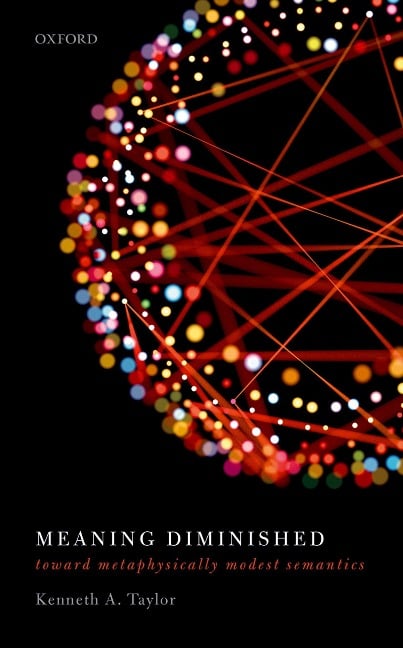
Meaning Diminished examines the complex relationship between semantic analysis and metaphysical inquiry. Kenneth A. Taylor argues that we should expect linguistic and conceptual analysis of natural language to yield far less metaphysical insight into what there is - and the nature of what there is - than many philosophers have imagined. Taking a strong stand against the so-called linguistic turn in philosophy, Taylor contends that philosophers as diverse as Kant, with his Transcendental Idealism, Frege, with his aspirational Platonism, Carnap with his distinction between internal and external questions, and Strawson, with his descriptive metaphysics, have placed too much confidence in the ability of linguistic and conceptual analysis to achieve deep insight into matters of ultimate metaphysics. He urges philosophers who seek such insight to turn away from the interrogation of language and concepts and back to the more direct interrogation of reality itself. In doing so, he maps out the way forward toward a metaphysically modest semantics, in which semantics carries less weighty metaphysical burdens, and toward a revisionary and naturalistic metaphysics, untethered to the a priori analysis of ordinary language.
Kenneth Taylor is Henry Waldgrave Stuart Professor of Philosophy at Stanford University. He is also director of Stanford's interdisciplinary program in Symbolic Systems. His work lies at the intersection of the philosophy of language and the philosophy of mind, and he also writes about the metaphysics of normativity. He is the author of many books and articles, as well as the co-host and co-creator of the long-running, nationally syndicated radio program and podcast, Philosophy Talk.
- Preface - 1: Semantic Analysis and Metaphysical Inquiry - 2: The Metaphysical Modesty of Narrowly Linguistic Semantics - 3: The Way of Ideas and the Way of Reference - 4: Some Considerations against the Way of Ideas - 5: Modesty as Incompleteness: Feature or Bug? - 6: Against the Metaphysical Transparency of Semantic Adicity - 7: Metaphysical Embarrassment, Indefinite Modifiability and Rules of Use - 8: Conclusion: A Way Forward in Semantics and Metaphysics
Dieses eBook wird im PDF-Format geliefert und ist mit einem Adobe Kopierschutz (DRM) versehen. Sie können dieses eBook mit allen Geräten lesen, die das PDF-Format und den Adobe Kopierschutz (DRM) unterstützen.
Zum Beispiel mit den folgenden Geräten:
• tolino Reader
Laden Sie das eBook direkt über den Reader-Shop auf dem tolino herunter oder übertragen Sie das eBook auf Ihren tolino mit einer kostenlosen Software wie beispielsweise Adobe Digital Editions.
• Sony Reader & andere eBook Reader
Laden Sie das eBook direkt über den Reader-Shop herunter oder übertragen Sie das eBook mit der kostenlosen Software Sony READER FOR PC/Mac oder Adobe Digital Editions auf ein Standard-Lesegeräte mit epub- und Adobe DRM-Unterstützung.
• Tablets & Smartphones
Möchten Sie dieses eBook auf Ihrem Smartphone oder Tablet lesen, finden Sie hier unsere kostenlose Lese-App für iPhone/iPad und Android Smartphone/Tablets.
• PC & Mac
Lesen Sie das eBook direkt nach dem Herunterladen mit einer kostenlosen Lesesoftware, beispielsweise Adobe Digital Editions, Sony READER FOR PC/Mac oder direkt über Ihre eBook-Bibliothek in Ihrem Konto unter „Meine eBooks“ - „online lesen“.
Schalten Sie das eBook mit Ihrer persönlichen Adobe ID auf bis zu sechs Geräten gleichzeitig frei.
Bitte beachten Sie, dass die Kindle-Geräte das Format nicht unterstützen und dieses eBook somit nicht auf Kindle-Geräten lesbar ist.