Und dann auf "Zum Home-Bildschirm [+]".

Stöbern
genialokal zum Startbildschirm hinzufügen
Installieren Sie die genialokal App auf Ihrem Startbildschirm für einen schnellen Zugriff und eine komfortable Nutzung.
Installieren Sie die genialokal App auf Ihrem Startbildschirm für einen schnellen Zugriff und eine komfortable Nutzung.
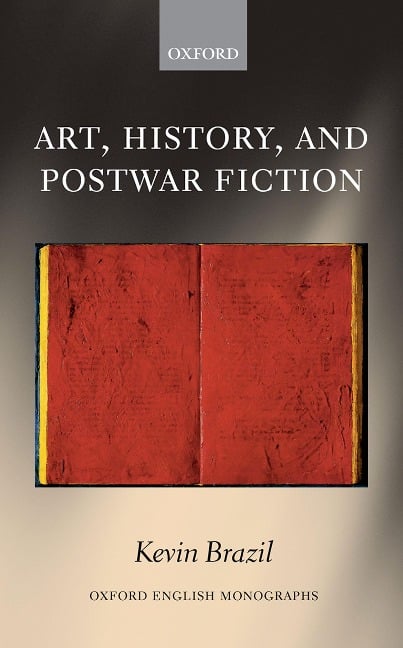
Art, History, and Postwar Fiction explores the ways in which novelists responded to the visual arts from the aftermath of the Second World War to the present day. If art had long served as a foil to enable novelists to reflect on their craft, this book argues that in the postwar period, novelists turned to the visual arts to develop new ways of conceptualizing the relationship between literature and history. The sense that the novel was becalmed in the end of history was pervasive in the postwar decades. In seeming to bring modernism to a climax whilst repeating its foundational gestures, visual art also raised questions about the relationship between continuity and change in the development of art. In chapters on Samuel Beckett, William Gaddis, John Berger, and W. G. Sebald, and shorter discussions of writers like Doris Lessing, Kathy Acker, and Teju Cole, this book shows that writing about art was often a means of commenting on historical developments of the period: the Cold War, the New Left, the legacy of the Holocaust. Furthermore, it argues that forms of postwar visual art, from abstraction to the readymade, offered novelists ways of thinking about the relationship between form and history that went beyond models of reflection or determination. By doing so, this book also argues that attention to interactions between literature and art can provide critics with new ways to think about the relationship between literature and history beyond reductive oppositions between formalism and historicism, autonomy and context.
Kevin Brazil is a Lecturer in Twentieth and Twenty-First Century Literature at the University of Southampton. He is co-editor of Doris Lessing and the Forming of History (2016) and has published widely on twentieth- and twenty-first century fiction, in Modernism/modernity, Textual Practice, and the Journal for Modern Literature.
- Introduction: Reviewing Postwar Fiction - 1: Pig Vomit: Beckett's Art Historical Necessities - 2: Canvas in the Cold War: William Gaddis and the Context of Art - 3: The Moment of History: John Berger's Modernism after Realism - 4: Art's Swindle: W. G. Sebald and History After Trauma - Conclusion: The Perspective of the Present
Dieses eBook wird im PDF-Format geliefert und ist mit einem Adobe Kopierschutz (DRM) versehen. Sie können dieses eBook mit allen Geräten lesen, die das PDF-Format und den Adobe Kopierschutz (DRM) unterstützen.
Zum Beispiel mit den folgenden Geräten:
• tolino Reader
Laden Sie das eBook direkt über den Reader-Shop auf dem tolino herunter oder übertragen Sie das eBook auf Ihren tolino mit einer kostenlosen Software wie beispielsweise Adobe Digital Editions.
• Sony Reader & andere eBook Reader
Laden Sie das eBook direkt über den Reader-Shop herunter oder übertragen Sie das eBook mit der kostenlosen Software Sony READER FOR PC/Mac oder Adobe Digital Editions auf ein Standard-Lesegeräte mit epub- und Adobe DRM-Unterstützung.
• Tablets & Smartphones
Möchten Sie dieses eBook auf Ihrem Smartphone oder Tablet lesen, finden Sie hier unsere kostenlose Lese-App für iPhone/iPad und Android Smartphone/Tablets.
• PC & Mac
Lesen Sie das eBook direkt nach dem Herunterladen mit einer kostenlosen Lesesoftware, beispielsweise Adobe Digital Editions, Sony READER FOR PC/Mac oder direkt über Ihre eBook-Bibliothek in Ihrem Konto unter „Meine eBooks“ - „online lesen“.
Schalten Sie das eBook mit Ihrer persönlichen Adobe ID auf bis zu sechs Geräten gleichzeitig frei.
Bitte beachten Sie, dass die Kindle-Geräte das Format nicht unterstützen und dieses eBook somit nicht auf Kindle-Geräten lesbar ist.