Und dann auf "Zum Home-Bildschirm [+]".

Stöbern
genialokal zum Startbildschirm hinzufügen
Installieren Sie die genialokal App auf Ihrem Startbildschirm für einen schnellen Zugriff und eine komfortable Nutzung.
Installieren Sie die genialokal App auf Ihrem Startbildschirm für einen schnellen Zugriff und eine komfortable Nutzung.
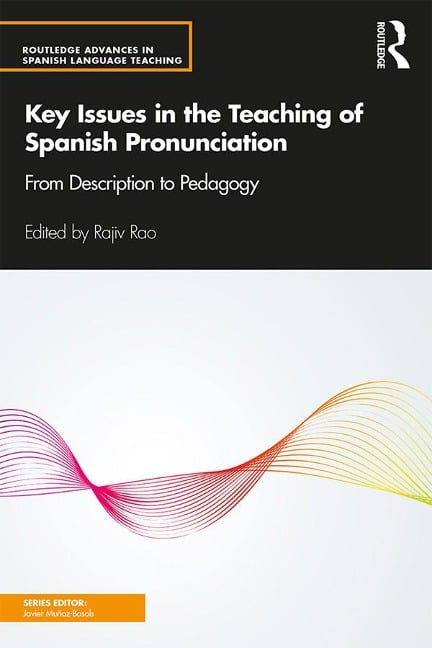
Key Issues in the Teaching of Spanish Pronunciation: From Description to Pedagogy is a resource that encourages Spanish teachers and curriculum designers to increase their incorporation of pronunciation into the classroom. Combining theory and practical guidance, it will help language practitioners integrate the teaching of Spanish pronunciation with confidence and effectiveness. The international group of scholars across its 15 chapters is made up of individuals with well-established research records and training in best pedagogical practices. Key features: - A range of topics including vowels, various classes of consonants, prosody, the use of technology, the role of orthography, the importance of both perception and production, individual learner differences, and teacher training; - Overviews of descriptive, empirical, and acquisition-based research associated with each aspect of the Spanish sound system; - Guidance on the difficulties that teachers face when incorporating the teaching of pronunciation into the classroom; - Clear explanations of concepts, accompanied by an abundance of concrete examples and references; - Multiple sample activities and lesson plans tailored to different levels and backgrounds of students; - A bilingual glossary of terms to help the content reach the widest audience possible. Written in a clear and accessible manner, Key Issues in the Teaching of Spanish Pronunciation is an essential resource for teachers of Spanish at all levels. It is also an excellent reference book for researchers and both undergraduate and graduate university students interested in Spanish phonetics and language acquisition.
Rajiv Rao is Associate Professor of Spanish in the Department of Spanish and Portuguese of the University of Wisconsin-Madison.
Introduction Rajiv Rao Part 1 The Sound System of Spanish 1 Description of Spanish Vowels and Guidelines for Teaching Them Eugenio Martínez Celdrán and Wendy Elvira-García 2 Pronunciation in the L2 Spanish Classroom: The Voiceless Stops /p, t, k/ Mary L. Zampini 3 Suggestions for Teaching Spanish Voiced Stops /b, d, g/ and Their Lenited Allophones [ß-, ð-, --] Manuela González-Bueno 4 A Theoretical Framework in the Acquisition and Teaching of Fricatives to L2 Learners of Spanish A. Raymond Elliott 5 Issues in the Teaching of Spanish Liquid Consonants Benjamin Schmeiser 6 The Polymorphism of Spanish Nasal Stops Carlos-Eduardo Piñeros 7 Incorporating Syllable Structure into the Teaching of Spanish Pronunciation Sonia Colina 8 Improving Non-Native Pronunciation: Teaching Prosody to Learners of Spanish as a Second/Foreign Language Carme de-la-Mota Part 2 Pedagogical Challenges and Suggestions for the Classroom 9 Spanish Pronunciation and Teaching Dialectal Variation Germán Zárate-Sández 10 Incorporating Technology into the Teaching of Spanish Pronunciation Gillian Lord 11 Navigating Orthographic Issues in the Teaching of Spanish Pronunciation Yasaman Rafat and Scott James Perry 12 The Role of Perception in Learning Spanish Pronunciation C. Elizabeth Goodin-Mayeda 13 An Analytical Approach to Teaching Spanish Pronunciation to Native Speakers of German: First Language and Age of First Exposure as Crucial Factors Conxita Lleó and Marta Ulloa 14 Teaching Pronunciation to Spanish Heritage Speakers Amanda Boomershine and Rebecca Ronquest 15 Spanish Pronunciation and Teacher Training: Challenges and Suggestions Manuel Delicado Cantero, William Steed, and Alfredo Herrero de Haro Glossary
Dieses eBook wird im PDF-Format geliefert und ist mit einem Adobe Kopierschutz (DRM) versehen. Sie können dieses eBook mit allen Geräten lesen, die das PDF-Format und den Adobe Kopierschutz (DRM) unterstützen.
Zum Beispiel mit den folgenden Geräten:
• tolino Reader
Laden Sie das eBook direkt über den Reader-Shop auf dem tolino herunter oder übertragen Sie das eBook auf Ihren tolino mit einer kostenlosen Software wie beispielsweise Adobe Digital Editions.
• Sony Reader & andere eBook Reader
Laden Sie das eBook direkt über den Reader-Shop herunter oder übertragen Sie das eBook mit der kostenlosen Software Sony READER FOR PC/Mac oder Adobe Digital Editions auf ein Standard-Lesegeräte mit epub- und Adobe DRM-Unterstützung.
• Tablets & Smartphones
Möchten Sie dieses eBook auf Ihrem Smartphone oder Tablet lesen, finden Sie hier unsere kostenlose Lese-App für iPhone/iPad und Android Smartphone/Tablets.
• PC & Mac
Lesen Sie das eBook direkt nach dem Herunterladen mit einer kostenlosen Lesesoftware, beispielsweise Adobe Digital Editions, Sony READER FOR PC/Mac oder direkt über Ihre eBook-Bibliothek in Ihrem Konto unter „Meine eBooks“ - „online lesen“.
Schalten Sie das eBook mit Ihrer persönlichen Adobe ID auf bis zu sechs Geräten gleichzeitig frei.
Bitte beachten Sie, dass die Kindle-Geräte das Format nicht unterstützen und dieses eBook somit nicht auf Kindle-Geräten lesbar ist.