Und dann auf "Zum Home-Bildschirm [+]".

Stöbern
genialokal zum Startbildschirm hinzufügen
Installieren Sie die genialokal App auf Ihrem Startbildschirm für einen schnellen Zugriff und eine komfortable Nutzung.
Installieren Sie die genialokal App auf Ihrem Startbildschirm für einen schnellen Zugriff und eine komfortable Nutzung.
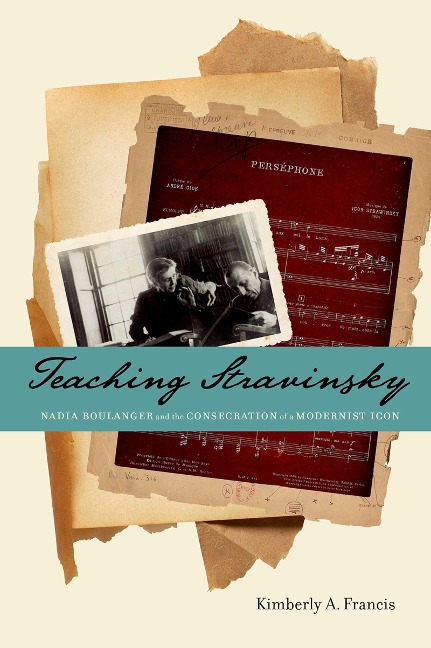
In 1929 Nadia Boulanger accepted Igor Stravinsky's younger son, Soulima, as her student. Within two years, Stravinsky and Boulanger merged their artistic spheres, each influencing and enhancing the cultural work of the other until the composer's death in 1971. Teaching Stravinsky tells Boulanger's story of the ever-changing nature of her fractious relationship with Stravinksy. Author Kimberly A. Francis explores how Boulanger's own professional activity during the turbulent twentieth-century intersected with her efforts on behalf of Stravinsky, and how this facilitated her own influential conversations with the composer about his works while also drawing her into close contact with his family. Through the theoretical lens of Bourdieu, and drawing upon over one thousand pages of letters and scores, many published here for the first time, Francis examines the extent to which Boulanger played a foundational role in defining, defending, and ultimately consecrating Stravinsky's canonical identity. She considers how the quotidian events in the lives of these two icons of modernism informed both their art and their professional decisions, and convincingly argues for a reevaluation of the influence of women on cultural production during the twentieth century. At once a story of one woman's vibrant friendship with an iconic modernist composer, and a case study in how gendered polemics informed professional negotiations of the artistic-political fields of the twentieth-century, Teaching Stravinsky sheds new light not only on how Boulanger taught Stravinsky, but also how, in doing so, she managed to influence the course of modernism itself.
Kimberly A. Francis is Associate Professor of Music at the University of Guelph, Canada, where she specializes in music of the twentieth and twenty-first centuries and feminist musicology. She serves as Editor-in-Chief for the University of Guelph's award-winning journal Critical Voices: The University of Guelph Book Review Project and served as co-supervisor for the digitization of the Don Campbell Papers at the American Music Research Centre. Dr. Francis has been the recipient of a number of grants, including those from the American Musicological Society and the Social Sciences and Humanities Research Council of Canada. Her numerous articles have appeared in everything from The Musical Quarterly to the Journal of the Society for American Music.
Acknowledgements
List of Figures
List of Tables
Note on Translations and Transliterations
Abbreviations
Note on Sources
About the Companion Website
Introduction Boulanger and Bourdieu Chapter Overview
PART ONE 1. Foundations (1929-1932) Membre de famille: Boulanger and Soulima Stravinsky A trip to Brussels Lessons and love 2. Master Copy: Correcting the Symphonie de psaumes Editorial process and power Soulima Stravinsky and advanced studies Main idea or major and minor thirds A dialogue established 3. Surviving the Great Depression: 1932-1936 The last Parisian project: Perséphone Loss and recovery: 1935-36 4. Beyond France: 1937-1939 Dumbarton Oaks Increasing tensions, failing health Toward war
PART TWO 5. The War, 1940-1942 Romantic complications American reunions 6. Together, 1942-1945 1943 1944 1945 A way home Residue/rupture
7. Redefining a Partnership, Reestablishing an Icon: 1946-1949 Stravinsky's Mass The beginning of the end
PART THREE 8. The Last Project: The Rake's Progress, 1948-1952 An opera The premiere: "I've never seen such disorder" Composition in early cold war America After Europe: A Rake's reception 9. Mediating Serialism A dialogue dissolves Concerts and commissions post-1952 Boulanger teaches Stravinsky's twelve-tone music 10. Insider/Outsider Stravinsky's Failing Health
Conclusion
Bibliography
Dieses eBook wird im PDF-Format geliefert und ist mit einem Adobe Kopierschutz (DRM) versehen. Sie können dieses eBook mit allen Geräten lesen, die das PDF-Format und den Adobe Kopierschutz (DRM) unterstützen.
Zum Beispiel mit den folgenden Geräten:
• tolino Reader
Laden Sie das eBook direkt über den Reader-Shop auf dem tolino herunter oder übertragen Sie das eBook auf Ihren tolino mit einer kostenlosen Software wie beispielsweise Adobe Digital Editions.
• Sony Reader & andere eBook Reader
Laden Sie das eBook direkt über den Reader-Shop herunter oder übertragen Sie das eBook mit der kostenlosen Software Sony READER FOR PC/Mac oder Adobe Digital Editions auf ein Standard-Lesegeräte mit epub- und Adobe DRM-Unterstützung.
• Tablets & Smartphones
Möchten Sie dieses eBook auf Ihrem Smartphone oder Tablet lesen, finden Sie hier unsere kostenlose Lese-App für iPhone/iPad und Android Smartphone/Tablets.
• PC & Mac
Lesen Sie das eBook direkt nach dem Herunterladen mit einer kostenlosen Lesesoftware, beispielsweise Adobe Digital Editions, Sony READER FOR PC/Mac oder direkt über Ihre eBook-Bibliothek in Ihrem Konto unter „Meine eBooks“ - „online lesen“.
Schalten Sie das eBook mit Ihrer persönlichen Adobe ID auf bis zu sechs Geräten gleichzeitig frei.
Bitte beachten Sie, dass die Kindle-Geräte das Format nicht unterstützen und dieses eBook somit nicht auf Kindle-Geräten lesbar ist.