Und dann auf "Zum Home-Bildschirm [+]".

Stöbern
genialokal zum Startbildschirm hinzufügen
Installieren Sie die genialokal App auf Ihrem Startbildschirm für einen schnellen Zugriff und eine komfortable Nutzung.
Installieren Sie die genialokal App auf Ihrem Startbildschirm für einen schnellen Zugriff und eine komfortable Nutzung.
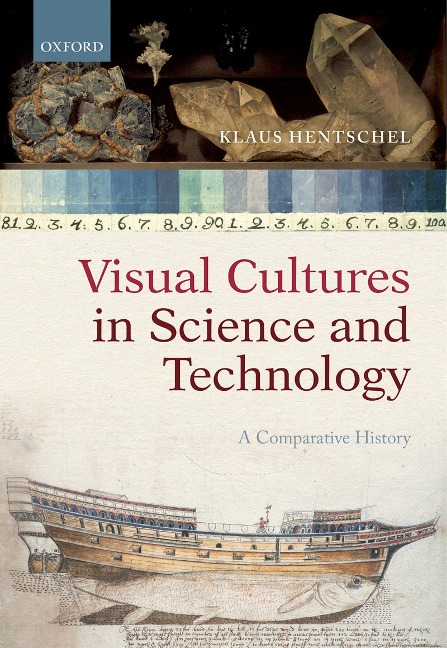
This book is offers a broad, comparative survey of a booming field within the history of science: the history, generation, use, and function of images in scientific practice. It explores every aspect of visuality in science, arguing for the concept of visual domains. What makes a good scientific image? What cultural baggage is essential to it? Is science indeed defined by its pictures? This book aims to provide a synthesis of the history, generation, use, and transfer of images in scientific practice. It delves into the rich reservoir of case studies on visual representations in scientific and technological practice that have accumulated over the past couple of decades by historians, sociologists, and philosophers of science. The main aim is thus located on the meta-level. It adopts an integrative view of recurrently noted general features of visual cultures in science and technology, something hitherto unachieved and believed by many to be a mission impossible. By systematic comparison of numerous case studies, the purview broadens away from myopic microanalysis in search of overriding patterns. The many different disciplines and research areas involved encompass mathematics, technology, natural history, medicine, the geosciences, astronomy, chemistry, and physics. The chosen examples span the period from the Renaissance to the late 20th century. The broad range of visual representations in scientific practice is treated, as well as schooling in pattern recognition, design and implementation of visual devices, and a narrowing in on the special role of illustrators and image specialists.
Prior to his current full professorship in the history of science and technology at the University of Stuttgart, Klaus Hentschel was a Lecturer/Researcher at the Universities of Berlin, Göttingen and Berne, a Fellow at the Dibner Institute for the History of Science & Technology at MIT in Cambridge, Massachusetts 1996/97 and Ernst Cassirer Guest Professor at the University of Hamburg 2003.
- 1: Introduction - 2: Historiographic layers of visual science cultures - 3: Formation of visual science cultures - 4: Pioneers of visual science cultures - 5: Transfer of visual techniques - 6: Support by illustrators and image technicians - 7: One image rarely comes alone - 8: Practical training in visual skills - 9: Mastery of pattern recognition - 10: Visual thinking in scientic and technological practice - 11: Recurrent color taxonomies - 12: Aesthetic fascination as a visual culture's binding glue - 13: Issues of visual perception - 14: Visuality through and through
Dieses eBook wird im PDF-Format geliefert und ist mit einem Adobe Kopierschutz (DRM) versehen. Sie können dieses eBook mit allen Geräten lesen, die das PDF-Format und den Adobe Kopierschutz (DRM) unterstützen.
Zum Beispiel mit den folgenden Geräten:
• tolino Reader
Laden Sie das eBook direkt über den Reader-Shop auf dem tolino herunter oder übertragen Sie das eBook auf Ihren tolino mit einer kostenlosen Software wie beispielsweise Adobe Digital Editions.
• Sony Reader & andere eBook Reader
Laden Sie das eBook direkt über den Reader-Shop herunter oder übertragen Sie das eBook mit der kostenlosen Software Sony READER FOR PC/Mac oder Adobe Digital Editions auf ein Standard-Lesegeräte mit epub- und Adobe DRM-Unterstützung.
• Tablets & Smartphones
Möchten Sie dieses eBook auf Ihrem Smartphone oder Tablet lesen, finden Sie hier unsere kostenlose Lese-App für iPhone/iPad und Android Smartphone/Tablets.
• PC & Mac
Lesen Sie das eBook direkt nach dem Herunterladen mit einer kostenlosen Lesesoftware, beispielsweise Adobe Digital Editions, Sony READER FOR PC/Mac oder direkt über Ihre eBook-Bibliothek in Ihrem Konto unter „Meine eBooks“ - „online lesen“.
Schalten Sie das eBook mit Ihrer persönlichen Adobe ID auf bis zu sechs Geräten gleichzeitig frei.
Bitte beachten Sie, dass die Kindle-Geräte das Format nicht unterstützen und dieses eBook somit nicht auf Kindle-Geräten lesbar ist.