Und dann auf "Zum Home-Bildschirm [+]".

Stöbern
genialokal zum Startbildschirm hinzufügen
Installieren Sie die genialokal App auf Ihrem Startbildschirm für einen schnellen Zugriff und eine komfortable Nutzung.
Installieren Sie die genialokal App auf Ihrem Startbildschirm für einen schnellen Zugriff und eine komfortable Nutzung.
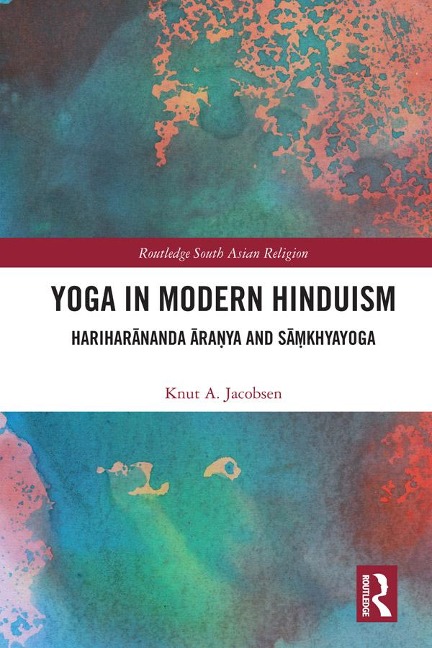
The Säkhyayoga institution of Kapil Mäh is a religious organisation with a small tradition of followers which emerged in the last decade of the nineteenth century and the first decades of the twentieth century in Bengal in India around the renunciant and yogin Hariharananda Aräya. This tradition developed during the same period in which modern yoga was born and forms a chapter in the expansion of yoga traditions in modern Hinduism. The book analyses the yoga teaching of Hariharananda Aräya (1869-1947) and the Kapil Mäh tradition, its origin, history and contemporary manifestations, and this tradition's connection to the expansion of yoga and the Yogasutra in modern Hinduism. The Säkhyayoga of the Kapil Mäh tradition is based on the Patañjalayogasastra, on a number of texts in Sanskrit and Bengali written by their gurus, and on the lifestyle of the renunciant yogin living isolated in a cave. The book investigates Hariharananda Aräya's connection to pre-modern yoga traditions and the impact of modern production and transmission of knowledge on his interpretations of yoga. The book connects the Kapil Mäh tradition to the nineteenth century transformations of Bengali religious culture of the educated upper class that led to the production of a new type of yogin. The book analyses Säkhyayoga as a living tradition, its current teachings and practices, and looks at what Säkhyayogins do and what Säkhyayoga is as a yoga practice. A valuable contribution to recent and ongoing debates, this book will be of interest to academics in the fields of Religious Studies, Anthropology, Asian Studies, Indology, Indian philosophy, Hindu Studies and Yoga Studies.
Knut A. Jacobsen is professor in the study of religions at the University of Bergen, Norway. His research focuses on Yoga, Säkhya, and Hindu conceptions and rituals of space and time. He is the editor in chief of the six volumes Brill's Encyclopedia of Hinduism (2009-2015) and he is the editor of the Routledge Handbook of Contemporary India (2016).
Introduction 1. Säkhya, Yoga and Säkhyayoga 2. Encounters with a living Säkhyayoga tradition 3. Kapila as the originator of Yoga 4. The rebirth of Yoga and the emergence of the bhadralok yogin 5. Gurus, book printing and the Säkhyayoga lineage 6. Textual tradition of the Kapil Math institution 7. Säkhyayoga meditation instructions of the Kapil Mäh tradition 8. Monastic life and recitation of Sanskrit stotras 9. The material religion of Säkhyayoga 10. The Kapil Mäh tradition and modern scholarship on Yoga Conclusion
Dieses eBook wird im PDF-Format geliefert und ist mit einem Adobe Kopierschutz (DRM) versehen. Sie können dieses eBook mit allen Geräten lesen, die das PDF-Format und den Adobe Kopierschutz (DRM) unterstützen.
Zum Beispiel mit den folgenden Geräten:
• tolino Reader
Laden Sie das eBook direkt über den Reader-Shop auf dem tolino herunter oder übertragen Sie das eBook auf Ihren tolino mit einer kostenlosen Software wie beispielsweise Adobe Digital Editions.
• Sony Reader & andere eBook Reader
Laden Sie das eBook direkt über den Reader-Shop herunter oder übertragen Sie das eBook mit der kostenlosen Software Sony READER FOR PC/Mac oder Adobe Digital Editions auf ein Standard-Lesegeräte mit epub- und Adobe DRM-Unterstützung.
• Tablets & Smartphones
Möchten Sie dieses eBook auf Ihrem Smartphone oder Tablet lesen, finden Sie hier unsere kostenlose Lese-App für iPhone/iPad und Android Smartphone/Tablets.
• PC & Mac
Lesen Sie das eBook direkt nach dem Herunterladen mit einer kostenlosen Lesesoftware, beispielsweise Adobe Digital Editions, Sony READER FOR PC/Mac oder direkt über Ihre eBook-Bibliothek in Ihrem Konto unter „Meine eBooks“ - „online lesen“.
Schalten Sie das eBook mit Ihrer persönlichen Adobe ID auf bis zu sechs Geräten gleichzeitig frei.
Bitte beachten Sie, dass die Kindle-Geräte das Format nicht unterstützen und dieses eBook somit nicht auf Kindle-Geräten lesbar ist.