Und dann auf "Zum Home-Bildschirm [+]".

Stöbern
genialokal zum Startbildschirm hinzufügen
Installieren Sie die genialokal App auf Ihrem Startbildschirm für einen schnellen Zugriff und eine komfortable Nutzung.
Installieren Sie die genialokal App auf Ihrem Startbildschirm für einen schnellen Zugriff und eine komfortable Nutzung.
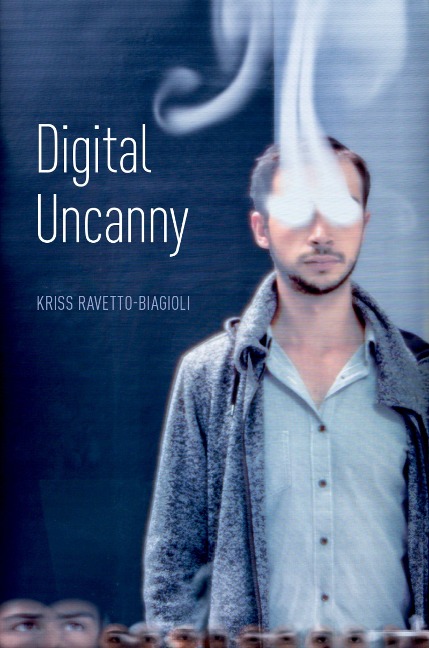
We are now confronted with a new type of uncanny experience, an uncanny evoked by parallel processing, aggregate data, and cloud-computing. The digital uncanny does not erase the uncanny feeling we experience as déjà vu or when confronted with robots that are too lifelike. Today's uncanny refers to how non-human devices (surveillance technologies, algorithms, feedback, and data flows) anticipate human gestures, emotions, actions, and interactions, thus intimating that we are but machines and that our behavior is predicable precisely because we are machinic. It adds another dimension to those feelings in which we question whether our responses are subjective or automated - automated as in reducing one's subjectivity to patterns of data and using those patterns to present objects or ideas that would then elicit one's genuinely subjective-yet effectively preset-response. In fact, this anticipation of our responses is a feedback loop that we humans have produced by designing software that can study our traces, inputs, and moves. In this sense one could say that the digital uncanny is a trick we play on ourselves, a trick that we would not be able to play had we not developed sophisticated digital technologies. Digital Uncanny explores how digital technologies, particularly software systems working through massive amounts of data, are transforming the meaning of the uncanny that Freud tied to a return of repressed memories, desires, and experiences to their anticipation. Through a close reading of interactive and experimental art works of Rafael Lozano-Hemmer, Bill Viola, Simon Biggs, Sue Hawksley, and Garth Paine, this book is designed to explore how the digital uncanny unsettles and estranges concepts of "self," "affect," "feedback" and "aesthetic experience," forcing us to reflect on our relationship with computational media and by extension our relationship to each other and our experience of the world.
Kriss Ravetto-Biagioli is a film and media scholar whose work focuses on representations and theorizations of violence in media, interactive art, film, and social media. She is the author of The Unmaking of Fascist Aesthetics (2001), Mythopoetic Cinema: On the Ruins of European Identity (2017), and many articles on film, performance, installation art, new media, and the hacker group Anonymous. She is the co-editor with Professor Martine Beugnet of the series in Film and Intermediality.
Introduction Chapter 1: Self-Uncanny Chapter 2: Uncanny Affect Chapter 3: Uncanny Feedback Epilogue: Uncanny Aesthetics Bibliography Index
Dieses eBook wird im PDF-Format geliefert und ist mit einem Adobe Kopierschutz (DRM) versehen. Sie können dieses eBook mit allen Geräten lesen, die das PDF-Format und den Adobe Kopierschutz (DRM) unterstützen.
Zum Beispiel mit den folgenden Geräten:
• tolino Reader
Laden Sie das eBook direkt über den Reader-Shop auf dem tolino herunter oder übertragen Sie das eBook auf Ihren tolino mit einer kostenlosen Software wie beispielsweise Adobe Digital Editions.
• Sony Reader & andere eBook Reader
Laden Sie das eBook direkt über den Reader-Shop herunter oder übertragen Sie das eBook mit der kostenlosen Software Sony READER FOR PC/Mac oder Adobe Digital Editions auf ein Standard-Lesegeräte mit epub- und Adobe DRM-Unterstützung.
• Tablets & Smartphones
Möchten Sie dieses eBook auf Ihrem Smartphone oder Tablet lesen, finden Sie hier unsere kostenlose Lese-App für iPhone/iPad und Android Smartphone/Tablets.
• PC & Mac
Lesen Sie das eBook direkt nach dem Herunterladen mit einer kostenlosen Lesesoftware, beispielsweise Adobe Digital Editions, Sony READER FOR PC/Mac oder direkt über Ihre eBook-Bibliothek in Ihrem Konto unter „Meine eBooks“ - „online lesen“.
Schalten Sie das eBook mit Ihrer persönlichen Adobe ID auf bis zu sechs Geräten gleichzeitig frei.
Bitte beachten Sie, dass die Kindle-Geräte das Format nicht unterstützen und dieses eBook somit nicht auf Kindle-Geräten lesbar ist.