Und dann auf "Zum Home-Bildschirm [+]".

Stöbern
genialokal zum Startbildschirm hinzufügen
Installieren Sie die genialokal App auf Ihrem Startbildschirm für einen schnellen Zugriff und eine komfortable Nutzung.
Installieren Sie die genialokal App auf Ihrem Startbildschirm für einen schnellen Zugriff und eine komfortable Nutzung.
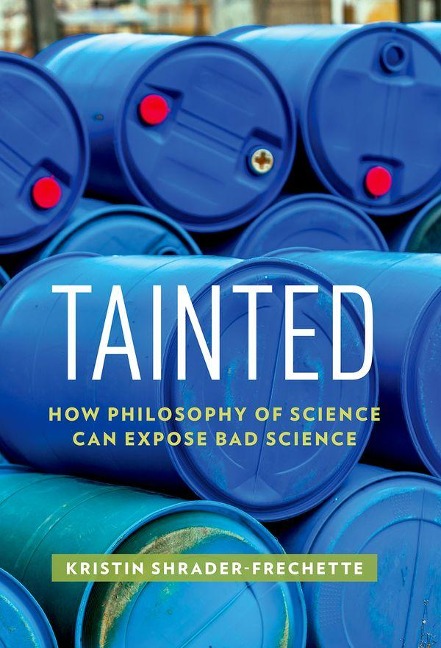
Three-fourths of scientific research in the United States is funded by special interests. Many of these groups have specific practical goals, such as developing pharmaceuticals or establishing that a pollutant causes only minimal harm. For groups with financial conflicts of interest, their scientific findings often can be deeply flawed.
To uncover and assess these scientific flaws, award-winning biologist and philosopher of science Kristin Shrader-Frechette uses the analytical tools of classic philosophy of science. She identifies and evaluates the concepts, data, inferences, methods, models, and conclusions of science tainted by the influence of special interests. As a result, she challenges accepted scientific findings regarding risks such as chemical toxins and carcinogens, ionizing radiation, pesticides, hazardous-waste disposal, development of environmentally sensitive lands, threats to endangered species, and less-protective standards for workplace-pollution exposure. In so doing, she dissects the science on which many contemporary scientific controversies turn. Demonstrating and advocating "liberation science," she shows how practical, logical, methodological, and ethical evaluations of science can both improve its quality and credibility -- and protect people from harm caused by flawed science, such as underestimates of cancers caused by bovine growth hormones, cell phones, fracking, or high-voltage wires.
This book is both an in-depth look at the unreliable scientific findings at the root of contemporary debates in biochemistry, ecology, economics, hydrogeology, physics, and zoology -- and a call to action for scientists, philosophers of science, and all citizens.
Kristin Shrader-Frechette is O'Neill Professor at University of Notre Dame, where she teaches biological sciences, environmental sciences, and philosophy of science. With degrees in mathematics and in philosophy of science, she has done three post-docs -- in biology, economics, and hydrogeology -- and served on many boards/committees of the US National Academy of Sciences and international scientific or environmental groups. The first female president of 3 professional scientific associations, she has had her scientific research (on quantitative risk assessment in radiobiology, biostatistics, and energy modeling) funded for 27 years by the US National Science Foundation. Author of more than 400 articles and 16 books, including Taking Action, Saving Lives (2007, Oxford University), she writes for both scientific and medical journals, such as Science, BioScience, Health Physics, Conservation Biology, Quarterly Review of Biology, American Journal of Public Health, and Bulletin of the Atomic Scientists, and philosophy journals such as Ethics, Journal of Philosophy, Philosophy of Science, and Synthese. Her books and articles have been translated into 13 languages and also appear in popular newspapers and magazines. In 2004 Shrader-Frechette became only the third American to win the World Technology Award in Ethics. In 2007, she was named one of 12 "Heroes for the US and the World" because of her pro-bono environmental-justice (EJ) work with minority and poor communities. In 2011, Tufts University gave her the Jean Mayer Global Citizenship Award for her pro-bono public-health and EJ Work.
Section 1: Conceptual and Logical Analysis Chapter 1: Speaking Truth to Power: Uncovering Flawed Methods, Protecting Lives and Welfare Chapter 2: Discovering Dump Dangers: Unearthing Hazards in Hydrogeology Chapter 3: Hormesis Harms: The Emperor Has No Biochemistry Clothes Chapter 4: Trading Lives for Money: Compensating Wage Differentials in Economics Section 2: Heuristic Analysis and Developing Hypotheses Chapter 5: Learning from Analogy: Extrapolating from Animal Data in Toxicology Chapter 6: Conjectures and Conflict: A Thought Experiment in Physics Chapter 7: Being a Disease Detective: Discovering Causes in Epidemiology Chapter 8: Why Statistics Is Slippery: Easy Algorithms Fail in Biology Section 3: Methodological Analysis and Justifying Hypotheses Chapter 9: Releasing Radioactivity: Hypothesis-Prediction in Hydrogeology Chapter 10: Protecting Florida Panthers: Historical-Comparativist Methods in Zoology Chapter 11: Cracking Case Studies: Why They Work in Sciences Such As Ecology Chapter 12: Uncovering Cover-up: Inference to the Best Explanation in Medicine Section 4: Values Analysis and Scientific Uncertainty Chapter 13: Value Judgments Can Kill: Expected-Utility Rules in Decision Theory Chapter 14: Understanding Uncertainty: False Negatives in Quantitative Risk Analysis Chapter 15: Where We Go from Here: Making Philosophy of Science Practical
Dieses eBook wird im PDF-Format geliefert und ist mit einem Adobe Kopierschutz (DRM) versehen. Sie können dieses eBook mit allen Geräten lesen, die das PDF-Format und den Adobe Kopierschutz (DRM) unterstützen.
Zum Beispiel mit den folgenden Geräten:
• tolino Reader
Laden Sie das eBook direkt über den Reader-Shop auf dem tolino herunter oder übertragen Sie das eBook auf Ihren tolino mit einer kostenlosen Software wie beispielsweise Adobe Digital Editions.
• Sony Reader & andere eBook Reader
Laden Sie das eBook direkt über den Reader-Shop herunter oder übertragen Sie das eBook mit der kostenlosen Software Sony READER FOR PC/Mac oder Adobe Digital Editions auf ein Standard-Lesegeräte mit epub- und Adobe DRM-Unterstützung.
• Tablets & Smartphones
Möchten Sie dieses eBook auf Ihrem Smartphone oder Tablet lesen, finden Sie hier unsere kostenlose Lese-App für iPhone/iPad und Android Smartphone/Tablets.
• PC & Mac
Lesen Sie das eBook direkt nach dem Herunterladen mit einer kostenlosen Lesesoftware, beispielsweise Adobe Digital Editions, Sony READER FOR PC/Mac oder direkt über Ihre eBook-Bibliothek in Ihrem Konto unter „Meine eBooks“ - „online lesen“.
Schalten Sie das eBook mit Ihrer persönlichen Adobe ID auf bis zu sechs Geräten gleichzeitig frei.
Bitte beachten Sie, dass die Kindle-Geräte das Format nicht unterstützen und dieses eBook somit nicht auf Kindle-Geräten lesbar ist.