Und dann auf "Zum Home-Bildschirm [+]".

Stöbern
genialokal zum Startbildschirm hinzufügen
Installieren Sie die genialokal App auf Ihrem Startbildschirm für einen schnellen Zugriff und eine komfortable Nutzung.
Installieren Sie die genialokal App auf Ihrem Startbildschirm für einen schnellen Zugriff und eine komfortable Nutzung.
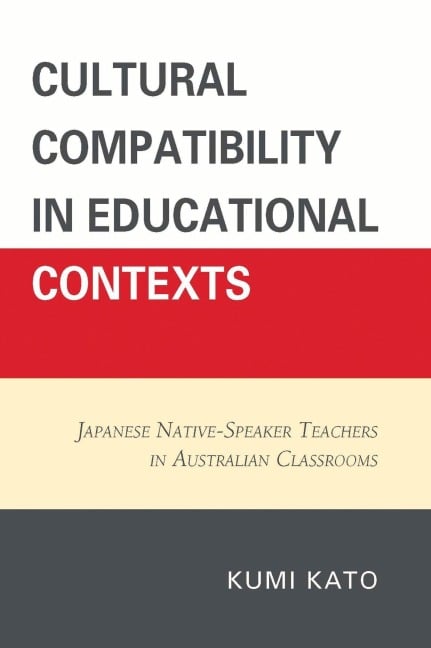
Cultural Compatibility in Educational Contexts examines the mechanism of control and efficacy underlying specific cultural contexts, intercultural value differences, and consequential conflicts, which invisibly and unintentionally cause communication difficulties and negative performances. This specific study centers on Japanese language classrooms in Australia taught by native Japanese speakers. Comparative studies were carried out in classrooms in both Japan and Australia, and identified specific teaching strategies perceived to be effective in each cultural context. The book concludes by asserting that the notion of culture in the educational context goes beyond ethnic and linguistic differences; an awareness of cultural compatibility should be recognized as one of the professional responsibilities of all educators. This is particularly relevant to multicultural societies such as Australia, where both teaching and learning populations are increasingly diverse, as well as being applicable to other social contexts.
Kumi Kato teaches environmental studies and intercultural communication at the University of Queensland, Australia and Wakayama University, Japan. She is also a research associate at the Australian Centre for Peace and Conflict Studies, The University of Queensland, and a research director for Global Cities Institute (Kansai), UN Global Compact (Kansai). She specializes in intercultural value conflicts in environmental issues.
Chapter 1 Tables
Chapter 2 Abbreviations
Chapter 3 Preface
Chapter 4 Acknowledgments
Chapter 5 Introduction
Chapter 6 Chapter 1: Self, subjectivity, and a story of multiple voices
Chapter 7 Chapter 2: Research overview and methodology
Chapter 8 Chapter 3: Cultural compatibility in teaching and learning
Chapter 9 Chapter 4: Japanese native-speaker teachers in Australian classrooms
Chapter 10 Chapter 5: JNS teachers' classroom language use and development of lesson management strategies
Chapter 11 Chapter 6: Conclusion
Chapter 12 Bibliography
Chapter 13 Notes
Dieses eBook wird im PDF-Format geliefert und ist mit einem Adobe Kopierschutz (DRM) versehen. Sie können dieses eBook mit allen Geräten lesen, die das PDF-Format und den Adobe Kopierschutz (DRM) unterstützen.
Zum Beispiel mit den folgenden Geräten:
• tolino Reader
Laden Sie das eBook direkt über den Reader-Shop auf dem tolino herunter oder übertragen Sie das eBook auf Ihren tolino mit einer kostenlosen Software wie beispielsweise Adobe Digital Editions.
• Sony Reader & andere eBook Reader
Laden Sie das eBook direkt über den Reader-Shop herunter oder übertragen Sie das eBook mit der kostenlosen Software Sony READER FOR PC/Mac oder Adobe Digital Editions auf ein Standard-Lesegeräte mit epub- und Adobe DRM-Unterstützung.
• Tablets & Smartphones
Möchten Sie dieses eBook auf Ihrem Smartphone oder Tablet lesen, finden Sie hier unsere kostenlose Lese-App für iPhone/iPad und Android Smartphone/Tablets.
• PC & Mac
Lesen Sie das eBook direkt nach dem Herunterladen mit einer kostenlosen Lesesoftware, beispielsweise Adobe Digital Editions, Sony READER FOR PC/Mac oder direkt über Ihre eBook-Bibliothek in Ihrem Konto unter „Meine eBooks“ - „online lesen“.
Schalten Sie das eBook mit Ihrer persönlichen Adobe ID auf bis zu sechs Geräten gleichzeitig frei.
Bitte beachten Sie, dass die Kindle-Geräte das Format nicht unterstützen und dieses eBook somit nicht auf Kindle-Geräten lesbar ist.