Und dann auf "Zum Home-Bildschirm [+]".

Stöbern
genialokal zum Startbildschirm hinzufügen
Installieren Sie die genialokal App auf Ihrem Startbildschirm für einen schnellen Zugriff und eine komfortable Nutzung.
Installieren Sie die genialokal App auf Ihrem Startbildschirm für einen schnellen Zugriff und eine komfortable Nutzung.
Ihr gewünschter Artikel ist in 0 Buchhandlungen vorrätig - wählen Sie hier eine Buchhandlung in Ihrer Nähe aus:

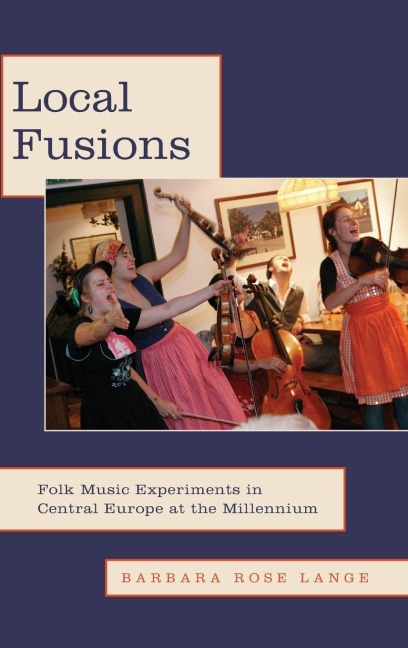
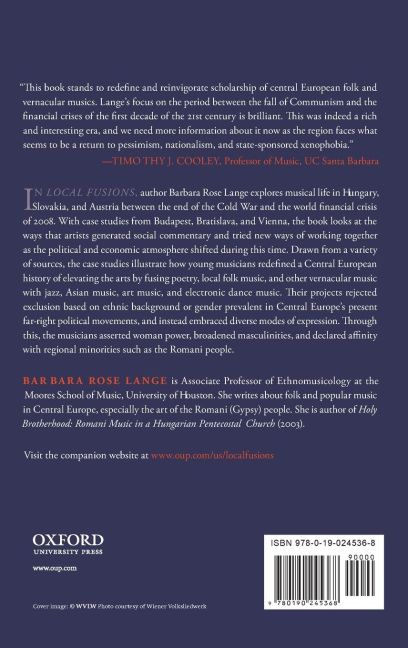
In Local Fusions, author Barbara Rose Lange explores musical life in Hungary, Slovakia, and Austria between the end of the Cold War and the world financial crisis of 2008. With case studies from Budapest, Bratislava, and Vienna, the book looks at the ways that artists generated social commentary and tried new ways of working together as the political and economic atmosphere shifted during this time. Drawn from a variety of sources, the case studies illustrate how young musicians redefined a Central European history of elevating the arts by fusing poetry, local folk music, and other vernacular music with jazz, Asian music, art music, and electronic dance music. Their projects rejected exclusion based on ethnic background or gender prevalent in Central Europe's present far-right political movements, and instead embraced diverse modes of expression. Through this, the musicians asserted woman power, broadened masculinities, and declared affinity with regional minorities such as the Romani people.
Barbara Rose Lange is Associate Professor of Ethnomusicology at the Moores School of Music, University of Houston. She writes about folk and popular music in Central Europe, especially the art of the Romani (Gypsy) people. She is author of Holy Brotherhood: Romani Music in a Hungarian Pentecostal Church (Oxford, 2003).
- Contents
- List of Figures and Tables
- Note on Orthography
- Acknowledgements
- About the Companion Website
- Introduction
- Chapter 1. "Good Old Days": Critiques of Masculinity in the Hungarian Folk Revival
- Chapter 2. Ági Szalóki and Multiethnic Femininity
- Chapter 3. Autobiography, Sexuality, and Ethnicity in the Music of Bea Palya
- Chapter 4. Banda and the Slovak Folk Revival
- Chapter 5. Urban Nostalgia in the Music of Po%zo? sentimentál
- Chapter 6. Slovak Folksong, Romani Pop, and Outer Space in the Music of Hudba z Marsu
- Chapter 7. Recuperating the Alpine Image in Austrian Music
- Chapter 8. Local Identity, World Music 2.0, and Electronic Dance Music
- Chapter 9. Sampling and Commercialization in Danubian Trances and Boheme
- Epilogue
- References
- Index