Und dann auf "Zum Home-Bildschirm [+]".

Stöbern
genialokal zum Startbildschirm hinzufügen
Installieren Sie die genialokal App auf Ihrem Startbildschirm für einen schnellen Zugriff und eine komfortable Nutzung.
Installieren Sie die genialokal App auf Ihrem Startbildschirm für einen schnellen Zugriff und eine komfortable Nutzung.
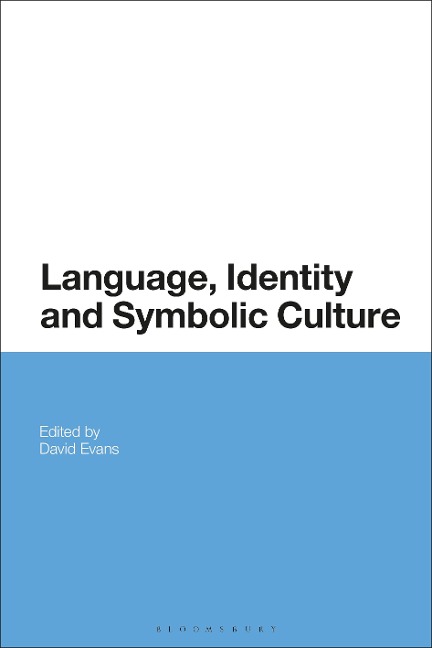
Language is integral to the construction of personal, socio-cultural and socio-political identities. Language, Identity and Symbolic Culture closely investigates the relationship between language and identities, offering a comprehensive yet progressive view of how linguistics relates to development and education, both in theoretical and real world applications.
Progressing from a theoretical core examining the connection between language and individual identity, this book moves on to look at the wider socio-political discourse involving the marginalization and resistance of communities in the world. Beginning with the philosophical paradigms of language, Evans questions whether language shapes personal identities in its daily use or whether language is simply a tool for describing, rather than creating, the world. Extrapolating on this, the contributors utilise case studies from across the globe to see how these linguistic perspectives are played out in the real world, considering the role of language in issues surrounding power, colonization, marginalization and education.
Language, Identity and Symbolic Culture offers a view of language identity conflicts around the world and an understanding of the opportunities of political and cultural emancipation created through language and open discourse.
David Evans is a Fellow in Education in the Education Faculty at Liverpool Hope University, UK.
Part I: Language and Identity: A Theoretical Perspective
1. Introduction, David Evans (Liverpool Hope University, UK)
2. Meaning; from inner structure to post-structure, David Evans (Liverpool Hope University, UK)
3. Discourse Formation, David Evans (Liverpool Hope University, UK)
Part II: Urban Discourses
4. "DFLs" versus "Locals": Discursive Conflict on Social Media and the Battle for Regional Identity, Christopher Anderson (Canterbury Christchurch University, UK)
5. Youth Identities: Media discourse in the formation of youth identity, Patricia Giardiello (Manchester Metropolitan University, UK)
Part III: Marginalized Discourse
6. Language - Culture: Marginalisation or Opportunity in Cameroon's official 'state bilingualism', Henry Kum (Liverpool Hope University, UK)
7. Refugee Communities: The disappearance of voice and impact on care and identity, Henry Kum (Liverpool Hope University, UK)
8. Subalternity, Language and Projects of Emancipation: An Analysis of Dalit Literature, Joseph M.T. (University of Mumbai, India)
9. Mandarin Chinese in Education and Society in Xinjiang, Mamtimyn Sunuodula (Durham University, UK)
Part IV: Pedagogical Discourse
10. Cultural Discourses in the Foreign Language Classroom: economic opportunity, instrumental motivation or cultural understanding, David Evans (Liverpool Hope University, UK)
11. Teacher Development through Classroom Discourse Analysis: The Self Evaluation of Teacher Talk (SETT) instrument developed by Walsh (2007), Karin Zotzmann (University of Southampton, UK)
12. Conclusion: A pedagogy for marginalized language-culture, David Evans (Liverpool Hope University, UK)
Index
Dieses eBook wird im PDF-Format geliefert und ist mit einem Adobe Kopierschutz (DRM) versehen. Sie können dieses eBook mit allen Geräten lesen, die das PDF-Format und den Adobe Kopierschutz (DRM) unterstützen.
Zum Beispiel mit den folgenden Geräten:
• tolino Reader
Laden Sie das eBook direkt über den Reader-Shop auf dem tolino herunter oder übertragen Sie das eBook auf Ihren tolino mit einer kostenlosen Software wie beispielsweise Adobe Digital Editions.
• Sony Reader & andere eBook Reader
Laden Sie das eBook direkt über den Reader-Shop herunter oder übertragen Sie das eBook mit der kostenlosen Software Sony READER FOR PC/Mac oder Adobe Digital Editions auf ein Standard-Lesegeräte mit epub- und Adobe DRM-Unterstützung.
• Tablets & Smartphones
Möchten Sie dieses eBook auf Ihrem Smartphone oder Tablet lesen, finden Sie hier unsere kostenlose Lese-App für iPhone/iPad und Android Smartphone/Tablets.
• PC & Mac
Lesen Sie das eBook direkt nach dem Herunterladen mit einer kostenlosen Lesesoftware, beispielsweise Adobe Digital Editions, Sony READER FOR PC/Mac oder direkt über Ihre eBook-Bibliothek in Ihrem Konto unter „Meine eBooks“ - „online lesen“.
Schalten Sie das eBook mit Ihrer persönlichen Adobe ID auf bis zu sechs Geräten gleichzeitig frei.
Bitte beachten Sie, dass die Kindle-Geräte das Format nicht unterstützen und dieses eBook somit nicht auf Kindle-Geräten lesbar ist.