Und dann auf "Zum Home-Bildschirm [+]".

Stöbern
genialokal zum Startbildschirm hinzufügen
Installieren Sie die genialokal App auf Ihrem Startbildschirm für einen schnellen Zugriff und eine komfortable Nutzung.
Installieren Sie die genialokal App auf Ihrem Startbildschirm für einen schnellen Zugriff und eine komfortable Nutzung.

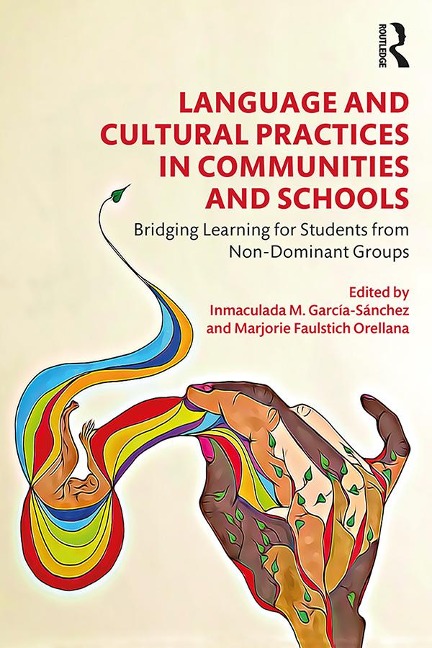
Drawing on sociocultural theories of learning, this book examines how the everyday language practices and cultural funds of knowledge of youth from non-dominant or minoritized groups can be used as centerpoints for classroom learning in ways that help all students both to sustain and expand their cultural and linguistic repertoires while developing skills that are valued in formal schooling. Bringing together a group of ethnographically grounded scholars working in diverse local contexts, this volume identifies how these language practices and cultural funds of knowledge can be used as generative points of continuity and productively expanded on in schools for successful and inclusive learning. Ideal for students and researchers in teaching, learning, language education, literacy, and multicultural education, as well as teachers at all stages of their career, this book contributes to research on culturally and linguistically sustaining practices by offering original teaching methods and a range of ways of connecting cultural competencies to learning across subject matters and disciplines.
Inmaculada M. García-Sánchez is Associate Professor of Anthropology at Temple University, USA.. Marjorie Faulstich Orellana is Professor of Urban Schooling in the Graduate School of Education and Information Studies at University of California, Los Angeles, USA.
Introduction to the Volume -- Everyday Learning: Centering in Schools the Language and Cultural Practices of Young People from Non-Dominant Backgrounds Inmaculada Ma García-Sánchez and Marjorie Faulstich Orellana Chapter 1-- Learning by Observing and Pitching In: Implications for the Classroom Maricela Correa-Chávez and Angélica López-Fraire Chapter 2 -- Seeing Together: The Ecological Knowledge of Indigenous Families in Chicago Urban Forest Walks Ananda M. Marin Chapter 3 -- Building on Students' Cultural Practices in STEM Tia Madkins and Na'ilah Nasir Chapter 4 -- "They Think Detroit is Just Litter": Youth Challenging Environmental Injustice Through Participatory Research and Civic Engagement Enid Rosario-Ramos and Jenny Sawada Chapter 5 -- Leveling the Politicized Experiences of Children from Mixed Status Families: Connections to Civic Education in Elementary Schools Sarah Gallo, Holly Link, and Jessica Somerville Chapter 6 -- Linking Church and School: Language and Literacy Practices of Bilingual Latinx Pentecostal Youth Lucila D. Ek Chapter 7 -- Figurative Language in Religious Community Contexts: Opportunities to Leverage and Expand Bilingual Youth's Linguistic Repertoires Mariana Pacheco and P. Zitlali Morales Chapter 8 -- Centering Shared Linguistic Heritage To Build Language And Literacy Resilience Among Immigrant Students Inmaculada Ma García-Sánchez Chapter 9 -- Finding a Way into Story Worlds: Youth Co-Narrations of Cross-Cultural Lives as Analogue for Academic Literary Talk Patricia Enciso Chapter 10 -- Where Everyday Translanguaging Meets Academic Writing: Exploring Tensions and Generative Connections for Bilingual Latina/o/x Students Ramón Martínez, Leah Durán, and Michiko Hikida Chapter 11 -- Immigrant Youth Reading Stories in Translation: Lessons for Literacy Instruction in School Jennifer F. Reynolds and Marjorie Faulstich Orellana Chapter 12 -- Exploring, Thinking and Learning about Languages and Literacies with Young People in Super-diverse Australian Classrooms Jacqueline D'warte Chapter 13 -- Leveraging Youth Cultural Data Sets for Teacher Learning Danny Martinez, Elizabeth Montaño, and Javier Rojo Afterword - Don't Believe the Hype: Reality Rules! Carol D. Lee