Und dann auf "Zum Home-Bildschirm [+]".

Stöbern
genialokal zum Startbildschirm hinzufügen
Installieren Sie die genialokal App auf Ihrem Startbildschirm für einen schnellen Zugriff und eine komfortable Nutzung.
Installieren Sie die genialokal App auf Ihrem Startbildschirm für einen schnellen Zugriff und eine komfortable Nutzung.
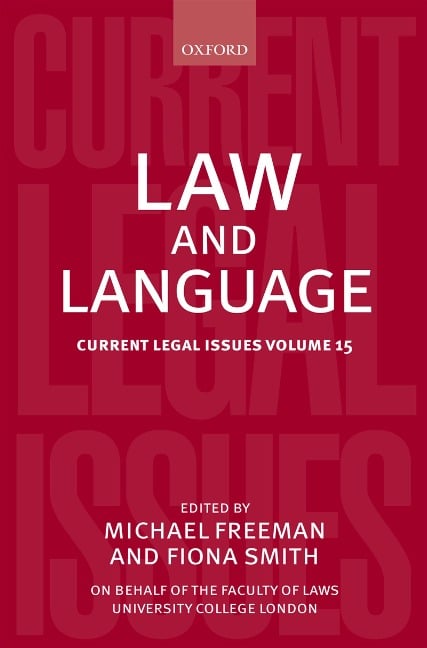
Current Legal Issues, like its sister volume Current Legal Problems (now available in journal format), is based upon an annual colloquium held at University College London. Each year leading scholars from around the world gather to discuss the relationship between law and another discipline of thought. Each colloquium examines how the external discipline is conceived in legal thought and argument, how the law is pictured in that discipline, and analyses points of controversy in the use, and abuse, of extra-legal arguments within legal theory and practice. Law and Language, the fifteenth volume in the Current Legal Issues series, offers an insight into the scholarship examining the relationship between language and the law. The issues examined in this book range from problems of interpretation and beyond this to the difficulties of legal translation, and further to non-verbal expression in a chapter tracing the use of sign language at the Old Bailey; it examines the role of language and the law in a variety of literary works, including Hamlet; and considers the interrelation between language and the law in a variety of contexts, including criminal law, contract law, family law, human rights law, and EU law.
- 1: Michael Freeman and Fiona Smith: Introduction: Law and Language - 2: Robyn Carston: Legal Texts and Canons of Construction: A View from Current Pragmatic Theory - 3: Brian H. Bix: Linguistic Meaning and Legal Truth - 4: Andrei Marmor: Truth in Law - 5: Andrew Halpin: Language, Truth, and Law - 6: Veronica Rodriguez-Blanco: Claims of Legal Authorities and 'Expressions of Intention': The Limits of Philosophy of Language - 7: Richard Nobles and David Schiff: Legal Pluralism: A Systems Theory Approach to Language, Translation, and Communication - 8: Steven L. Winter: Frame Semantics and the 'Internal Point of View' - 9: Ross Charnock: Hart as Contextualist? Theories of Interpretation in Language and the Law - 10: Jan-Melissa Schramm: On Goodness and Genre: Talking about Virtue in Law and Literature - 11: Sebastian McEvoy: The Grin's Cat: Language, Law, and Literature - 12: Michael Hancher: Reading and Writing the Law: Macaulay in India - 13: Eric Heinze: 'Where be his quiddities now?' Law and Language in Hamlet - 14: Steven Cammiss: Stories in Law: Providing Space for 'Oppositionists'? - 15: Marco Wan: Literal Interpretation and English Precedent in Joe Ma's Lawyer, Lawyer - 16: Benjamin Shaer: Toward a Cognitive Science of Legal Interpretation - 17: June Luchjenbroers and Michelle Aldridge-Waddon: Do You Kick a Dog When It's Down? Considering the Use of Children's Video-taped Testimonies in Court - 18: Jonathan Herring: The Power of Naming: Surnames, Children, and Spouses - 19: Luna Filipovic: The Role of Language in Legal Contexts: A Forensic Cross-linguistic Viewpoint - 20: Hrafn Asgeirsson: Vagueness and Power-Delegation in Law: A Reply to Sorensen - 21: David Gurnham: Plato's Fertility Clinic: Status and Identity Rhetoric in Parenthood Disputes - 22: Janet Ainsworth: Silence, Speech, and the Paradox of the Right to Remain Silent in American Police Interrogation - 23: Anthony Amatrudo: The Consumption of Legal Language: Consuming the Law - 24: Catrin Fflur Huws: (Language + Law)2 = ? - 25: Kim Barker: MMORPGing, Law, and Lingo - 26: Paul S. Davies: Construing Commercial Contracts: No Need for Violence - 27: Claire A. Hill: Why Are Non-US Contracts Written in US Legalese? Some Preliminary Thoughts, and a Research Agenda - 28: Rachel Herron: The Role of Parliamentary Rhetoric in Facilitating the Racial Effect of the Section 44 Terrorism Act 2000 Stop and Search Powers - 29: Karen McAuliffe: Precedent at the Court of Justice of the European Union: the Linguistic Aspect - 30: Bénédicte Sage-Fuller, Ferdinand Prinz zur Lippe, and Seán Ó Conaill: Law and Language(s) at the Heart of the European Project: Educating Different Kinds of Lawyers - 31: Simone Glanert and Pierre Legrand: Foreign Law in Translation: If Truth Be Told... - 32: Lorenz Kähler: First-person Perspectives in Legal Decisions - 33: Bencie Woll and Christopher Stone: Deaf People at the Old Bailey from the 18th Century Onwards - 34: Gary Watt: Rule of the Root: Proto-Indo-European Domination of Legal Language - 35: Penelope Pether: Necessary Violence?: Inscribing the Subject of Law
Dieses eBook wird im PDF-Format geliefert und ist mit einem Adobe Kopierschutz (DRM) versehen. Sie können dieses eBook mit allen Geräten lesen, die das PDF-Format und den Adobe Kopierschutz (DRM) unterstützen.
Zum Beispiel mit den folgenden Geräten:
• tolino Reader
Laden Sie das eBook direkt über den Reader-Shop auf dem tolino herunter oder übertragen Sie das eBook auf Ihren tolino mit einer kostenlosen Software wie beispielsweise Adobe Digital Editions.
• Sony Reader & andere eBook Reader
Laden Sie das eBook direkt über den Reader-Shop herunter oder übertragen Sie das eBook mit der kostenlosen Software Sony READER FOR PC/Mac oder Adobe Digital Editions auf ein Standard-Lesegeräte mit epub- und Adobe DRM-Unterstützung.
• Tablets & Smartphones
Möchten Sie dieses eBook auf Ihrem Smartphone oder Tablet lesen, finden Sie hier unsere kostenlose Lese-App für iPhone/iPad und Android Smartphone/Tablets.
• PC & Mac
Lesen Sie das eBook direkt nach dem Herunterladen mit einer kostenlosen Lesesoftware, beispielsweise Adobe Digital Editions, Sony READER FOR PC/Mac oder direkt über Ihre eBook-Bibliothek in Ihrem Konto unter „Meine eBooks“ - „online lesen“.
Schalten Sie das eBook mit Ihrer persönlichen Adobe ID auf bis zu sechs Geräten gleichzeitig frei.
Bitte beachten Sie, dass die Kindle-Geräte das Format nicht unterstützen und dieses eBook somit nicht auf Kindle-Geräten lesbar ist.