Und dann auf "Zum Home-Bildschirm [+]".

Stöbern
genialokal zum Startbildschirm hinzufügen
Installieren Sie die genialokal App auf Ihrem Startbildschirm für einen schnellen Zugriff und eine komfortable Nutzung.
Installieren Sie die genialokal App auf Ihrem Startbildschirm für einen schnellen Zugriff und eine komfortable Nutzung.
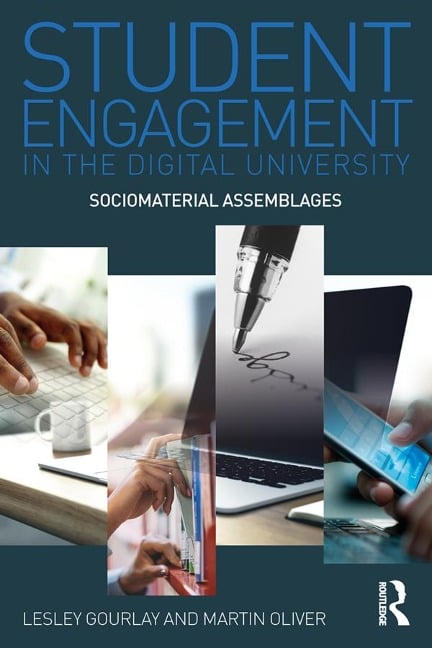
Student Engagement in the Digital University challenges mainstream conceptions and assumptions about students' engagement with digital resources in Higher Education. While engagement in online learning environments is often reduced to sets of transferable skills or typological categories, the authors propose that these experiences must be understood as embodied, socially situated, and taking place in complex networks of human and nonhuman actors. Using empirical data from a JISC-funded project on digital literacies, this book performs a sociomaterial analysis of student-technology interactions, complicating the optimistic and utopian narratives surrounding technology and education today and positing far-reaching implications for research, policy and practice.
Lesley Gourlay is Head of the Department of Culture, Communication and Media and Reader in Education and Technology at the Institute of Education, University College London, UK. She is Co-Convener of the Society for Research into Higher Education's UK-wide Digital University Network, and Executive Editor for the journal Teaching in Higher Education. Martin Oliver is Professor of Education and Technology and the Head of the Centre for Doctoral Education at the Institute of Education, University College London, UK. He has edited the journals Research in Learning Technology and Learning, Media and Technology, and is Past President of the Association for Learning Technology.
Chapter 1: Introduction Chapter 2: Digital Hype, Myths and Fantasies Chapter 3: Hidden Texts and the Digital Invisible Chapter 4: The Trouble with Frameworks Chapter 5: Researching Digital Engagement Chapter 6: Entanglements with the Digital Chapter 7: Nonhuman Actors, Materiality and Embodiment Chapter 8: Beyond Context Chapter 9: Fluid Assemblages and Resilience Chapter 10: The Organisation as Assemblage Chapter 11: The Assemblage as Lens Chapter 12: Conclusions
Dieses eBook wird im PDF-Format geliefert und ist mit einem Adobe Kopierschutz (DRM) versehen. Sie können dieses eBook mit allen Geräten lesen, die das PDF-Format und den Adobe Kopierschutz (DRM) unterstützen.
Zum Beispiel mit den folgenden Geräten:
• tolino Reader
Laden Sie das eBook direkt über den Reader-Shop auf dem tolino herunter oder übertragen Sie das eBook auf Ihren tolino mit einer kostenlosen Software wie beispielsweise Adobe Digital Editions.
• Sony Reader & andere eBook Reader
Laden Sie das eBook direkt über den Reader-Shop herunter oder übertragen Sie das eBook mit der kostenlosen Software Sony READER FOR PC/Mac oder Adobe Digital Editions auf ein Standard-Lesegeräte mit epub- und Adobe DRM-Unterstützung.
• Tablets & Smartphones
Möchten Sie dieses eBook auf Ihrem Smartphone oder Tablet lesen, finden Sie hier unsere kostenlose Lese-App für iPhone/iPad und Android Smartphone/Tablets.
• PC & Mac
Lesen Sie das eBook direkt nach dem Herunterladen mit einer kostenlosen Lesesoftware, beispielsweise Adobe Digital Editions, Sony READER FOR PC/Mac oder direkt über Ihre eBook-Bibliothek in Ihrem Konto unter „Meine eBooks“ - „online lesen“.
Schalten Sie das eBook mit Ihrer persönlichen Adobe ID auf bis zu sechs Geräten gleichzeitig frei.
Bitte beachten Sie, dass die Kindle-Geräte das Format nicht unterstützen und dieses eBook somit nicht auf Kindle-Geräten lesbar ist.