Und dann auf "Zum Home-Bildschirm [+]".

Stöbern
genialokal zum Startbildschirm hinzufügen
Installieren Sie die genialokal App auf Ihrem Startbildschirm für einen schnellen Zugriff und eine komfortable Nutzung.
Installieren Sie die genialokal App auf Ihrem Startbildschirm für einen schnellen Zugriff und eine komfortable Nutzung.
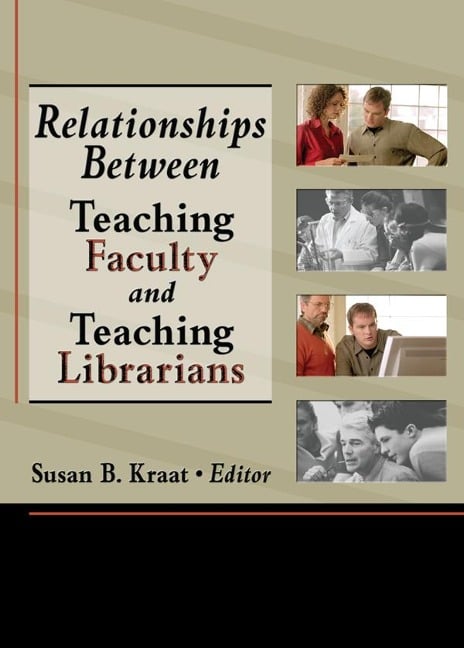
Every librarian who teaches in an academic library setting understands the complexities involved in partnering with teaching faculty. Relationships Between Teaching Faculty and Teaching Librarians recounts the efforts of librarians and faculty working together in disciplines across the board to create and sustain connections crucial to the success of library instruction. This unique collection of essays examines various types of partnerships between librarians and faculty (networking, coordination, and collaboration) and addresses the big issues involved, including teaching within an academic discipline, the intricacies of assigning grades, faculty perceptions of library instruction, and the changing role of the reference librarian. Education is the main focus of reference service in today's academic libraries and librarians teach a variety of single-session, course-related, course-integrated, or credit-bearing courses in nearly every discipline. Relationships Between Teaching Faculty and Teaching Librarians reflects the experiences of librarians, teaching faculty, and library directors, whose perspectives range from cynicism to cautious optimism to idealism when it comes to working with teaching faculty. The book includes case studies, surveys, sample questionnaires, statistics, and a toolkit for establishing an effective library liaison program, and examines the teaching and learning environment, course growth and maintenance, and the professor librarian model. Relationships Between Teaching Faculty and Teaching Librarians presents lessons learned from seeking a common ground including: - a successful faculty/librarian collaboration for educational psychology and counseling - a library research project for freshman engineering students - a semester-by-semester look at a collaboratively taught graduate research and writing course - a survey that determines how librarians and library directors feel about teaching outside the library - an analysis of librarians' attitudes toward faculty - an analysis of attitudes that influence faculty collaboration in library instruction - a look at innovative methods of increasing the teaching roles of librarians - and much more! The Middle States Commission on Higher Education (MSA/CHE) has mandated that information literacy be included as part of a general education requirement. If your faculty wasn't calling for library instruction before the mandate, it probably is now. Relationships Between Teaching Faculty and Teaching Librarians will help librarians establish communication with faculty that provides a solid foundation for coursework in all disciplines.
Susan B. Kraat
- Introduction: Do You Really Get More Flies with Honey? (Susan B. Kraat) - Getting Psyched About Information Literacy: A Successful Faculty-Librarian Collaboration for Educational Psychology and Counseling (Lynn Lampert) - Finding Common Ground: An Analysis of Librarians' Expressed Attitudes Towards Faculty (Lisa M. Given and Heidi Julien) - Librarians Grading: Giving A's, B's, C's, D's, and F's (Nicole J. Auer and Ellen M. Krupar) - Can't Get No Respect: Helping Faculty to Understand the Educational Power of Information Literacy (William B. Badke) - Research and Writing and ThesesOh My! The Journey of a Collaboratively Taught Graduate Research and Writing Course (Michelle Toth) - Library Research Project for First-Year Engineering Students: Results from Collaboration by Teaching and Library Faculty (Rachel Callison, Dan Budny, and Kate Thomes) - Librarians in the Classroom (Peggie Partelllo) - Faculty-Librarian Collaboration to Teach Research Skills: Electronic Symbiosis (Navaz P. Bhavnagri and Veronica Bielat) - An Ethnographic Study of Attitudes Influencing Faculty Collaboration in Library Instruction (Kate Manuel, Susan E. Beck, and Molly Molloy) - The Library Liaison Toolkit: Learning to Bridge the Communication Gap (Stephan J. Macaluso and Barbara Whitney Petruzzelli) - Index - Reference Notes Included
Dieses eBook wird im PDF-Format geliefert und ist mit einem Adobe Kopierschutz (DRM) versehen. Sie können dieses eBook mit allen Geräten lesen, die das PDF-Format und den Adobe Kopierschutz (DRM) unterstützen.
Zum Beispiel mit den folgenden Geräten:
• tolino Reader
Laden Sie das eBook direkt über den Reader-Shop auf dem tolino herunter oder übertragen Sie das eBook auf Ihren tolino mit einer kostenlosen Software wie beispielsweise Adobe Digital Editions.
• Sony Reader & andere eBook Reader
Laden Sie das eBook direkt über den Reader-Shop herunter oder übertragen Sie das eBook mit der kostenlosen Software Sony READER FOR PC/Mac oder Adobe Digital Editions auf ein Standard-Lesegeräte mit epub- und Adobe DRM-Unterstützung.
• Tablets & Smartphones
Möchten Sie dieses eBook auf Ihrem Smartphone oder Tablet lesen, finden Sie hier unsere kostenlose Lese-App für iPhone/iPad und Android Smartphone/Tablets.
• PC & Mac
Lesen Sie das eBook direkt nach dem Herunterladen mit einer kostenlosen Lesesoftware, beispielsweise Adobe Digital Editions, Sony READER FOR PC/Mac oder direkt über Ihre eBook-Bibliothek in Ihrem Konto unter „Meine eBooks“ - „online lesen“.
Schalten Sie das eBook mit Ihrer persönlichen Adobe ID auf bis zu sechs Geräten gleichzeitig frei.
Bitte beachten Sie, dass die Kindle-Geräte das Format nicht unterstützen und dieses eBook somit nicht auf Kindle-Geräten lesbar ist.