Und dann auf "Zum Home-Bildschirm [+]".

Stöbern
genialokal zum Startbildschirm hinzufügen
Installieren Sie die genialokal App auf Ihrem Startbildschirm für einen schnellen Zugriff und eine komfortable Nutzung.
Installieren Sie die genialokal App auf Ihrem Startbildschirm für einen schnellen Zugriff und eine komfortable Nutzung.
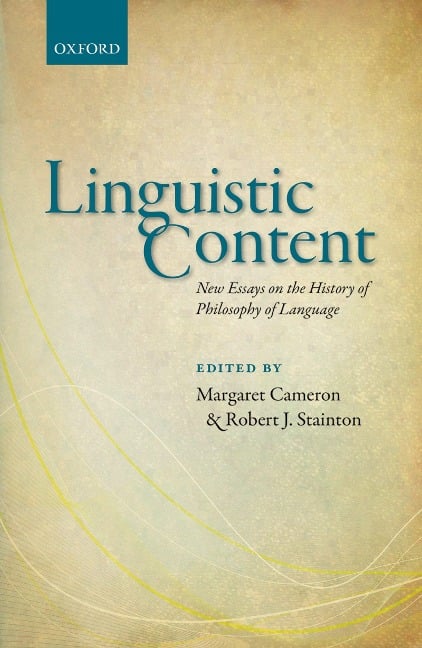
Philosophy of language has a rich and varied history stretching back to the Ancient Greeks. Twelve specially written essays explore this richness, from Plato and Aristotle, through the Stoics, to medieval thinkers, both Islamic and Christian; from the Renaissance and the early modern period, all the way up to the twentieth Century. Among the many topics that arise across this 2500-year trajectory are metaphysical questions about linguistic content. A first focal point of the volume is the issue of which broad ontological family linguistic contents belong to. Are linguistic contents mental ideas, physical particulars, abstract Forms, social practices, or something else again? And do different sorts of linguistic contents belong to different ontological categories-e.g., might it be that names stand for ideas, whereas logical terms stand for mental processes? The second focal point is the metaphysical grounding of linguistic content: that is, in virtue of what more basic facts do content facts obtain? Do words mean what they do because of natural resemblances? Because of causal relations? Because of arbitrary conventional usage? Or because of some combination of the above?
Margaret Cameron completed her PhD in the Collaborative Program in Ancient and Medieval Philosophy at the University of Toronto in 2005. She is currently Associate Professor and Canada Research Chair in the Aristotelian Tradition at the University of Victoria.
Robert Stainton first studied Philosophy and Linguistics as an undergraduate in his home town of Toronto, at Glendon College, part of York University. He completed the Ph.D. at MIT in 1993, and took up his first academic job at Carleton University in Ottawa, where he was Canada Research Chair in Cognitive Science. Presently he is Distinguished University Professor in the Department of Philosophy at the University of Western Ontario in London.
- Introduction - 1: Deborah Modrak: Method, Meaning, and Ontology in Plato's Philosophy of Language - 2: Francesco Ademollo: Names, Verbs, and Sentences in Ancient Greek Philosophy - 3: Margaret Cameron: On what is said: the Stoics and Peter Abelard - 4: Peter Adamson and Alexander Key: Philosophy of Language in the Medieval Arabic Tradition - 5: Joke Spruyt and Catarina Dutilh Novaes: Those 'funny words': medieval theories of syncategorematic terms - 6: Gyula Klima: Semantic Content in Aquinas and Ockham - 7: Lodi Nauta: Meaning and Linguistic Usage in Renaissance Humanism: The case of Valla - 8: E. Jennifer Ashworth: Medieval Theories of Signification to John Locke - 9: Benjamin Hill: Locke on the Names of Modes - 10: Michael Forster: Herder's Doctrine of Meaning as Use - 11: Patrick Rysiew: Thomas Reid on Language - 12: Laurent Cesalli: 'Meaning in Action': Anton Marty's Pragmatic Semantics
Dieses eBook wird im PDF-Format geliefert und ist mit einem Adobe Kopierschutz (DRM) versehen. Sie können dieses eBook mit allen Geräten lesen, die das PDF-Format und den Adobe Kopierschutz (DRM) unterstützen.
Zum Beispiel mit den folgenden Geräten:
• tolino Reader
Laden Sie das eBook direkt über den Reader-Shop auf dem tolino herunter oder übertragen Sie das eBook auf Ihren tolino mit einer kostenlosen Software wie beispielsweise Adobe Digital Editions.
• Sony Reader & andere eBook Reader
Laden Sie das eBook direkt über den Reader-Shop herunter oder übertragen Sie das eBook mit der kostenlosen Software Sony READER FOR PC/Mac oder Adobe Digital Editions auf ein Standard-Lesegeräte mit epub- und Adobe DRM-Unterstützung.
• Tablets & Smartphones
Möchten Sie dieses eBook auf Ihrem Smartphone oder Tablet lesen, finden Sie hier unsere kostenlose Lese-App für iPhone/iPad und Android Smartphone/Tablets.
• PC & Mac
Lesen Sie das eBook direkt nach dem Herunterladen mit einer kostenlosen Lesesoftware, beispielsweise Adobe Digital Editions, Sony READER FOR PC/Mac oder direkt über Ihre eBook-Bibliothek in Ihrem Konto unter „Meine eBooks“ - „online lesen“.
Schalten Sie das eBook mit Ihrer persönlichen Adobe ID auf bis zu sechs Geräten gleichzeitig frei.
Bitte beachten Sie, dass die Kindle-Geräte das Format nicht unterstützen und dieses eBook somit nicht auf Kindle-Geräten lesbar ist.