Und dann auf "Zum Home-Bildschirm [+]".

Stöbern
genialokal zum Startbildschirm hinzufügen
Installieren Sie die genialokal App auf Ihrem Startbildschirm für einen schnellen Zugriff und eine komfortable Nutzung.
Installieren Sie die genialokal App auf Ihrem Startbildschirm für einen schnellen Zugriff und eine komfortable Nutzung.
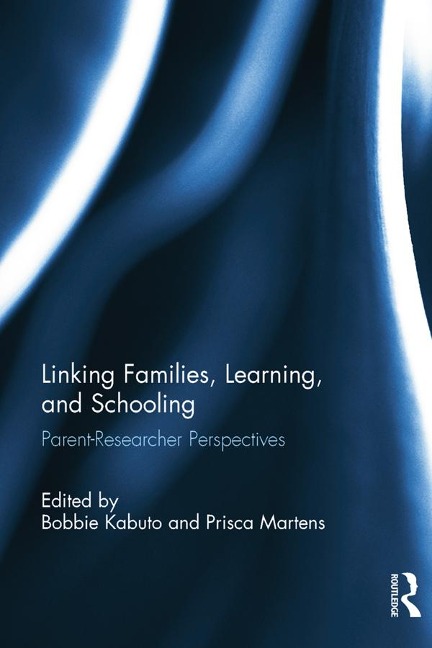
Parents who are also educational researchers have access to a domain that is highly complex and not always available to other scholars. In this book, parent-researchers provide theoretical and practical insights into children's learning in the home and at school. Readers are given a window into learning in the home context and how all family members organize or engage in that learning. Working on two levels, the book develops scholarly discussions about learning in the home (how is it organized, who the participants are, and what children are learning), and it illustrates the impacts that outside institutions, in particular schools, have on families It is unique in showcasing parent-research as a type of research paradigm with particular aspects and challenges. Both teachers and researchers can learn from these studies as they show the impact that schooling has on families and how institutional discourses and beliefs can both positively and negatively affect the dynamics of any family.
Bobbie Kabuto is Assistant Professor of Literacy Education in the Department of Elementary and Early Childhood Education, Queens College, City University of New York, USA. Prisca Martens is Professor in the Department of Elementary Education at Towson University, USA.
Contents Foreword Learning Lessons from Our Children and Grandchildren Yetta M. Goodman Preface Acknowledgments Chapter 1 Introduction Bobbie Kabuto & Prisca Martens Section 1: Everyday Families, Everyday Learning Chapter 2 What Do Those Marks Really Mean?: A Semiotic Perspective to Writing in a Bilingual Context Bobbie Kabuto Chapter 3 Whiteness, Discourse, and Early Childhood: An Ethnographic Study of Three Young Children's Construction of Race in Home and Community Settings Erin T. Miller Section 2: Families and Schooling Chapter 4 The Struggle for Literacy: Leo's Story Catherine Olsen Maderazo Chapter 5 Preparing Teachers to Teach Other People's Children While Homeschooling Your Own: One Black Woman Scholar's Story Marcelle M. Haddix Chapter 6 My Gift to You is My Language: Spanish is the Language of My Heart Julia López-Robertson Chapter 7 "I already know how to read!": Home and School Perceptions of Literacy Prisca Martens Chapter 8 At Home At School: Following Our Children Kathleen Shannon & Patrick Shannon Section 3: Parent-Researchers as Archeologists in Daily Family Life Chapter 9 "They don't really know me": Mother-Daughter Insights for Researchers and Teachers Susi Long & Kelli Long Chapter 10 Looking Backward in Order to Look Forward: The Enduring Contribution of Parent Research Marcia Baghban Chapter 11 Researching Literate Lives Jerome C. Harste & Carolyn L. Burke
Dieses eBook wird im PDF-Format geliefert und ist mit einem Adobe Kopierschutz (DRM) versehen. Sie können dieses eBook mit allen Geräten lesen, die das PDF-Format und den Adobe Kopierschutz (DRM) unterstützen.
Zum Beispiel mit den folgenden Geräten:
• tolino Reader
Laden Sie das eBook direkt über den Reader-Shop auf dem tolino herunter oder übertragen Sie das eBook auf Ihren tolino mit einer kostenlosen Software wie beispielsweise Adobe Digital Editions.
• Sony Reader & andere eBook Reader
Laden Sie das eBook direkt über den Reader-Shop herunter oder übertragen Sie das eBook mit der kostenlosen Software Sony READER FOR PC/Mac oder Adobe Digital Editions auf ein Standard-Lesegeräte mit epub- und Adobe DRM-Unterstützung.
• Tablets & Smartphones
Möchten Sie dieses eBook auf Ihrem Smartphone oder Tablet lesen, finden Sie hier unsere kostenlose Lese-App für iPhone/iPad und Android Smartphone/Tablets.
• PC & Mac
Lesen Sie das eBook direkt nach dem Herunterladen mit einer kostenlosen Lesesoftware, beispielsweise Adobe Digital Editions, Sony READER FOR PC/Mac oder direkt über Ihre eBook-Bibliothek in Ihrem Konto unter „Meine eBooks“ - „online lesen“.
Schalten Sie das eBook mit Ihrer persönlichen Adobe ID auf bis zu sechs Geräten gleichzeitig frei.
Bitte beachten Sie, dass die Kindle-Geräte das Format nicht unterstützen und dieses eBook somit nicht auf Kindle-Geräten lesbar ist.