Und dann auf "Zum Home-Bildschirm [+]".

Stöbern
genialokal zum Startbildschirm hinzufügen
Installieren Sie die genialokal App auf Ihrem Startbildschirm für einen schnellen Zugriff und eine komfortable Nutzung.
Installieren Sie die genialokal App auf Ihrem Startbildschirm für einen schnellen Zugriff und eine komfortable Nutzung.
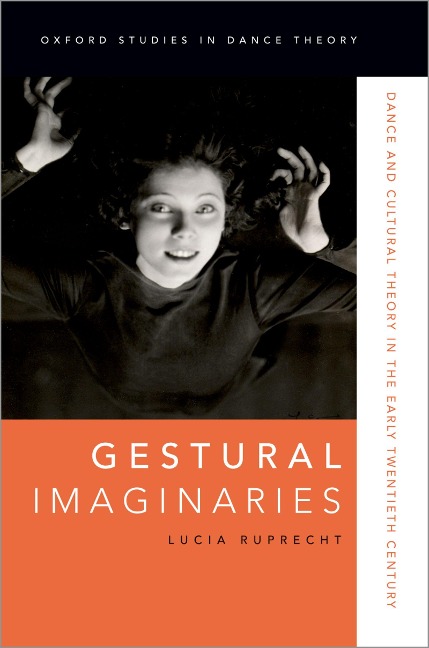
Gestural Imaginaries: Dance and Cultural Theory in the Early Twentieth Century offers a new interpretation of European modernist dance by addressing it as guiding medium in a vibrant field of gestural culture that ranged across art and philosophy. Taking further Cornelius Castoriadis's concept of the social imaginary, it explores this imaginary's embodied forms. Close readings of dances, photographs, and literary texts are juxtaposed with discussions of gestural theory by thinkers including Walter Benjamin, Sigmund Freud, and Aby Warburg. Choreographic gesture is defined as a force of intermittency that creates a new theoretical status of dance. Author Lucia Ruprecht shows how this also bears on contemporary theory. She shifts emphasis from Giorgio Agamben's preoccupation with gestural mediality to Jacques Rancière's multiplicity of proliferating, singular gestures, arguing for their ethical and political relevance. Mobilizing dance history and movement analysis, Ruprecht highlights the critical impact of works by choreographers such as Vaslav Nijinsky, Jo Mihaly, and Alexander and Clotilde Sakharoff. She also offers choreographic readings of Franz Kafka and Alfred Döblin. Gestural Imaginaries proposes that modernist dance conducts a gestural revolution which enacts but also exceeds the insights of past and present cultural theory. It makes a case for archive-based, cross-medial, and critically informed dance studies, transnational German studies, and the theoretical potential of performance itself.
Lucia Ruprecht is a Fellow of Emmanuel College and an affiliated Lecturer in the Department of German and Dutch, University of Cambridge, UK. She studied German and French literature at Universities in Germany, France, and the UK. She has been an Alexander von Humboldt Fellow at the Institute of Theater Studies, Free University Berlin, and the inaugural Visiting Research Scholar at Boyer College of Music and Dance, Temple University, Philadelphia. She works at the intersection of dance, film, literature, and cultural theory from the enlightenment to the contemporary.
Foreword by Mark Franko Acknowledgments List of Figures List of Abbreviations Inaugurating Gestures: Le Sacre du printemps Introduction: Gestural Imaginaries 1. A Second Gestural Revolution and Gesturing Hands in Rainer Maria Rilke, Auguste Rodin, Mary Wigman, and Tilly Losch 2. Gestures of Vibrating (Interruption) in Rudolf von Laban, Mary Wigman, and Walter Benjamin 3. Conducts and Codes of Gesture in Walter Benjamin and Franz Kafka 4. Gestural (In)visibility in Béla Balázs and Helmuth Plessner 5. Gestures Between Symptom and Symbol in Aby Warburg and Sigmund Freud 6. Gestures Between the Auratic and the Profane: Niddy Impekoven's and Franz Kafka's Reenactments of Liturgy 7. Gestural Drag: Baroquism and Modernist Minstrelsy in Alexander and Clotilde Sakharoff 8. Floral Pathochoreographies: Mime Studies by Harald Kreutzberg, Alfred Döblin, and Jo Mihaly Epilogue Notes Bibliography Index
Dieses eBook wird im PDF-Format geliefert und ist mit einem Adobe Kopierschutz (DRM) versehen. Sie können dieses eBook mit allen Geräten lesen, die das PDF-Format und den Adobe Kopierschutz (DRM) unterstützen.
Zum Beispiel mit den folgenden Geräten:
• tolino Reader
Laden Sie das eBook direkt über den Reader-Shop auf dem tolino herunter oder übertragen Sie das eBook auf Ihren tolino mit einer kostenlosen Software wie beispielsweise Adobe Digital Editions.
• Sony Reader & andere eBook Reader
Laden Sie das eBook direkt über den Reader-Shop herunter oder übertragen Sie das eBook mit der kostenlosen Software Sony READER FOR PC/Mac oder Adobe Digital Editions auf ein Standard-Lesegeräte mit epub- und Adobe DRM-Unterstützung.
• Tablets & Smartphones
Möchten Sie dieses eBook auf Ihrem Smartphone oder Tablet lesen, finden Sie hier unsere kostenlose Lese-App für iPhone/iPad und Android Smartphone/Tablets.
• PC & Mac
Lesen Sie das eBook direkt nach dem Herunterladen mit einer kostenlosen Lesesoftware, beispielsweise Adobe Digital Editions, Sony READER FOR PC/Mac oder direkt über Ihre eBook-Bibliothek in Ihrem Konto unter „Meine eBooks“ - „online lesen“.
Schalten Sie das eBook mit Ihrer persönlichen Adobe ID auf bis zu sechs Geräten gleichzeitig frei.
Bitte beachten Sie, dass die Kindle-Geräte das Format nicht unterstützen und dieses eBook somit nicht auf Kindle-Geräten lesbar ist.