Und dann auf "Zum Home-Bildschirm [+]".

Stöbern
genialokal zum Startbildschirm hinzufügen
Installieren Sie die genialokal App auf Ihrem Startbildschirm für einen schnellen Zugriff und eine komfortable Nutzung.
Installieren Sie die genialokal App auf Ihrem Startbildschirm für einen schnellen Zugriff und eine komfortable Nutzung.
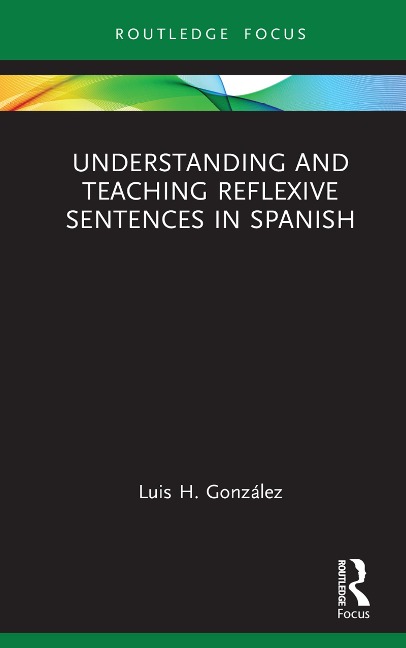
Understanding and Teaching Reflexive Sentences in Spanish provides a fresh, simple, and novel approach to understanding and teaching the use of the intransitivizing se. Understanding reflexive sentences can be challenging for learners of Spanish. Instead of expecting learners to memorize multiple rules, the author offers one simple rule that allows learners to intuitively understand and use reflexive sentences. Sample exercises for students at all levels of language proficiency are also provided to practice and internalize the new approach. This book will be of interest to teachers and learners of any second language, as well as linguists interested in second language acquisition or in second language teaching or pedagogy.
Luis H. González is Professor of Spanish and Linguistics at Wake Forest University. He completed his Ph.D. at the University of California, Davis. His main areas of research are semantic roles, case, reflexivization, clitic doubling, differential object marking, dichotomies in languages, Spanish linguistics, and second language learning. He is the co-author of Gramática para la composición (Georgetown University Press), a Spanish advanced grammar and writing textbook, now in its third edition (2016). He is also the author of Cómo entender y cómo enseñar por y para (Routledge, 2020), Four Dichotomies in Spanish: Adjective Position, Adjectival Clauses, Ser/Estar, and Preterite/Imperfect (Routledge, 2021) and The Fundamentally Simple Logic of Language: Learning a Second Language with the Tools of the Native Speaker (Routledge, 2021).
List of tables Acknowledgements Chapter 1: Subject and direct object or verber and verbed? 1.1 Introduction 2.1 How verbed reveals a difference that subject hides 3.1 Sentences with three participants Chapter 2: Turning reflexivization on its head 2.1. Introduction 2.2. Reflexivization: more than meets the eye 2.3. Reflexivization turned upside down 2.4. How Estela se parece a su mamá is not an idiom; it is similar to Estela se sirvió un café 2.5. Does a reflexive pronoun replace the direct object/indirect object or the subject? 2.6. An intransitivizing pronoun replaces the verber, not the subject 2.7. Conclusions 2.8. Exercises 2.9. Answers to the exercises Chapter 3: How the intransitivizing se accounts for true reflexive se, but not the other way around 3.1. The view from above: against the need for the ten to 15 different functions of se 3.2. You can drink up your coffee but you cannot *drink up coffee 3.3. Conclusions 3.4. Exercises 3.5. Answers to the exercises Chapter 4: Other "functions" of se: Can telling your name in another language be an idiom? 4.1. On gone, goer, goner, fallen, dead 4.2. Can telling your name in another language be an idiom? 4.3. Can we, please, never ever again explain in a textbook for Spanish the accidental or unplanned se? 4.4. Conclusions 4.5. Exercises 4.6. Answers to the exercises Chapter 5: Bringing together coreference reflexives, decausative reflexives, impersonal passives, and inherently reflexive verbs 5.1. How verber intransitivization brings together coreference reflexives, decausative reflexives, impersonal se, and inherently reflexive verbs 5.2. The 11 types of intransitivized sentences with a reflexive pronoun in Spanish (§ 3.1) and in ten other languages 5.3 A smaller set of sentences intransitivized with an intransitivizing pronoun in 20 other languages 5.4. Conclusions Index
Dieses eBook wird im PDF-Format geliefert und ist mit einem Adobe Kopierschutz (DRM) versehen. Sie können dieses eBook mit allen Geräten lesen, die das PDF-Format und den Adobe Kopierschutz (DRM) unterstützen.
Zum Beispiel mit den folgenden Geräten:
• tolino Reader
Laden Sie das eBook direkt über den Reader-Shop auf dem tolino herunter oder übertragen Sie das eBook auf Ihren tolino mit einer kostenlosen Software wie beispielsweise Adobe Digital Editions.
• Sony Reader & andere eBook Reader
Laden Sie das eBook direkt über den Reader-Shop herunter oder übertragen Sie das eBook mit der kostenlosen Software Sony READER FOR PC/Mac oder Adobe Digital Editions auf ein Standard-Lesegeräte mit epub- und Adobe DRM-Unterstützung.
• Tablets & Smartphones
Möchten Sie dieses eBook auf Ihrem Smartphone oder Tablet lesen, finden Sie hier unsere kostenlose Lese-App für iPhone/iPad und Android Smartphone/Tablets.
• PC & Mac
Lesen Sie das eBook direkt nach dem Herunterladen mit einer kostenlosen Lesesoftware, beispielsweise Adobe Digital Editions, Sony READER FOR PC/Mac oder direkt über Ihre eBook-Bibliothek in Ihrem Konto unter „Meine eBooks“ - „online lesen“.
Schalten Sie das eBook mit Ihrer persönlichen Adobe ID auf bis zu sechs Geräten gleichzeitig frei.
Bitte beachten Sie, dass die Kindle-Geräte das Format nicht unterstützen und dieses eBook somit nicht auf Kindle-Geräten lesbar ist.