Und dann auf "Zum Home-Bildschirm [+]".

Stöbern
genialokal zum Startbildschirm hinzufügen
Installieren Sie die genialokal App auf Ihrem Startbildschirm für einen schnellen Zugriff und eine komfortable Nutzung.
Installieren Sie die genialokal App auf Ihrem Startbildschirm für einen schnellen Zugriff und eine komfortable Nutzung.
Ihr gewünschter Artikel ist in 0 Buchhandlungen vorrätig - wählen Sie hier eine Buchhandlung in Ihrer Nähe aus:

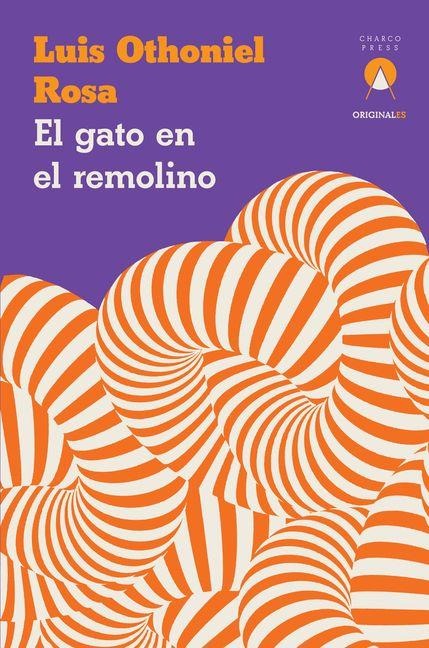
Una novela experimental y utópica que narra el nacimiento, la vida y la muerte de una conciencia colectiva. "Lo que quiero decir es que la locura es un derecho". Así comienza El Gato en el remolino, una novela experimental y utópica que relata la historia del surgimiento, desarrollo y extinción de una conciencia colectiva conocida como el Animal. El libro cuenta la historia de un mundo que resulta a la vez deseable y aterrador a lo largo de los próximos 377 años. Comienza en medio del relato. En el Caribe. Avanza lentamente, siguiendo con rigor la forma de un espiral narrativo a través de ciclos de destrucción. Luego regresa a nuestro presente, para que podamos contemplar cómo nuestro mundo se transforma en aquel otro. Su protagonista es una conciencia colectiva: el Animal. Nace. Crece y aprende. Muere. Es llorado por diosas cibernéticas. También grita: ¡La soledad es una enfermedad colectiva! ¡Defendamos nuestro derecho a la locura! ¡Valientes no son quienes resisten, sino quienes se atreven a soltar! The post-colonial birth, life, and death of the collective consciousness known as the Animal. Middle-aged streamer twins in Bayamón, Puerto Rico, are the first human beings to successfully connect--sharing their consciousness across 34 translucent cables. In that moment, the Animal is born, an intracerebral force that quickly grows to encompass anthills of synaptically entwined bodies, a floating library kitchen redolent of rice and beans far above the Mississippi river, and a transhuman compound in a future Cuba on the Isle of Youth. Circling back and forth and ever progressing, Animal Spiral moves through 400 years of human, and then post-human history, beginning with a revolution on the streets of San Juan and ending with five brilliant siblings: the Squash (humanoid), Calima (beetles), Yemayá (eels), Coatlicue (serpents), and Juracán (anthropomorphic birds), who have millions of bodies and all the world's intelligence, but only want to no longer be alone. This is a buoyant, joyous ode to possibility, a warning about the dangers of neglecting what makes us human, and an astonishing exercise of the flexibility and capacity of liminal spaces. Loneliness is a collective disease! We defend our right to madness! Brave are not the ones who resist; brave are the ones who let go!
Luis Othoniel Rosa (Bayamón, Puerto Rico, 1985) cursó estudios en la Universidad de Puerto Rico y obtuvo su doctorado (Ph.D.) en la Universidad de Princeton, EEUU. Es autor de las novelas Otra vez me alejo (2012) y Caja de fractales (2017). Esta última fue traducida al inglés bajo el título Down with Gargamel! (2020). Rosa es también autor de Calima, un libro bilingüe (español-inglés) de carácter experimental, realizado en colaboración con diversos artistas y traductores (2023), así como del libro académico Comienzos para una estética anarquista: Borges con Macedonio (2016). Es, además, editor fundador de la revista digital ElRoommate . Luis Othoniel Rosa is a Puerto Rican writer from Bayamón. He studied at the University of Puerto Rico and holds a PhD from Princeton University, and his work engages with questions of literature, politics and form.