Und dann auf "Zum Home-Bildschirm [+]".

Stöbern
genialokal zum Startbildschirm hinzufügen
Installieren Sie die genialokal App auf Ihrem Startbildschirm für einen schnellen Zugriff und eine komfortable Nutzung.
Installieren Sie die genialokal App auf Ihrem Startbildschirm für einen schnellen Zugriff und eine komfortable Nutzung.
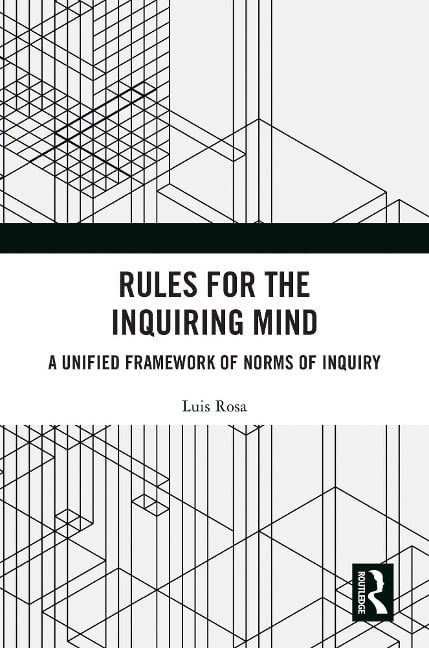
This book concerns the nature and the norms of inquiry. It tackles not only philosophical issues regarding what inquiry is, but also issues regarding how it should and should not be executed. Roughly put, inquiry is the activity of searching for the true answers to questions of our interest. But what is the difference between empirical and armchair inquiry? And what are the right and the wrong ways to inquire? Under what conditions should one start inquiring? Which questions are such that one should not inquire into them? The book offers answers to these questions. It argues that competent armchair inquiry only makes explicit what was already implicit-the inquirer already had the answer to her question before inquiring into it, though this was not explicit to her. It also argues that we should avoid inquiring into questions whose answers are unknowable to us, in the instrumental sense of 'should', and that different modes of inquiry are called for, depending on which type of information is available to the subject. These answers are rigorously argued for, and they stem from a unified framework for modeling the activity of inquiry.
Luis Rosa is a philosophy lecturer at Washington University, St. Louis, USA. His research is primarily in epistemology with additional interests in psychology, AI and literature. Rosa's work has been published in Philosophical Studies, Synthese, Journal of Philosophy, The Philosophical Quarterly and Erkenntnis, and in edited book collections from Routledge, Wiley, Oxford UP and Brill.
1. The Conceptual Groundwork 2. Settling a Question and the Requisite Information 3. A One Possible World Model of Inquiry 4. Structural Conditions and a New Model with Two Norms 5. Critical Scrutiny of the Go Gather Norm 6. Critical Scrutiny of the Go Figure Norm 7. Critical Scrutiny of the Knowledge Norm 8. The Anti-Impossibility Norm of Inquiry 9. The Instrumental Benefits of Violating Instrumental Norms 10. Pseudo Questions and Interrogative Sentences 11. A System of Instrumental Norms of Inquiry; Index.
Dieses eBook wird im PDF-Format geliefert und ist mit einem Adobe Kopierschutz (DRM) versehen. Sie können dieses eBook mit allen Geräten lesen, die das PDF-Format und den Adobe Kopierschutz (DRM) unterstützen.
Zum Beispiel mit den folgenden Geräten:
• tolino Reader
Laden Sie das eBook direkt über den Reader-Shop auf dem tolino herunter oder übertragen Sie das eBook auf Ihren tolino mit einer kostenlosen Software wie beispielsweise Adobe Digital Editions.
• Sony Reader & andere eBook Reader
Laden Sie das eBook direkt über den Reader-Shop herunter oder übertragen Sie das eBook mit der kostenlosen Software Sony READER FOR PC/Mac oder Adobe Digital Editions auf ein Standard-Lesegeräte mit epub- und Adobe DRM-Unterstützung.
• Tablets & Smartphones
Möchten Sie dieses eBook auf Ihrem Smartphone oder Tablet lesen, finden Sie hier unsere kostenlose Lese-App für iPhone/iPad und Android Smartphone/Tablets.
• PC & Mac
Lesen Sie das eBook direkt nach dem Herunterladen mit einer kostenlosen Lesesoftware, beispielsweise Adobe Digital Editions, Sony READER FOR PC/Mac oder direkt über Ihre eBook-Bibliothek in Ihrem Konto unter „Meine eBooks“ - „online lesen“.
Schalten Sie das eBook mit Ihrer persönlichen Adobe ID auf bis zu sechs Geräten gleichzeitig frei.
Bitte beachten Sie, dass die Kindle-Geräte das Format nicht unterstützen und dieses eBook somit nicht auf Kindle-Geräten lesbar ist.