Und dann auf "Zum Home-Bildschirm [+]".

Stöbern
genialokal zum Startbildschirm hinzufügen
Installieren Sie die genialokal App auf Ihrem Startbildschirm für einen schnellen Zugriff und eine komfortable Nutzung.
Installieren Sie die genialokal App auf Ihrem Startbildschirm für einen schnellen Zugriff und eine komfortable Nutzung.
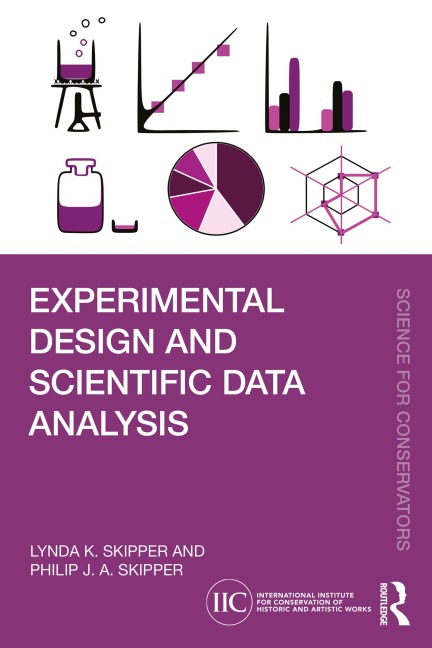
Experimental Design and Scientific Data Analysis provides accessible information about the research process from start to finish as applied to conservation to enable readers to successfully plan and carry out research and share findings effectively with others. The book is divided into two parts, starting with experimental design in Part I and then considering data analysis in Part II. Part I takes the reader through the process of designing and planning experiments, from the initial design of aims and objectives to ethical testing, and includes a range of examples to demonstrate how these ideas apply to a range of specialisms and materials. Part II focuses on what to do with data once it has been collected, including choosing the right statistical test, different methods of presenting information, and communicating your findings clearly to your chosen audience. Questions at the end of each chapter are designed to help readers check and consolidate their knowledge of the different topics. Experimental Design and Scientific Data Analysis is suitable for students, emerging professionals, and experienced conservators at different stages of their careers, and is particularly suitable for those without a scientific background.
Lynda K. Skipper is a senior lecturer in conservation at the University of Lincoln, UK, focusing on science, research, and preventive conservation. She has a PGCE in higher education teaching and is a Fellow of the Higher Education Academy. She researches historic interiors and stone biodeterioration. Philip J. A. Skipper is a research associate and associate lecturer at the University of Lincoln. He also works as a freelance consultant, currently contracted with Historic England to provide advice and carry out research projects on biological growth, biodeterioration of heritage materials, surface treatments, and general heritage science.
Introduction to this book; Part 1: Experimental design; Chapter 1. Why?: scientific method and writing a research question; Chapter 2. How?: experimental design methodology; Chapter 3. What: ethical sampling and scientific rigour; Scientific Data Analysis; Chapter 4: Introduction to statistics for conservators; Chapter 5: How to display results; Chapter 6: Writing reports in scientific style.
Dieses eBook wird im PDF-Format geliefert und ist mit einem Adobe Kopierschutz (DRM) versehen. Sie können dieses eBook mit allen Geräten lesen, die das PDF-Format und den Adobe Kopierschutz (DRM) unterstützen.
Zum Beispiel mit den folgenden Geräten:
• tolino Reader
Laden Sie das eBook direkt über den Reader-Shop auf dem tolino herunter oder übertragen Sie das eBook auf Ihren tolino mit einer kostenlosen Software wie beispielsweise Adobe Digital Editions.
• Sony Reader & andere eBook Reader
Laden Sie das eBook direkt über den Reader-Shop herunter oder übertragen Sie das eBook mit der kostenlosen Software Sony READER FOR PC/Mac oder Adobe Digital Editions auf ein Standard-Lesegeräte mit epub- und Adobe DRM-Unterstützung.
• Tablets & Smartphones
Möchten Sie dieses eBook auf Ihrem Smartphone oder Tablet lesen, finden Sie hier unsere kostenlose Lese-App für iPhone/iPad und Android Smartphone/Tablets.
• PC & Mac
Lesen Sie das eBook direkt nach dem Herunterladen mit einer kostenlosen Lesesoftware, beispielsweise Adobe Digital Editions, Sony READER FOR PC/Mac oder direkt über Ihre eBook-Bibliothek in Ihrem Konto unter „Meine eBooks“ - „online lesen“.
Schalten Sie das eBook mit Ihrer persönlichen Adobe ID auf bis zu sechs Geräten gleichzeitig frei.
Bitte beachten Sie, dass die Kindle-Geräte das Format nicht unterstützen und dieses eBook somit nicht auf Kindle-Geräten lesbar ist.